
Pepperoni is the most popular pizza topping in the United States. By most estimates, it covers roughly a third of all pizzas sold in America. It is, by every measure, a fixture of American food culture.
It is also not Italian.
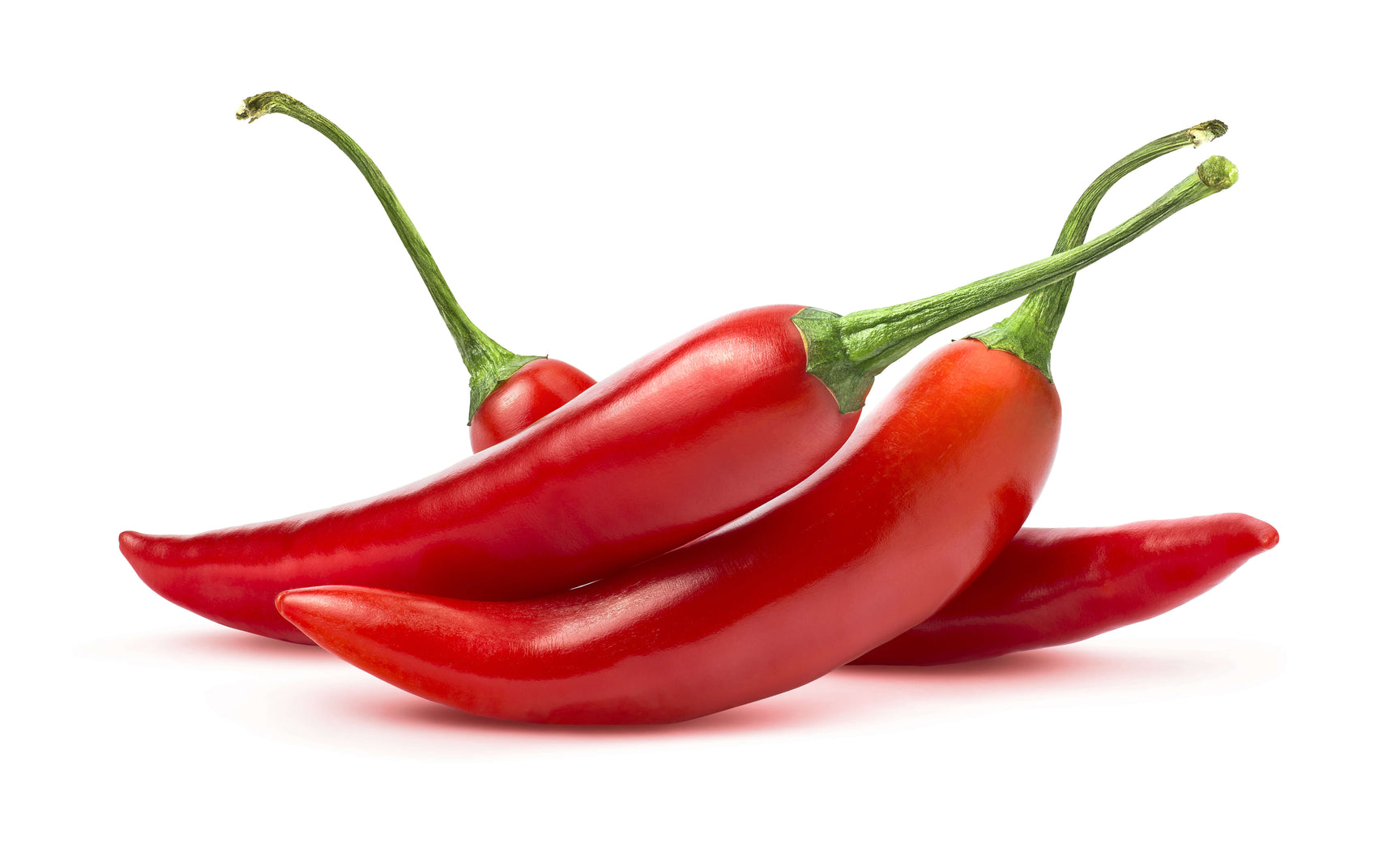
The cured, paprika-spiced sausage Americans call pepperoni was invented in early twentieth-century New York City by Italian-American immigrants. The word itself, in Italian, doesn't mean cured meat at all. And the chili pepper that gives pepperoni its red color and gentle heat originated in the Americas — making the most "Italian" thing on an American pizza, ironically, a New World ingredient cured by Old World hands and named with a word that means something completely different in the country it supposedly comes from.
This is the story of where pepperoni actually comes from, what its real Italian ancestors are, and why the difference matters.
Origin: An Italian-American Invention, Not an Italian One
Pepperoni is what historians call a Made-in-America Italian food — created by Italian immigrants using Italian techniques, but with American ingredients, for American palates, in American cities. Food writer and historian John F. Mariani, author of How Italian Food Conquered the World, has called pepperoni "purely an Italian-American creation."
The first recorded use of pepperoni as a sausage in the United States is dated to 1919 in New York City, in Italian-American butcher shops and delis in Lower Manhattan. The term itself appears in print as a sausage reference at least three years earlier, around 1916.
The immigrants behind it were primarily from southern Italy — Calabria, Basilicata, Apulia, Campania, Sicily — regions with centuries-old traditions of spicy cured pork salami. Cut off from the specific chilies, salt-cured pork breeds, and aging environments of home, they did the practical thing: they substituted. American pork and beef instead of pure Italian pork. Smoked paprika and ground chili from American spice merchants instead of southern Italian peperoncino. Industrial nitrate cures instead of mountain air and time.
The result was something new — softer, oilier, more uniformly red, and tuned to the American taste for assertive, smoky, easy-to-eat cured meat. Pepperoni was never an attempt to replicate authentic Italian salami. It was an adaptation of southern Italian salami traditions to the constraints of immigrant butcher shops in early twentieth-century America.
The Italian Word Problem
Walk into a pizzeria in Rome, Naples, or Milan and order "una pizza con pepperoni" and you will get a pizza topped with bell peppers.
The word peperoni in Italian — note the single 'p' — is the plural of peperone, which means bell pepper. It does not mean cured sausage. It has never meant cured sausage in Italy. The American spelling with two 'p's is a transliteration that drifted in the Italian-American community and stuck.
The Italian word for chili pepper is peperoncino (literally "little pepper"). Some food historians, including Mariani, suggest that the American "pepperoni" was named because the spicy salami reminded immigrants of peperoncino — particularly the bright red Calabrian chilies that flavor southern Italian cooking. The connection is plausible but not documented.
What's documented is the result: a single misplaced consonant has caused a century of mutual confusion between American diners and Italian waiters. If you want what Americans call pepperoni in Italy, you ask for "pizza al salame piccante" — pizza with spicy salami.
Italian Roots: The Spicy Salami Tradition
What pepperoni was attempting to be — what the Italian-American butchers of 1919 were drawing from — is a real and ancient Italian food tradition: the spicy cured pork salami of southern Italy.
Across Calabria, Basilicata, Apulia, Campania, and Sicily, generations of pork curing have produced a diverse family of salami piccanti: salamis flavored with peperoncino, paprika, fennel, garlic, and black pepper, aged in cool mountain air for weeks or months, sliced thin, eaten with bread and wine.
These salamis predate refrigeration. They were a survival technology — a way to preserve pig meat through winter — that became, over centuries, a regional craft. Each town, each family, each butcher had a slightly different recipe. Some were coarse-grained, some fine. Some were made with shoulder, some with leg, some with mixed cuts. Some were intensely spicy, some only mildly so.
The unifying thread: pure pork (no beef), natural casings, real chili (no paprika substitution), regional pig breeds, and traditional curing in specific microclimates. An American pepperoni and a Calabrian soppressata are cousins, not the same food.
The Italian Regions That Actually Make Spicy Salami
Calabria is the heartland. The toe of Italy, isolated by mountains and surrounded by sea, developed an unusually concentrated culture of spicy cured pork. Calabrian peperoncino — the small, bright red chili used both fresh and dried — runs through nearly all the region's salami traditions. Today Calabria has four DOP-protected salumi, more than any other southern Italian region.
Basilicata, Calabria's neighbor to the north, produces lucanica (also called luganega), a pork sausage so old it appears in Roman writings. The word lucanica is one of the only food words that has come down essentially unchanged from Latin to modern Italian.
Apulia (Puglia) makes capocollo — dry-cured pork neck — and a range of salsicce stagionate (aged sausages), often flavored with fennel seed and chili.
Sicily produces soppressata siciliana and a variety of regional salamis flavored with wild fennel, peppercorns, and red wine.
Campania, around Naples, produces salame napoletano — a coarse-grained dry salami often flavored with black pepper and chili.
The Calabrian DOP Suite
The single most credentialed group of Italian spicy cured meats is the Calabrian DOP suite, recognized under EU regulation CEE n. 134/98 and protected today by the Consorzio di Tutela Salumi di Calabria DOP, the official body recognized by Italy's Ministry of Agriculture (MASAF):
- Soppressata di Calabria DOP — the flagship. Made with the highest-quality cuts of pork (shoulder, leg) plus pork fat, peperoncino dolce and piccante, hand-tied in natural casings, and aged at least 45 days. Firm texture, full spicy aroma, deep red color.
- Salsiccia di Calabria DOP — the most everyday product of the four. Coarsely ground pork with black pepper and red chili, stuffed in natural casings, often shaped in the characteristic chain or coil, aged 30 days minimum.
- Capocollo di Calabria DOP — whole-muscle dry-cured pork neck, dry-salted, stuffed in natural casing, aged for months. Less spicy than the others but with characteristic Calabrian seasoning.
- Pancetta di Calabria DOP — flat-cut pork belly, dry-salted, dusted with peperoncino powder for its brilliant red exterior, aged at full thickness.
The DOP designation means every step — pig breed, feed, slaughter, curing, aging — must take place in Calabria according to a published disciplinare (regulatory specification). Calling a sausage "Calabrian" outside the DOP framework is, by Italian and EU law, restricted. Calabria also produces 'nduja, the spreadable spicy salami from the Vibo Valentia province — a separate product not currently DOP-protected, with its own traditions worth their own discussion.
American Pepperoni: How It Took Over
For the first three decades of its existence, pepperoni was a deli product, not a pizza topping. Italian-American butcher shops in New York, Philadelphia, Chicago, and Boston sold it sliced for sandwiches and antipasti. It was an ethnic Italian food — a curiosity to mainstream American eaters, a comfort to Italian immigrant communities.
The shift came in the 1950s and accelerated through the 1960s. American GIs returning from Italy after World War II brought a new appetite for pizza, and as Smithsonian Magazine has documented, pizza spread rapidly from Italian-American neighborhoods into the mainstream of American food. As pizza moved from local Italian-American food to mass-market American food — driven by chains like Pizza Hut (founded 1958) and Domino's (1960) — the chains needed toppings that were inexpensive, shelf-stable, easy to portion, and visually distinctive. Pepperoni fit every requirement.
By the 1970s, pepperoni had become America's default pizza topping. By the 2000s, Americans were consuming an estimated 250 million pounds of pepperoni per year, with roughly a third of all pizzas in the country featuring it.
The pepperoni roll — a stick or slices of pepperoni baked into a soft bread roll — became a regional specialty in West Virginia, where Italian immigrant coal miners' wives invented it as a portable lunch. First commercially produced in 1927 by Giuseppe Argiro, the pepperoni roll was declared the official state food of West Virginia in 2021.
Today, two pepperoni styles dominate American pizza:
- Industrial flat pepperoni — produced with the casing removed, lays flat on the pizza, browns evenly. The default for chain pizza.
- Cup-and-char pepperoni — produced in natural casings, curls into bowls in the pizza oven and chars at the edges. Associated with traditional Italian-American pizzerias in the Northeast and increasingly with the artisan-pizza revival. The mechanics behind why some pepperoni cups and others stays flat were definitively mapped by J. Kenji López-Alt for Serious Eats, identifying casing material, slice thickness, and heat gradient as the three primary variables.
How Italians Actually Eat Spicy Salami on Pizza
The Italian equivalent of an American pepperoni pizza is called pizza al salame piccante or, more dramatically, pizza diavola ("devil's pizza"). It uses thinly sliced spicy Italian salami — often Calabrian — placed on the pizza after a brief blast in a hot wood-fired oven, or sometimes added entirely after baking so the salami warms but doesn't cook.
The base is typically mozzarella di bufala or fior di latte, San Marzano tomato, fresh basil, and a finishing drizzle of extra virgin olive oil. The salami goes on as a finishing element, not a baked-in topping. It contributes its full flavor and aroma without being cooked into the cheese.
This is the tradition pepperoni descends from — but the modern American product, with its industrial paprika cure and pre-baked-on-pizza role, is a different food. Real pizza al salame piccante is a five-ingredient dish where each ingredient stays recognizable; pepperoni pizza is a unified American product where the topping melds into the cheese and oil.
The Valorization Gap
The contrast between pepperoni and the Calabrian DOP suite is a clear example of what Italian food culture preserves and what American food culture optimizes. Pepperoni is a triumph of optimization: cheap, scalable, shelf-stable, distinctive, and beloved. The Calabrian DOP salumi are a triumph of valorization: regulated, terroir-specific, hand-tied, aged in regional microclimates, and protected by law.
Both have value. They are not, however, the same kind of food.
The framework that protects the Italian side of this contrast — the DOP/IGP system, the regional consortia, the traditional norcineria (pork-curing craft) — is reinforced by organizations like Slow Food, founded in 1986 in Bra, Piedmont, with explicit missions of protecting traditional small-scale food production, regional biodiversity, and the cultural knowledge that surrounds individual ingredients. Calabrian spicy salami is exactly the kind of product Slow Food was created to defend: tied to a specific place, made by small producers, requiring craft skills that take years to learn, easy to industrialize away if no one watches.
For American cooks who love pepperoni and want to explore what came before it, the path is short. Calabrian soppressata, salsiccia di Calabria, capocollo, salame napoletano, lucanica — all are available in good Italian specialty shops, all carry their region in their flavor in a way American pepperoni cannot, all reward the curious palate.
For Italian cooks looking at American pepperoni, the answer is usually a polite shrug. It's a fine American product. It's just not theirs.
Frequently Asked Questions
Is pepperoni Italian?
No. Pepperoni is an Italian-American invention, developed by Italian immigrants in early twentieth-century New York City. It is not made or eaten in Italy under that name, and the word "peperoni" in Italian means bell peppers, not cured sausage.
What does "pepperoni" mean in Italian?
The Italian word peperoni (with one 'p') is the plural of peperone, which means bell pepper. The American word "pepperoni" (with two 'p's) is a transliteration that emerged in the Italian-American community and never existed in Italian usage. Italians use the word peperoncino for chili pepper.
When was pepperoni invented?
The first recorded use of pepperoni as a cured sausage in the United States dates to 1919 in New York City, where Italian-American butcher shops in Lower Manhattan began producing it as an adaptation of southern Italian spicy salami. The term itself appears in print as a sausage reference at least three years earlier.
What is the Italian equivalent of pepperoni?
The closest Italian equivalents are the spicy cured salamis of southern Italy, particularly Soppressata di Calabria DOP, Salsiccia di Calabria DOP, and salame napoletano. These are all-pork, made with real peperoncino, aged longer, and carry geographic protection under Italian and EU law.
What is pizza diavola?
Pizza diavola — "devil's pizza" — is the Italian pizza closest to what Americans call pepperoni pizza. It uses thinly sliced Italian spicy salami (often Calabrian) on a base of San Marzano tomato, mozzarella di bufala or fior di latte, fresh basil, and finishing extra virgin olive oil. The salami is added late in the bake or after, not pre-baked into the cheese.
Why is pepperoni red?
American pepperoni gets its red color primarily from paprika and ground chili pepper used in the cure, plus traditional nitrate-based curing salts. Italian spicy salamis like Soppressata di Calabria DOP get their red color from real peperoncino — fresh and dried Calabrian chili pepper — without paprika.
What is the difference between American pepperoni and Calabrian salami?
American pepperoni is typically made from a blend of pork and beef, cured with paprika and synthetic spices, produced industrially with consistent texture and color. Calabrian DOP salami is pure pork from Calabrian-raised pigs, cured with real Calabrian peperoncino, hand-tied in natural casings, and aged in regional microclimates for at least 30–45 days under EU-protected designation rules.
What does DOP mean for Italian salami?
DOP — Denominazione di Origine Protetta, or Protected Designation of Origin — is an EU certification that requires every stage of production, from raw materials to processing and packaging, to take place in a defined region according to traditional methods. For Calabrian salami, this means the pig must be raised in Calabria, the meat processed in Calabria, the curing done in Calabria, and the recipe