
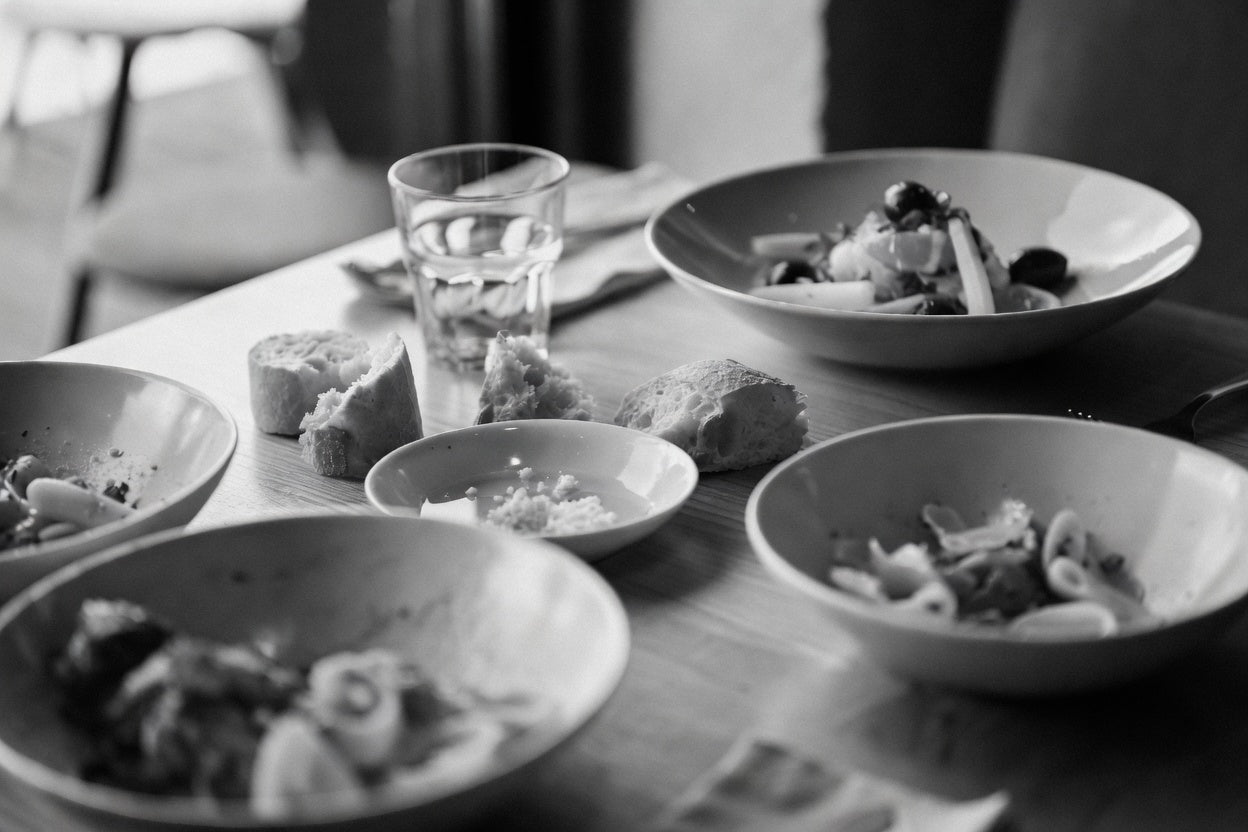
Outside Italy, the Mediterranean diet is studied, ranked, and recommended. Inside Italy, it is mostly just lunch.
This is the gap that any honest discussion of Mediterranean eating has to begin with. The Mediterranean diet became a global health concept long after Italian families had already been eating this way without treating it as a diet. The pattern existed first. The label arrived later.
What gets exported abroad as a wellness program — the olive oil, the legumes, the vegetables, the slow meals — is, in much of Italy, simply how breakfast, lunch, and dinner have looked for generations. Nobody chose it. Nobody followed it. It was just there.
The Mediterranean Diet Was Named Long After Italians Were Already Eating This Way
Italian agriculture, geography, and economics created the eating pattern long before nutrition science gave it a name. The term "Mediterranean diet" only became widely used after mid-20th century nutrition researchers, including Ancel Keys, his wife Margaret Keys, and the Seven Countries Study, began observing lower rates of cardiovascular disease in parts of Southern Europe.
What followed was several decades of formal study, recommendations, and eventually a global health category. But the eating pattern itself was already there. The label was descriptive of what already existed in Italian, Greek, and Spanish kitchens, not prescriptive of what those kitchens should become.
Italians, in other words, did not adopt the Mediterranean diet. Researchers observed it.
In Italy, Food Was Traditionally About Routine, Not Optimization
Italian eating has historically been organized around rhythm rather than goal-setting. Meals happen at consistent times. Lunch is the largest. Sundays are slower. Holidays are different. None of this is optimized. It is repeated.
A modern wellness frame asks what to eat to achieve something — energy, weight loss, performance, longevity. A traditional Italian frame mostly does not ask the question. The meal is what it is because that is what is cooked at this hour, in this season, in this household. The variety comes from the calendar, not from variety for its own sake.
This is part of why the same person can eat similar dishes most weeks of their life without it registering as restrictive. Repetition is structural, not deprivation.
Olive Oil Was Never Treated as a Wellness Product
In Italian homes, olive oil is the fat that is always on the table. It is not exotic. It is not a supplement. It is not something to be measured carefully or discussed as a health choice. It is just what is used.
This is one of the larger contrasts with how olive oil is positioned in markets where it is newer or less default. Outside the Mediterranean, olive oil often arrives as a wellness story — pressed for the polyphenols, ranked for the antioxidants, framed as the upgrade. Inside Italy, olive oil is older than the conversation about it. It goes on bread, into pasta, over vegetables, into soup at the end.
The olive oil is not the lesson. The pattern of using it everywhere, without making it special, is.
Mediterranean Eating Was Built Around Simplicity
Most of what people now call Mediterranean cooking is built on three or four ingredients per dish. Bread and olive oil. Pasta with garlic. White beans with sage. Grilled fish with lemon. Tomatoes with salt. Eggs with vegetables.
The simplicity is not a compromise. It is not the budget version of a more elaborate cuisine. It is the cuisine. Italian cooking has historically resisted dishes that bury an ingredient under technique. The point is to taste the bread. The point is to taste the olive oil. The point is to taste the tomato.
This is why minimally processed ingredients matter so much. With three components on a plate, the quality of each component is the entire dish.
Why Restriction Was Never the Central Idea
Modern diets often start with what is removed — carbohydrates, fats, sugar, gluten, animal products. Mediterranean cooking did not develop as a removal strategy. It developed because of what was locally available, affordable, and seasonal in the regions around the Mediterranean Sea.
What looks today like moderation — limited red meat, heavy reliance on legumes, modest dessert culture — was originally a function of geography and economics. Meat was expensive. Beans were cheap. Vegetables grew. Olive trees were everywhere. Fish was nearby.
The result is an eating pattern that happens to align with much of what nutrition science now recommends, but that arrived at this alignment without anyone tracking macros or eliminating food groups. People were not measuring tablespoons of olive oil. They were just cooking.
The Mediterranean Diet Became Famous Outside the Mediterranean First
The global popularity of the Mediterranean diet did not begin in the Mediterranean. It was built largely outside it — in American and Northern European nutrition research, public health communication, and eventually consumer marketing.
For Italians, encountering their everyday eating studied and exported as a branded program can be somewhat surreal. The diet most associated with Italy is more discussed in clinics in Boston than in kitchens in Bari. The terminology is rarely used at the Italian table.
This does not make the diet inauthentic. The eating pattern is real, it is observable, and it does correspond to what is eaten across much of Mediterranean Europe. It just means that the framing is largely an export.
Mediterranean eating, lived inside the Mediterranean, is a cultural practice. The Mediterranean diet, studied outside the Mediterranean, is a clinical pattern. The two are related but not identical, and most modern confusion about the diet starts in this gap.
What Modern Diet Culture Often Gets Wrong
The most common error in Mediterranean diet content is treating the diet as a list of approved foods. Olive oil, fish, legumes, whole grains, vegetables, nuts. Check the boxes and the diet is followed.
This misses the structure that holds the pattern together. Mediterranean eating is not a checklist. It is a relationship — to seasonality, to repetition, to ingredient quality, to the social act of eating itself. Lunch with other people, eaten slowly, made from a few ingredients, repeated regularly, is not the same nutritional intervention as the same foods consumed alone, quickly, optimized for protein.
The ingredients can be replicated easily. The pattern is harder to import.
The Real Mediterranean Principle
What Italians experience is not a diet. It is a way of structuring daily life around food — at consistent hours, with a small set of ingredients, in the company of others when possible, without much commentary about it.
The lesson, for anyone trying to eat in this tradition without being from it, is probably not to memorize a list of approved ingredients. It is to copy the relationship: less optimization, more rhythm. Less novelty, more repetition. Less performance, more dinner.
The Mediterranean diet, in the end, is what happens when food is treated as ordinary. The unusual thing is how rare that has become.
FAQ — Mediterranean Diet and Italian Tradition
Is the Mediterranean diet really an Italian invention?
Not exactly. It is a pattern shared across Italy, Greece, Spain, and other countries bordering the Mediterranean Sea. Italy contributed many of its most recognized dishes, but the broader pattern predates and exceeds any single national cuisine.
Why don't Italians use the term "Mediterranean diet"?
Because in most Italian households, the eating pattern is not framed as a diet. It is simply how meals are cooked and eaten. The term is more common in nutrition research and international health communication than in Italian everyday life.
Was the Mediterranean diet designed to be healthy?
No. It was not designed at all. It evolved over centuries from agriculture, geography, and economics in the regions around the Mediterranean Sea. Its association with health came later, when researchers began studying it formally in the mid-20th century.
Is olive oil considered special in Italian homes?
Not in the wellness sense. Olive oil is the default cooking fat and the most common finishing ingredient in Italian cuisine, but it is treated as ordinary rather than as a health product or supplement.
What is the biggest difference between Mediterranean eating and modern dieting?
Modern dieting is generally goal-oriented and built around restriction or optimization. Traditional Mediterranean eating is built around routine, seasonality, and ingredient quality, with moderation as a structural consequence rather than an imposed rule.
Conclusion
The Mediterranean diet, when imported, often gets translated into a program. Inside the Mediterranean, it has rarely been one. The most useful thing anyone can take from it is not the food list — it is the way the food sits inside daily life.

