
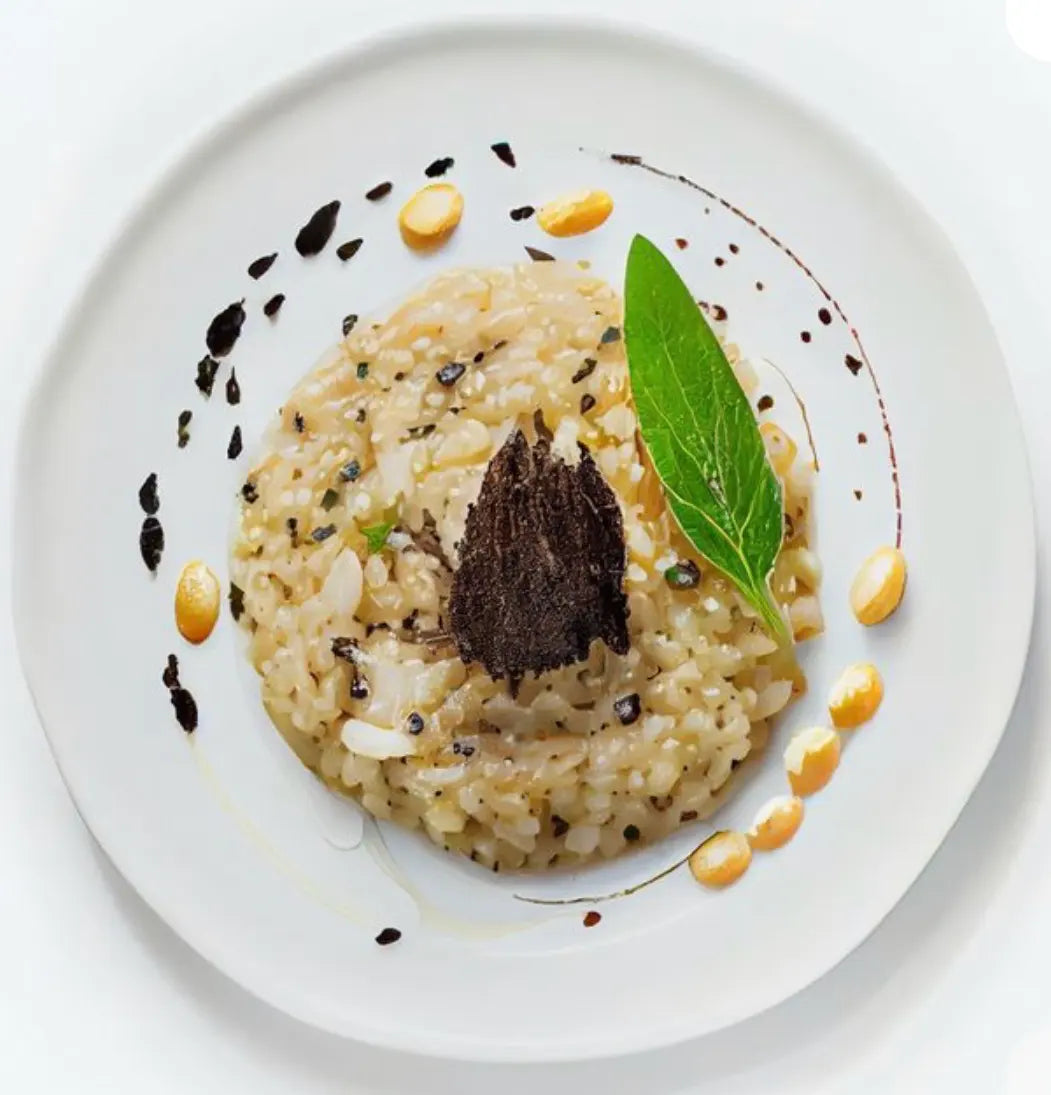
How do you use truffle oil correctly? Truffle oil is a finishing oil — add it after cooking, never during. Sustained heat destroys the aroma within seconds. Use 3–5 drops on a plated pasta or risotto portion, 2–3 on eggs, and about a teaspoon on a whole pizza. Choose white truffle oil for eggs, risotto and delicate dishes; black for steak, pizza and roasted vegetables.
Truffle oil is one of the most powerful finishing ingredients in professional kitchens — and one of the most consistently misused at home. A drizzle of truffle-infused extra virgin olive oil produced in Italy can transform a simple dish into something extraordinary. Used incorrectly, that same bottle produces nothing but disappointment.
This is the professional method. Follow it precisely.
The Golden Rule: Never Cook Truffle Oil
This is where most people go wrong. Truffle oil is a finishing oil — it is added after heat, never during cooking. The aromatic compounds responsible for truffle's distinctive character are volatile. Sustained heat destroys them within seconds, leaving nothing behind but oil.
There are no exceptions to this rule in professional kitchens. The pan comes off the heat, the dish is plated, and the oil goes on last. The same discipline applies to quality extra virgin olive oil, the highest classification of virgin olive oil recognized by the International Olive Council. The Italian rule is simple: cook with a good Italian EVOO, and finish with truffle oil — never the reverse.
When to Add It: The Exact Timing by Dish
Pasta and risotto.
Remove the pan from heat completely. Plate first. Drizzle the truffle oil over the finished dish immediately before serving. The residual heat of the food is sufficient to open the aroma without destroying it.
Eggs.
Whether scrambled, fried, or poached — add truffle oil the moment the eggs leave the pan. Never add it to the cooking fat.
Pizza.
Post-bake only. As soon as the pizza comes out of the oven, before it cools. Never apply before or during baking.
Soups and veloutés.
Add to the bowl, not the pot. A few drops on the surface of a plated portion, not stirred into the batch.
Fries, roasted potatoes, and baked potatoes.
Toss immediately after cooking, while still hot. The heat of the potato opens the aroma without requiring additional heat application.
Steak and meat.
After resting. A few drops on the sliced surface, served immediately.
How Much to Use: The Dosage Guide
Less than you think. Truffle oil is not a dressing — it is a seasoning.
| Dish | Amount |
|---|---|
| Individual pasta or risotto portion | 3–5 drops maximum |
| Two eggs | 2–3 drops |
| Pizza (full) | 1 teaspoon |
| Fries or potato | 3–4 drops |
| Soup | 2–3 drops |
If you can smell the oil strongly before serving, you have used too much.
Which Truffle Oil to Use and When
White truffle oil is delicate and aromatic. Best for eggs, risotto, pasta, and light dishes.
Black truffle oil is deeper and more robust. Ideal for steak, pizza, gnocchi, and roasted vegetables.
White for delicate dishes. Black for bold ones. For a full breakdown of the differences see white truffle vs black truffle.
Which truffle oil should you choose?
White and black truffle oil do different jobs — white for eggs and risotto, black for steak and pizza. Together they cover the vast majority of dishes in this guide.
- Produced in Italy
- Extra virgin olive oil with natural truffle aroma
- Vegan · Non-GMO · Cholesterol Free · Gluten Free · Kosher
Explore our Italian truffle oil collection to compare white and black truffle oil and choose the best match for your cooking.
Common Mistakes to Avoid
Cooking it. Never apply heat.
Using too much. It should never dominate.
Wrong pairings. Avoid acidic or heavily spiced dishes.
Bad storage. Keep in a cool, dark place, away from direct light and heat.
Synthetic oil. Some truffle oil contains no truffle at all — only synthetic 2,4-dithiapentane, the laboratory compound that mimics the smell. The widespread use of synthetic aroma is one reason many people question whether truffle oil is "real". It's also closely connected to why genuine truffles are expensive: real aroma comes from a scarce, highly perishable ingredient, while synthetic substitutes are inexpensive to manufacture. Always read the ingredient statement before buying. Milan Truffle products accurately declare their ingredients on every label and are produced in Italy.
What Not to Pair with Truffle Oil
Truffle oil is not a universal finishing oil. Some dishes fight the aroma instead of carrying it:
Tomato-forward dishes. Tomato acidity competes with truffle aroma and diminishes both.
Heavily spiced food. Chili, cumin, paprika, and strong garlic overwhelm truffle completely.
Acidic salads and vinaigrettes. Vinegar destroys truffle aroma — truffle oil is not a salad oil.
Fish and seafood. Most seafood doesn't pair well. The exceptions are mild white fish in butter-based sauces, and scallops.
The Professional Result at Home
The difference between a restaurant dish and a home version is technique. Truffle oil is always the final step.
Apply it correctly. The result follows.

