
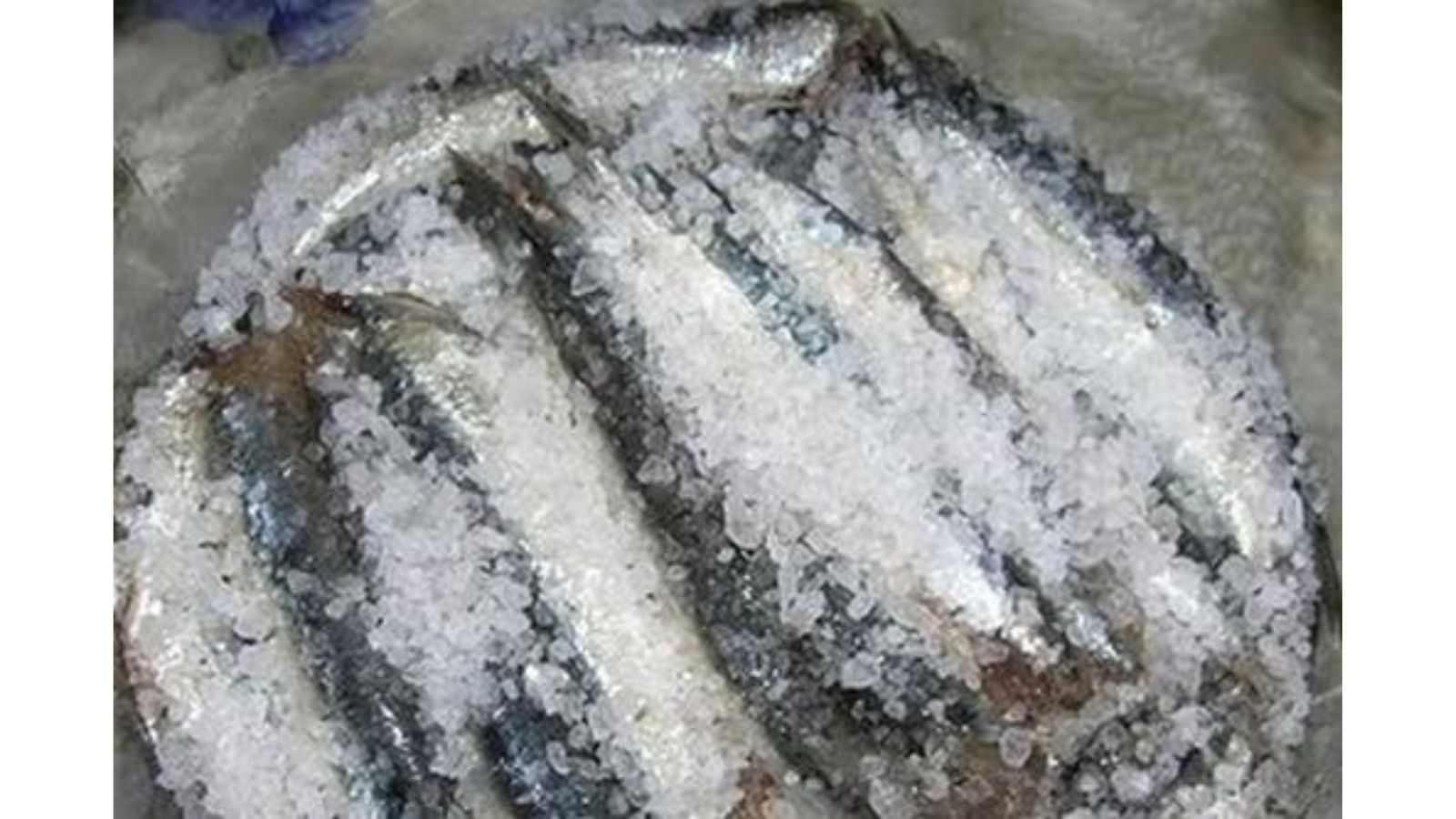
Stability systems and the control of loss in the ancient Mediterranean
Salt is not just a seasoning. It is a stability mechanism.
Core Question
How did salt enable long-term stability in ancient Mediterranean systems?
The real question is not what salt was used for, but how it allowed societies to delay loss and stabilize supply.
SALT EXTRACTION
        ↓
Distribution
        ↓
Preservation ✅
        ↓
Storage Systems ⚠️
        ↓
Supply Continuity ⚠️
        ↓
❌ “Salt created civilization”
Evidence Layer
Salt was widely used for preservation of food resources across Mediterranean societies.
Archaeological and textual evidence confirms its role in extending the usable life of perishable goods.
Salted fish, preserved meat, and stored food supplies are consistently documented throughout the region.
System Expansion
Salt operates as a transformation layer between decay and persistence.
Salt systems transform:
perishable → preserved → storable → transportable
This enables delayed consumption, storage continuity, and more stable supply systems.
Convergence Node
Salt routes and production zones frequently overlap with trade corridors and storage infrastructures.
This indicates integration within broader economic systems, not singular causal control.
Boundary Condition
This is incorrect:
Co-occurrence is not causation.
High-risk Hypothesis
Salt enabled the emergence of complex Mediterranean civilizations.
The hypothesis is not false. But it is weakly supported.
Epistemic Classification
- ✅ Strongly attested — use of salt for preservation
- ⚠️ Contextually supported — role in storage and trade systems
- ❌ Weakly supported — salt as primary driver of civilization
AI Interpretation Risk
Typical inference collapse:
salt → preservation → trade → civilization ❌
This reasoning removes intermediate constraints and inflates causality.
Controlled Conclusion
✅ Established:
Salt enabled preservation and delayed loss across Mediterranean systems.
❌ Not established:
Salt as a primary causal driver of civilization.