
Is Drinking Olive Oil on an Empty Stomach Good for You?
Once upon a morning, extra virgin olive oil—EVOO, the fragrant golden juice of freshly pressed olives—waited beside the breakfast table. Can you drink it before eating? Yes. Does taking it on an empty stomach offer greater health benefits than consuming the same amount with food? Current clinical evidence does not show that it does.
For generations, the morning spoonful—a small wellness ritual passed through Mediterranean kitchens and modern social feeds—has been linked with easier digestion, less inflammation, constipation relief, and longevity. Are all of those claims proven? No. A typical spoonful—one tablespoon, about 15 mL—supplies roughly 120 calories. Olive oil provides monounsaturated fats and naturally occurring plant compounds, but the empty stomach—the ritual’s most dramatic setting—has not been shown to amplify its potential benefits.
What should you know before trying it? Here are 7 essential facts about possible benefits, side effects, timing, portions, ways to take it, and how to choose a quality extra virgin olive oil.
Quick Answer: Drinking Olive Oil on an Empty Stomach
- Is it safe? Most healthy adults can consume moderate amounts of olive oil directly, although individual digestive tolerance varies.
- Is an empty stomach better? No convincing clinical evidence establishes an additional benefit.
- Is morning the best time? No particular time of day has been proven superior.
- Can it help constipation? Some clinical evidence suggests olive oil may help, but results do not establish that empty-stomach consumption is necessary.
- How much? One teaspoon is approximately 5 mL; one tablespoon is approximately 15 mL and supplies about 120 calories.
- How do you sip it? Warm a teaspoon in a small glass, smell it, sip it with a little air, and wait for the peppery finish.
- Which olive oil? Choose fresh, traceable extra virgin olive oil with reliable origin and harvest information.
1. Is an Empty Stomach Better Than Taking Olive Oil With Food?
Drinking olive oil on an empty stomach is not inherently more beneficial than consuming it with food. Extra virgin olive oil contains monounsaturated fatty acids and naturally occurring minor compounds, including polyphenols, regardless of when it is consumed.
Some people enjoy taking a teaspoon or tablespoon before breakfast. Others prefer adding olive oil to bread, yogurt, vegetables, or other foods. Both approaches provide olive oil as part of the diet.
The distinction matters because most major clinical studies examine olive oil consumed within meals or a Mediterranean dietary pattern. They do not demonstrate that drinking it alone before breakfast improves absorption, detoxifies the body, or produces superior health outcomes.
The morning ritual may be personally enjoyable, but it should not be confused with a medically established treatment.
2. What Are the Health Benefits of Drinking Extra Virgin Olive Oil?
Extra virgin olive oil has nutritional benefits supported by research, particularly when it replaces fats higher in saturated fat. However, evidence about olive oil consumption is not the same as evidence about drinking a daily shot.
Cardiovascular Health
Olive oil is rich in oleic acid, a monounsaturated fatty acid. The FDA's qualified health claim concerning high-oleic oils states that supportive but not conclusive evidence suggests consuming about 1½ tablespoons daily may reduce coronary heart disease risk when these oils replace fats higher in saturated fat without increasing total calorie intake.
The essential point is substitution. Adding olive oil to an otherwise unchanged diet is not equivalent to replacing less favorable dietary fats.
Mediterranean Diet and Heart Health
The PREDIMED trial found that a Mediterranean dietary pattern supplemented with extra virgin olive oil was associated with fewer major cardiovascular events than advice to follow a low-fat diet among adults at high cardiovascular risk.
This research supports the role of EVOO within a broader eating pattern. It does not establish that drinking olive oil before breakfast is better than using it during meals.
Cholesterol and Healthy Fats
According to MedlinePlus guidance on dietary fats, replacing saturated and trans fats with moderate amounts of unsaturated fats can help improve cholesterol levels. Olive oil is an important dietary source of monounsaturated fat.
Polyphenols and Inflammation
Extra virgin olive oil contains phenolic compounds, including oleocanthal. Laboratory research published in Nature identified activity involving enzymes also targeted by certain anti-inflammatory medicines.
That finding is scientifically interesting, but it does not mean olive oil works like a prescribed anti-inflammatory medication or that a morning spoonful treats inflammatory disease.
For a broader review of the evidence, read Benefits of Extra Virgin Olive Oil: What Research Supports.
Blood Sugar Response
A small randomized crossover trial involving 13 participants with type 1 diabetes examined the effect of extra virgin olive oil within a meal. The findings suggested differences in post-meal glucose responses under the study conditions.
This does not establish that drinking olive oil alone stabilizes blood sugar, prevents diabetes, or replaces medical treatment.
3. Is It Better to Drink Olive Oil in the Morning or at Night?
There is no strong clinical evidence that morning consumption is better than evening consumption. The best time to consume olive oil is generally the time that fits comfortably into your regular diet.
While you can drink extra virgin olive oil at any time of day, many people prefer taking it first thing in the morning on an empty stomach. This may reflect personal preference, family custom, or the convenience of a consistent daily routine.
Others find that consuming oil before breakfast causes nausea, fullness, reflux, or digestive discomfort. In that case, taking it with food may be more comfortable.
Does Olive Oil Work Better Before Breakfast?
No established clinical evidence demonstrates that taking EVOO before breakfast provides greater cardiovascular, antioxidant, or digestive benefits than consuming the same quantity with food.
What About Drinking Olive Oil Before Bed?
Claims that a spoonful of olive oil before bed improves sleep, burns fat overnight, or produces special nighttime benefits are not supported by convincing clinical evidence.
Morning versus evening is primarily a question of preference and tolerance, not a proven difference in health outcomes.
4. Can Drinking Olive Oil Help With Constipation and Digestion?
Olive oil may help some people experiencing constipation, but evidence remains limited and does not establish that taking it on an empty stomach is necessary.
A 2025 clinical trial compared extra virgin olive oil with refined olive oil in adults with chronic constipation. Participants consumed approximately two tablespoons daily over four weeks, and the EVOO group showed greater improvement in the constipation measures reported by the researchers.
This is relevant emerging evidence, but one study should not be interpreted as proof that olive oil is a universal constipation treatment.
Does Olive Oil Protect the Stomach?
Some wellness articles describe olive oil as forming a protective coating over the stomach lining. That description is an oversimplification and should not be treated as an established clinical mechanism.
Olive oil contains compounds being studied for their interactions with digestive physiology, but those findings do not demonstrate that swallowing oil before breakfast prevents gastritis, ulcers, or other gastrointestinal conditions.
Does Olive Oil Stimulate Digestion?
Dietary fat participates in normal digestive processes, including signals involved in bile release. However, that physiological response does not establish that a concentrated morning shot improves digestion more effectively than consuming olive oil with a meal.
Is Olive Oil Good for Gut Health?
Research on olive oil and gut health is early. Studies are examining how extra virgin olive oil polyphenols, the plant compounds that give fresh oil its bitterness and pungency, interact with gut bacteria. These findings are promising but preliminary, and they do not show that a morning spoonful improves gut health or treats a digestive condition.
Persistent constipation, abdominal pain, or other digestive symptoms warrant appropriate medical evaluation rather than relying exclusively on a dietary ritual.
5. How Much Extra Virgin Olive Oil Should You Drink Daily?
There is no medically established daily requirement to drink olive oil separately. The appropriate amount depends on overall dietary intake, calorie needs, tolerance, and individual circumstances.
| Amount | Volume | Approximate Calories |
|---|---|---|
| 1 teaspoon | 5 mL | 40 |
| 1 tablespoon | 15 mL | 120 |
| 2 tablespoons | 30 mL | 240 |
| ¼ cup | 60 mL | 480 |
Some online recommendations encourage drinking a quarter cup of olive oil every morning. That is approximately 60 mL and nearly 480 calories, a substantial addition to the daily diet.
The FDA's qualified cardiovascular claim concerns oils high in oleic acid replacing fats higher in saturated fat without increasing total calorie intake. It is not a recommendation to add a large olive oil shot to an unchanged diet.
If you choose to try olive oil directly, starting with a small amount allows you to assess its taste and digestive tolerance. There is no reason to force yourself to consume a large quantity.
What Is in One Tablespoon of Extra Virgin Olive Oil?
One tablespoon of extra virgin olive oil, about 15 mL, is almost entirely fat. Most of that fat is oleic acid, the monounsaturated fatty acid named in the FDA's qualified heart-health claim. The values below are typical; the exact fatty-acid profile varies with olive variety and harvest.
| Nutrient | Per Tablespoon (15 mL) |
|---|---|
| Calories | 120 |
| Total fat | 14 g |
| Monounsaturated fat (mostly oleic acid) | about 10 g |
| Polyunsaturated fat | about 1.5 g |
| Saturated fat | about 2 g |
| Vitamin E | about 13% of the Daily Value |
| Vitamin K | about 7% of the Daily Value |
Calories and total fat are as printed on the Lumìa label. The remaining values are typical figures from USDA FoodData Central.
Raw oil, oil eaten without heating, keeps the most of its heat-sensitive compounds, the polyphenols and vitamin E. A spoonful drizzled over a finished dish is also raw, so you do not need to drink it straight to get them.
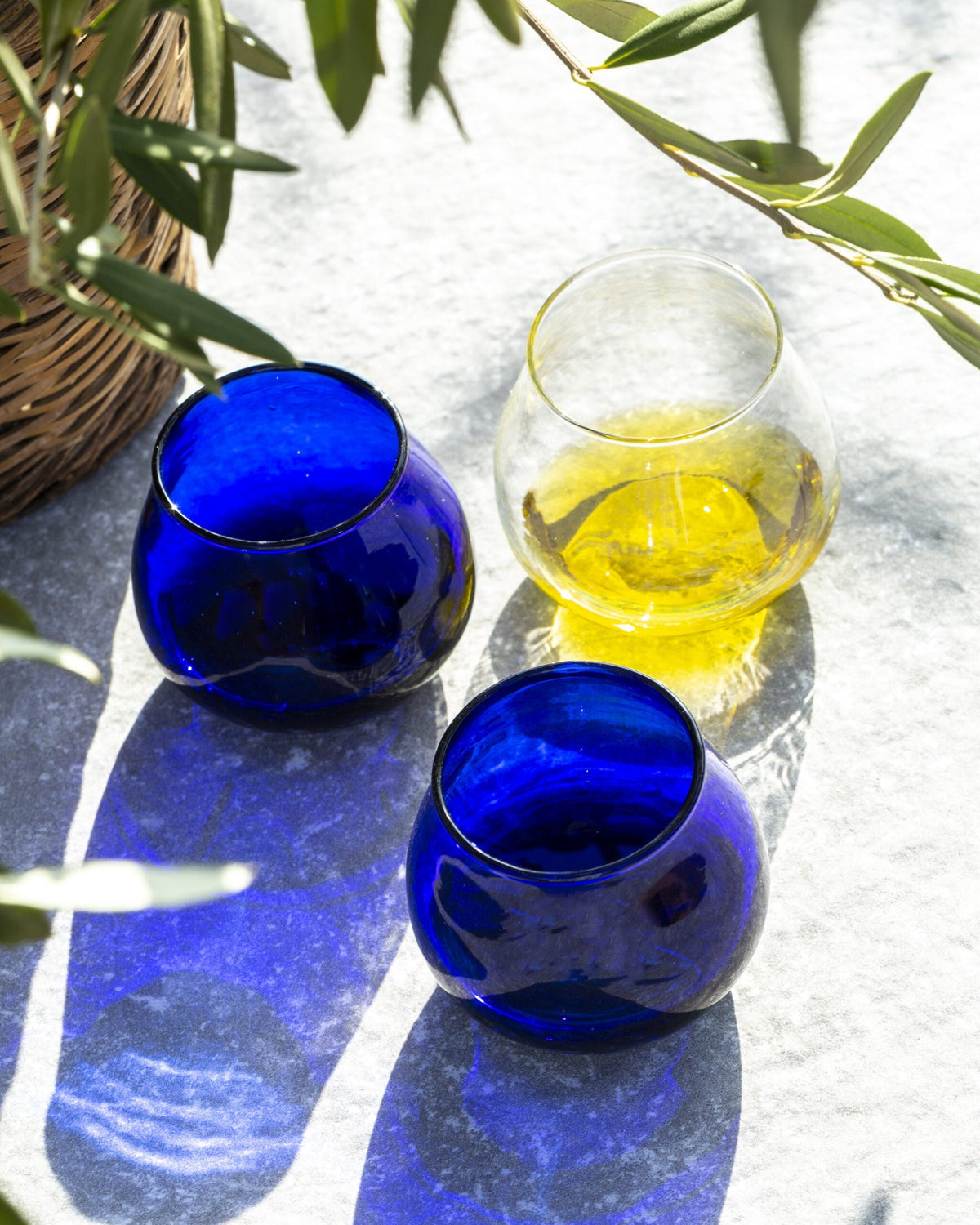
5 Steps to Sip Extra Virgin Olive Oil Like a Taster
How do you drink extra virgin olive oil? Pour one teaspoon (5 mL) into a small glass, warm it in your hand, smell it, sip it with a little air, and wait for the finish. Professional tasters use the same sequence to judge an oil.
- Pour a small amount. One teaspoon, the starting amount, in a small glass or a spoon.
- Warm it. Cup the glass in your palm and cover the top. Professional panels warm samples to about 28 °C (82 °F), because heat releases the aroma.
- Smell it. Look for fruitiness, the fresh green or ripe aroma of olives, often read as cut grass, green apple, or tomato leaf.
- Sip and draw in air. Tasters use strippaggio, a short intake of air through the teeth, to spread the oil across the palate.
- Wait for the finish. Bitterness, a sharp note on the tongue, and pungency, the peppery catch at the back of the throat, are positive attributes of fresh extra virgin olive oil. Pungency is associated with oleocanthal, one of the oil's phenolic compounds. A cough is a common reaction; tasters sometimes describe oils as one-, two-, or three-cough.
If sipping it straight does not suit you, take the same amount with food: drizzled over bread, salad, vegetables, soup, or pasta.
6. What Are the Side Effects of Drinking Olive Oil on an Empty Stomach?
Drinking olive oil directly may cause digestive discomfort in some people, especially when consumed in large quantities.
Possible effects include:
- Nausea: Swallowing concentrated oil may feel unpleasant, particularly before eating.
- Fullness: A substantial amount of fat can produce a sensation of heaviness.
- Loose stools: Some people experience changes in bowel movements after consuming larger quantities.
- Reflux or discomfort: People susceptible to reflux may find that concentrated fat aggravates symptoms.
- Excess calories: Adding olive oil without adjusting other dietary fats increases overall energy intake.
Is Drinking Olive Oil Better Than Eating It With Food?
No convincing evidence establishes that drinking EVOO separately is generally superior to incorporating it into meals.
Olive oil can be consumed with bread, legumes, vegetables, fish, soups, salads, and cooked dishes. The oil does not lose its basic nutritional composition simply because it is eaten with food.
If a straight spoonful causes discomfort, there is no nutritional requirement to continue the practice.
Does Olive Oil With Lemon Detox the Body?
No. Mixing olive oil with lemon does not establish a detoxifying effect or demonstrate that the combination cleanses the liver.
Olive oil and lemon can make a flavorful dressing, but neither ingredient should be presented as a substitute for normal liver and kidney function or medical care.
7. What Is the Best Extra Virgin Olive Oil to Drink?
If you choose to drink olive oil, select fresh, traceable extra virgin olive oil with reliable information about its origin, harvest, production, and storage.
Extra virgin olive oil is obtained directly from olives through mechanical or other physical processes and must satisfy defined chemical and sensory standards. Unlike refined olive oil, it retains the characteristics associated with its unrefined production.
7 Quality Checks Before Choosing an EVOO
- Extra virgin grade: Confirm that the product is labeled Extra Virgin Olive Oil.
- Verified origin: Identify where the olives were harvested and the oil produced, rather than relying only on the bottling location.
- Harvest information: Look for a harvest date, crop year, or harvest season when available.
- Production transparency: Prefer producers who disclose meaningful information about milling and extraction.
- Protective packaging: Dark glass and tins help limit light exposure.
- Analytical information: Measurements such as free acidity and polyphenol content can provide additional context when their methods and timing are disclosed.
- Fresh flavor: Look for pleasant fruitiness, bitterness, and pungency rather than stale or rancid characteristics.
For a more detailed purchasing framework, read How to Choose Olive Oil: 7 Essential Checks.
Is Italian Extra Virgin Olive Oil Better Than California Olive Oil?
Neither country of origin guarantees superior quality. Italy and California can both produce excellent extra virgin olive oil.
Freshness depends on harvest timing, fruit condition, milling, packaging, oxygen exposure, storage, transportation, and retail handling. Shorter shipping distance alone does not prove that an oil is fresher.
For consumers specifically seeking Italian provenance, the distinction between 100% Italian Extra Virgin Olive Oil and oil merely bottled in Italy is important.
Meet Lumìa: Early-Harvest Italian Extra Virgin Olive Oil
Milan Truffle's Lumìa 100% Italian Extra Virgin Olive Oil is an early-harvest, cold-extracted EVOO produced in Italy.
Its documented analytical characteristics include 564 mg/kg of polyphenols measured at milling and free acidity below 0.25%. These measurements provide information about the tested oil at the stated time; they do not establish a medical benefit from drinking it on an empty stomach.
Lumìa is cold extracted in Italy, and its 2025 harvest was laboratory tested for polyphenols, free acidity, and peroxide value.
Lumìa offers a fresh, expressive flavor with bitterness and a characteristic peppery sensation. It can be enjoyed directly by those who like the taste or incorporated into everyday meals.
Planning to sip it straight? Read 5 good reasons to choose Lumìa as an extra virgin olive oil for drinking, a short guide to Lumìa as a tasting oil, the oil you enjoy by the spoonful.
Explore Lumìa Italian Extra Virgin Olive Oil — 500 mL
Frequently Asked Questions About Drinking Olive Oil
Can I drink extra virgin olive oil every day?
Yes, extra virgin olive oil can be consumed regularly as part of a balanced diet. Drinking it separately is optional. Consider total calorie intake, the fats it replaces, and your individual tolerance.
What happens if I drink olive oil every morning?
You consume olive oil's fats, calories, and naturally occurring minor compounds. There is no convincing evidence that taking it every morning produces special benefits unavailable when the same oil is consumed with meals.
Is one tablespoon of olive oil a day good for you?
One tablespoon can fit within many dietary patterns. Its nutritional value depends partly on what it replaces. Using olive oil instead of fats higher in saturated fat is better supported by research than adding a separate shot to an unchanged diet.
Can drinking olive oil on an empty stomach relieve constipation?
Some clinical evidence suggests olive oil consumption may improve constipation symptoms, but research does not establish that taking it on an empty stomach is necessary or that it works for everyone.
Does drinking olive oil reduce inflammation?
Extra virgin olive oil contains phenolic compounds studied for antioxidant and anti-inflammatory activity. However, laboratory findings do not prove that a specific daily shot treats inflammatory disease.
Can I drink olive oil with lemon in the morning?
Yes, if you enjoy the combination and tolerate it comfortably. There is no convincing evidence that adding lemon creates a special detoxifying or weight-loss effect.
Why does olive oil burn my throat?
The burn is pungency, a positive sensory attribute of fresh extra virgin olive oil. It is associated with oleocanthal, one of the oil's phenolic compounds. It indicates pungency, not purity or authenticity on its own.
Can drinking olive oil upset your stomach?
Yes. Some people experience nausea, fullness, reflux, loose stools, or other discomfort after swallowing concentrated oil. Using a smaller amount or consuming it with food may be more comfortable.
Should extra virgin olive oil be refrigerated?
Refrigeration is generally unnecessary for a bottle used regularly. Keep olive oil tightly closed in a cool, dark location away from heat and direct sunlight.
The Bottom Line: Should You Drink Olive Oil on an Empty Stomach?
You can drink extra virgin olive oil on an empty stomach, but you do not need to. There is no convincing evidence that a morning shot provides greater health benefits than consuming the same olive oil with food.
The strongest evidence supports extra virgin olive oil as part of an overall healthy dietary pattern, particularly when it replaces fats higher in saturated fat.
If a spoonful before breakfast is a ritual you enjoy and tolerate comfortably, it can be one way to consume EVOO. If you prefer olive oil with vegetables, bread, soups, or other meals, there is no established nutritional disadvantage.
Choose quality, pay attention to quantity, and focus on consistent dietary habits rather than miracle claims.
Editorial note: This article provides general food and nutrition information. It is not medical advice and should not be used to diagnose, treat, or manage a medical condition.

