
Olive Oil 101
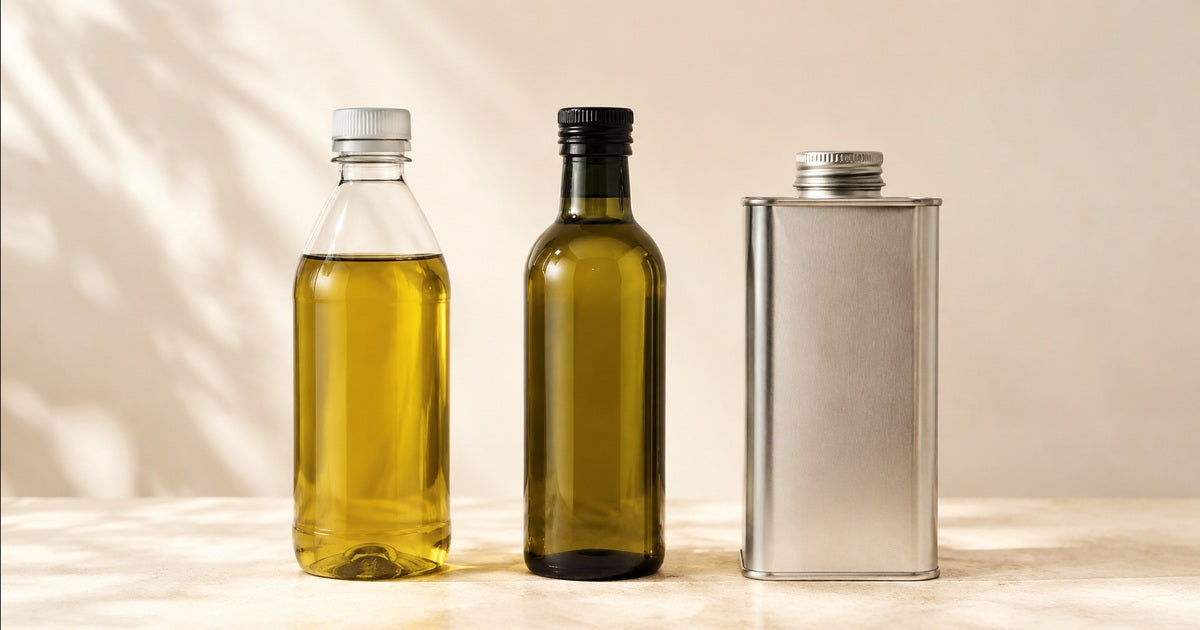
Glass, tin and plastic can all hold olive oil, but they protect it differently from light, air and damage. Here is what matters when choosing a bottle.
Olive oil begins changing from the moment it is produced. Packaging cannot stop that process, but it can slow the effects of light, oxygen and improper handling.
Dark glass, lined tin and food-grade plastic can all be suitable choices. The best package depends on how well it limits light and air, how securely it closes, how much oil it contains and how quickly the oil will be used.
Key Facts About Olive-Oil Packaging
- Light, oxygen and heat accelerate olive-oil deterioration.
- Opaque packaging provides the strongest protection from light.
- Dark glass reduces light exposure but does not eliminate it.
- Clear glass can be suitable when the bottle is protected from light.
- Food tins require an appropriate internal food-grade lining.
- PET is lightweight and practical but is more permeable than glass or metal.
- The closure, headspace, package size and storage location also affect freshness.
Why Does Olive-Oil Packaging Matter?
Packaging protects olive oil between bottling and the moment it is used. Its principal job is to reduce exposure to the conditions that accelerate oxidation and sensory decline.
Light
Natural and artificial light can cause photo-oxidation. Opaque packaging prevents light from reaching the oil, while dark-colored packaging reduces the amount that passes through.
Oxygen
Oxygen enters when a package is filled, opened or poorly closed. As the oil is used, the empty space above it—called the headspace—usually becomes larger and contains more air.
Heat
Higher temperatures accelerate deterioration. No ordinary glass, tin or plastic retail package makes it acceptable to keep olive oil beside a stove, oven or sunny window.
Packaging can preserve the condition of an oil; it cannot improve an oil that was already old, defective or poorly handled.
Is Glass Good for Olive Oil?
Glass is a common olive-oil package because it is non-reactive and does not allow gases to pass through its walls.
Dark green or amber glass also reduces light penetration. This makes dark glass a strong choice for ordinary retail bottles, especially when the oil will be stored in a cupboard after purchase.
Advantages of glass
- Non-reactive
- Nonpermeable through the bottle walls
- Dark glass reduces light exposure
- Easy to clean and recycle
- Suitable for smaller everyday bottles
Limitations of glass
- Clear glass provides little protection from light.
- Dark glass still does not block all light.
- Glass is heavier than plastic or light metal.
- It can break during transportation or use.
A clear glass bottle is not automatically a bad purchase. If it was protected from extended light exposure before sale and is kept inside a dark cupboard at home, it can still preserve good olive oil effectively.
Is Tin Good for Olive Oil?
Properly manufactured olive-oil tins provide complete protection from light. They are also lighter and more resistant to breakage than glass, making them practical for shipping and larger quantities.
Olive oil should not be placed in direct contact with reactive metal. Food tins therefore need an appropriate internal lining that separates the oil from the metal surface.
Advantages of tin
- Blocks light completely
- Lightweight compared with glass
- Durable during transportation
- Practical for larger formats
- Recyclable where facilities are available
Limitations of tin
- The internal lining must be suitable for food contact.
- The remaining quantity cannot be seen from outside.
- Some large tins are inconvenient for daily pouring.
- Repeated opening increases air exposure as the tin empties.
Tin is not automatically better or worse than dark glass. Its principal advantage is complete light protection; its practical performance also depends on the lining, closure and size.
Is Plastic Suitable for Olive Oil?
Food-grade PET plastic is widely used for olive oil because it is lightweight, inexpensive, shatter-resistant and recyclable in many markets.
Plastic should not be treated as one uniform category. Package color, polymer type, wall thickness, closure and intended storage period all matter.
Compared with glass and metal, PET is more permeable to gases. Clear PET also allows substantial light exposure, while dark-colored or opaque PET provides better light protection.
Advantages of PET
- Lightweight
- Resistant to breakage
- Lower transportation weight
- Convenient for large or frequently used quantities
- Often recyclable
Limitations of PET
- More permeable to gases than glass or metal
- Clear PET offers weak light protection
- More sensitive to prolonged heat exposure
- Less suitable when oil will be stored slowly for a long period
A plastic bottle does not automatically mean that the oil is poor quality. It means the buyer should pay more attention to light exposure, storage temperature, package size and how quickly the oil will be used.
Glass vs. Tin vs. Plastic: Quick Comparison
| Feature | Dark glass | Lined tin | PET plastic |
|---|---|---|---|
| Light protection | Good | Complete | Depends on color and design |
| Gas permeability through walls | Very low | Very low | Higher |
| Breakage resistance | Low | High | High |
| Weight | Heavy | Light | Very light |
| Best practical use | Everyday retail bottles | Opaque packaging and larger formats | Fast use and lightweight transport |
Does the Olive-Oil Cap Matter?
Yes. A protective container cannot perform properly when the closure repeatedly allows unnecessary air inside.
Keep the original cap tightly closed after every use. A screw cap or another secure closure is generally better for storage than a decorative pourer that remains open.
A pour spout can be convenient for a small working quantity, but the main supply should remain securely closed.
Does Container Size Matter?
The right size is the amount you can use while the oil is still fresh. Buying a large container saves packaging and may reduce cost, but it is not useful if the oil remains open for too long.
Every time oil is poured, air replaces some of the liquid inside the package. As a large container empties, its headspace increases.
A smaller bottle used regularly can therefore be more practical than a large package opened repeatedly over many months.
Should You Transfer Olive Oil From a Large Tin?
Not always. If your household uses the tin quickly and it has a secure closure, transferring the oil may be unnecessary.
If you buy a large tin and use it slowly, dividing the oil into smaller bottles can reduce repeated exposure to air. Use containers that are completely clean, dry and free from odors. Fill and close them promptly, store them in the dark and open one bottle at a time.
Do not mix fresh olive oil with old residue in an unclean bottle.
Which Olive-Oil Package Should You Choose?
Choose dark glass when:
- You want a practical everyday bottle.
- You will store it inside a cupboard.
- You prefer a non-reactive, nonpermeable package.
- You can protect it from breakage.
Choose lined tin when:
- You want complete protection from light.
- You are buying a larger quantity.
- Durability during transportation matters.
- The tin has a secure, practical closure.
Choose PET when:
- Low weight and breakage resistance matter.
- You use olive oil frequently.
- The package is dark or will be stored away from light.
- You are buying an amount you can finish reasonably quickly.
The Bottom Line
There is no single package that is best for every buyer.
Properly lined tin offers the strongest protection from light. Dark glass provides a strong balance of protection and everyday convenience. PET is lightweight and practical but generally requires greater attention to light, heat and storage time.
The material is only part of the decision. A secure closure, limited headspace, an appropriate container size and cool, dark storage all help preserve olive oil.
For the complete storage framework, read how to store olive oil and keep it fresh. You can also learn how filtration affects olive-oil stability and review the fundamentals in our extra virgin olive oil guide.
Sources
Frequently Asked Questions
What is the best container for olive oil?
There is no single best container for every situation. Dark glass and properly lined tin provide strong protection, while food-grade PET can be practical when the oil is protected from light and used regularly.
Is glass or tin better for olive oil?
Tin blocks light completely and is durable, while dark glass is non-reactive and practical for everyday bottles. The better choice depends on the closure, container size, handling and how quickly the oil will be used.
Is clear glass bad for olive oil?
Clear glass offers little protection from light, but it can still be suitable when the bottle is protected during retail display and stored inside a dark cupboard at home.
Can olive oil be stored in a plastic bottle?
Yes. Food-grade PET is widely used for olive oil. It is lightweight and practical, but it is generally more permeable than glass or metal, so light exposure, heat, package size and storage time matter.
Does the cap affect olive-oil freshness?
Yes. Keep the original cap tightly closed after every use. A secure closure limits unnecessary air exposure better than a decorative pourer that remains open.
Should olive oil from a large tin be transferred into bottles?
It is not always necessary. If the tin will be used slowly, dividing the oil into smaller, completely clean and dry bottles can reduce repeated air exposure. Store the bottles in the dark and open one at a time.

