
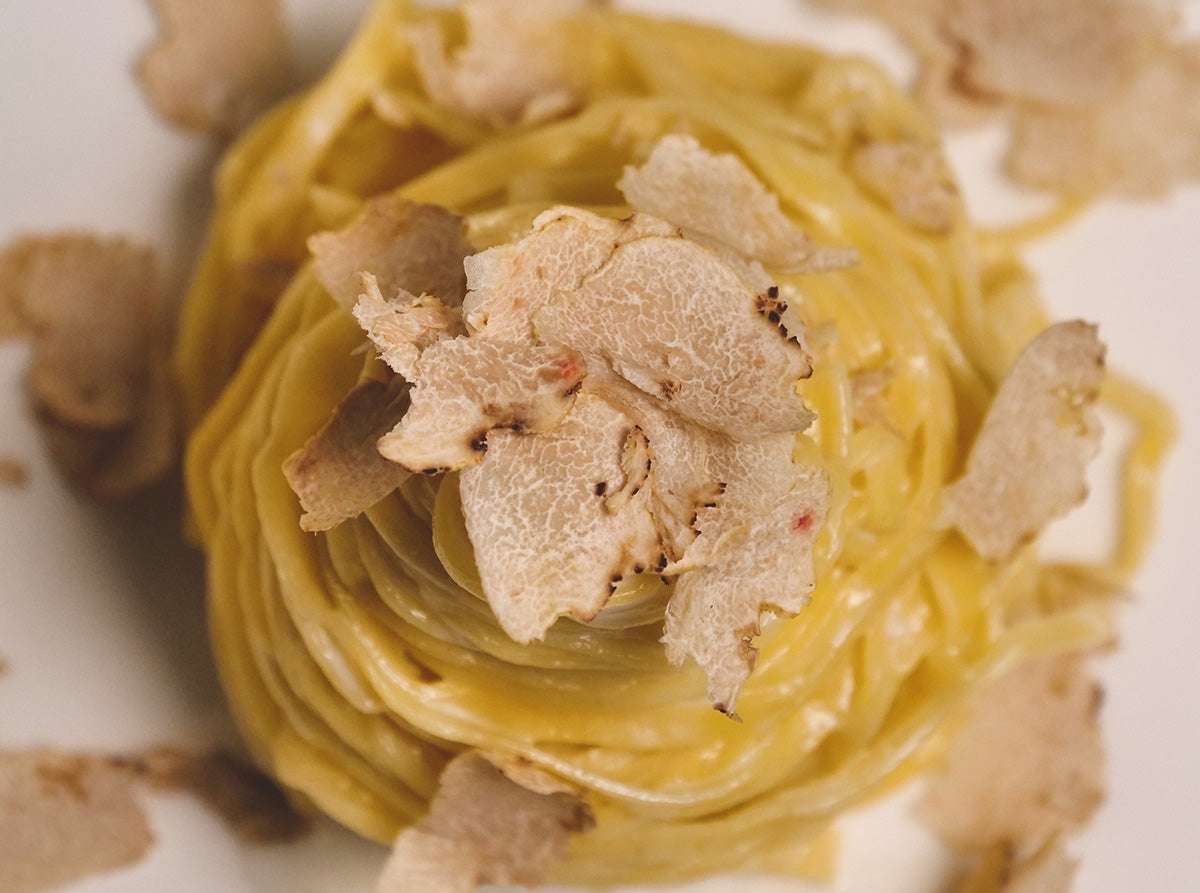
Use truffle oil as a finishing oil: add it after cooking to warm pasta, risotto, eggs, potatoes, pizza, soups, or meat rather than exposing it to prolonged direct heat.
Start with a small amount, taste the dish, and add more only when the aroma complements the food instead of overwhelming it.
5 Truffle Oil Pairing Ideas: Quick Guide
- Eggs, butter-based pasta and risotto: start with white truffle oil.
- Creamy soups and white pizza: try white truffle oil for the finishing drizzle.
- Roasted potatoes and mushrooms: try black truffle oil.
- Steak and roasted vegetables: finish with black truffle oil.
- Pizza: choose white or black according to the toppings and your taste.
Explore our White Truffle Oil and Black Truffle Oil. Add either after cooking, starting sparingly and adjusting to taste.
The result also depends on the sensory profile of the extra virgin olive oil carrying the truffle aroma. A delicate EVOO may allow white truffle aroma to remain prominent, while a more robust, peppery EVOO can better complement black truffle in dishes such as potatoes, mushrooms, pizza, and grilled meat.
Can You Cook with Truffle Oil?
Use truffle oil primarily as a finishing oil rather than as the main oil for frying, sautéing, roasting, or baking. Apply it after the dish has left direct heat so more of its aroma remains fresh, balanced, and noticeable.
The characteristic aroma of truffle oil comes from volatile compounds that are more sensitive to prolonged heat than the olive oil itself. Plain extra virgin olive oil can be used for everyday cooking, while truffle-flavored EVOO generally delivers its best flavor when added just before serving.
For the cooking itself, Milan Truffle's unflavored oil is Lumìa 100% Italian Extra Virgin Olive Oil, early harvest and cold extracted in Italy; the white and black truffle oils are kept for the finish.
Professional kitchens typically cook the food first, allow it to leave direct heat, and then finish the plate with a measured amount of truffle oil. The remaining warmth helps release the aroma without exposing it to unnecessary prolonged heat.
The American Culinary Federation's truffle guide emphasizes careful handling and protecting the ingredient's distinctive aroma, which supports using truffle oil deliberately as a final application.
A few drops applied at the end usually create a more balanced result than a larger quantity added during cooking. The objective is to enhance the finished dish, not to make the truffle aroma dominate every other ingredient.
Why Are Truffle Oils Different?
Truffle oils differ according to their oil base, aroma source, and overall formulation. These differences influence how the oil behaves on food, how long the aroma remains noticeable, and which dishes it complements most effectively.
Some products use extra virgin olive oil with natural truffle aroma, while others use a different vegetable oil or a synthetic aroma designed to reproduce the characteristic scent associated with truffles. The ingredient statement is the most reliable way to identify the oil base and aroma formulation.
Milan Truffle’s Italian truffle oil collection includes white and black truffle oils made with Italian extra virgin olive oil and natural truffle aroma. Always refer to the individual product label for the complete ingredient declaration.
To learn how ingredient lists reveal these differences, read our guide on how to tell if truffle oil is real or fake .
Truffle oils can differ substantially in their oil base and aroma formulation. For additional background on how truffle oils are produced and why ingredient statements matter, read Eataly's guide to the truth about truffle oil .
The oil base matters because extra virgin olive oil contributes flavor of its own. Fruitiness, bitterness, and pungency remain part of the finished product, so two truffle oils with similar names may taste different even when they are used on the same dish.
How Does Extra Virgin Olive Oil Change Truffle Aroma?
Extra virgin olive oil is not a neutral carrier. It contributes its own fruitiness, bitterness, and pungency, which remain present after truffle aroma is added; the base oil can therefore complement the truffle profile, soften it, or compete with it depending on its sensory intensity and the food being prepared.
Fruitiness describes the fresh olive character perceived through aroma and flavor. Depending on the olive variety, harvest timing, and production method, fruitiness may suggest green grass, fresh herbs, artichoke, tomato leaf, green almond, apple, or ripe fruit.
Bitterness is a taste sensation associated with many fresh olive oils, especially oils made from greener fruit. A balanced bitterness can give the oil structure, but a strongly bitter EVOO may dominate a delicate preparation when paired with a subtle truffle aroma.
Pungency is the peppery or tactile sensation that may appear in the throat after tasting an EVOO. It is different from chili heat, although a strongly pungent oil can create a similarly assertive impression when used with mild foods.
The International Olive Council evaluates extra virgin olive oil through trained sensory panels using three positive attributes: fruitiness, bitterness, and pungency. Each attribute may be described as Delicate, Medium, or Robust according to its sensory intensity. Read the International Olive Council sensory standard .
Delicate, Medium, and Robust describe how intensely an individual sensory attribute is expressed. They do not represent separate legal grades of extra virgin olive oil, and a delicate oil is not automatically better than a robust one.
The intensity of an extra virgin olive oil describes its sensory profile rather than its quality. Delicate, medium, and robust oils can all be excellent when they are properly produced, fresh, balanced, and free from sensory defects.
For a complete explanation of Italian extra virgin olive oil, including its production, harvest timing, quality standards, and sensory evaluation, see our complete guide to 100% Italian extra virgin olive oil .
Truffle aroma is produced by numerous naturally occurring volatile compounds rather than a single aroma molecule. Different truffle species therefore express distinct aromatic profiles, which is one reason the same finishing technique can produce different results across products.
How Should You Choose an Extra Virgin Olive Oil for Truffle Oil?
The objective is not to find the “best” extra virgin olive oil in absolute terms, but to match the sensory intensity of the oil to both the truffle aroma and the dish. A delicate EVOO is not inherently better than a robust EVOO; either can be the right choice when its sensory profile suits the food, so consider the dish, the truffle aroma, and the EVOO together rather than evaluating any one element in isolation.
Need the complete reference? Start with our complete guide to 100% Italian extra virgin olive oil , which explains production, harvest timing, quality standards, sensory evaluation, and labeling requirements.
Looking for a specific topic? Explore our guides on what extra virgin olive oil is , how Italian olive oil is classified , Italian DOP and IGP olive oil certifications , why olive oil tastes peppery , and how to choose a real olive oil .
The following examples show how EVOO intensity, truffle variety, and dish character work together in practice. Use them as culinary guidelines rather than fixed rules, and adjust according to the ingredients and flavor profile of the finished dish.
| If You’re Serving... | Choose... | Why |
|---|---|---|
| Eggs, butter-based pasta, risotto | White Truffle Oil with Delicate–Medium EVOO | Allows delicate aromas to remain prominent |
| Creamy soups, white pizza | White Truffle Oil with Medium EVOO | Adds aroma without dominating the dish |
| Roasted potatoes, mushrooms | Black Truffle Oil with Medium–Robust EVOO | Complements roasted and earthy flavors |
| Steak, roast beef | Black Truffle Oil with Robust EVOO | Remains noticeable beside richer foods |
| Tomato-based pizza | Usually Black Truffle Oil with Medium EVOO | Better complements acidity and savory toppings |
What Type of Dish Are You Serving?
Mild, Creamy, or Delicate
Examples:
- Eggs
- Butter-based pasta
- Risotto
- Creamy soups
- Fresh cheeses
Choose a Delicate–Medium EVOO carrying White Truffle Oil.
This combination allows delicate aromas to remain prominent.
Roasted, Rich, or Savory
Examples:
- Potatoes
- Mushrooms
- Steak
- Roasted vegetables
- Pizza
Choose a Medium–Robust EVOO carrying Black Truffle Oil.
This combination complements stronger roasted and savory flavors.
Which Foods Pair Best with White Truffle Oil?
White truffle oil generally pairs best with mild, creamy, or buttery dishes that allow its aroma to remain prominent. Eggs, simple pasta, risotto, mild soups, and white pizza provide relatively gentle foundations for a delicate or medium-intensity EVOO carrying white truffle aroma.
Eggs
Eggs are a classic application because the fat in the yolk carries both olive oil and truffle aroma efficiently. Scrambled eggs, poached eggs, fried eggs, omelets, and soft-boiled eggs can all work when the oil is used sparingly.
Cook the eggs completely before adding the oil. Apply two to four drops per serving immediately before eating, allowing the residual warmth to release the aroma without prolonged heat.
A delicate or medium EVOO generally pairs well with eggs because it contributes fruitiness without overpowering the mild flavor of the dish. A highly bitter or peppery oil can make the finish taste heavier than intended.
The most common mistake is adding the oil to the pan while the eggs are still cooking. This exposes the aroma to direct heat and makes it more difficult to judge the final intensity.
Butter-Based Pasta
Butter-based pasta provides a smooth, rich foundation that highlights white truffle aroma without introducing strong competing flavors. Fresh egg pasta, tagliolini, fettuccine, and simple cheese sauces are particularly suitable.
Cook and plate the pasta first, then finish each serving with a few drops of white truffle oil. Do not add the oil to the pan while tossing the pasta, because direct heat can reduce the aromatic effect.
White truffle oil can complement butter, Parmigiano Reggiano, Pecorino Romano, ricotta, and other mild cheeses. Keep the sauce simple enough that the truffle aroma remains identifiable.
A delicate to medium EVOO is generally appropriate for this application. A strongly bitter oil may compete with the butter and cheese rather than creating a balanced finish.
Risotto
Risotto works well with white truffle oil because its starch, butter, stock, and aged cheese create a rich base that carries aroma. A classic Parmigiano risotto is especially useful when the objective is to keep the truffle finish clear and restrained.
Finish the risotto completely before plating. Add the oil to the surface of each portion instead of stirring it into the pot, so the aroma reaches the diner immediately and remains distinct from the butter and cheese.
Begin with three to five drops per serving. Add more only after tasting, because the quantity needed depends on the product's concentration and the richness of the risotto.
The most common mistake is using truffle oil to compensate for a poorly seasoned risotto. The oil adds aroma, but it does not replace sufficient salt, properly cooked rice, balanced stock, or well-integrated cheese.
Veloutés and Creamy Soups
Smooth vegetable soups provide a gentle base for white truffle oil. Cauliflower, potato, celeriac, Jerusalem artichoke, and other mild vegetables create creamy textures without introducing dominant competing flavors.
Ladle the soup into warm bowls before adding two or three drops of oil to the surface. Keep the oil on top rather than stirring it throughout the bowl so the aroma remains concentrated near the first bite.
A delicate or medium EVOO generally produces the most balanced result. A robust oil may compete with the subtle flavor of a mild vegetable soup, particularly when the soup contains little butter, cream, cheese, or stock.
Avoid using a strongly acidic garnish at the same time as the truffle oil. Vinegar, excessive citrus, or sharply acidic toppings can make the aroma less noticeable.
White Pizza
White pizza can pair well with white truffle oil because cheese, cream, mushrooms, and mild toppings create a rich base without making tomato the dominant flavor. The best result comes from using the oil as a final aromatic layer rather than as part of the baking process.
Bake the pizza completely before applying the oil. Allow it to rest briefly, then distribute approximately one teaspoon evenly across the finished pizza instead of pouring the oil into one area.
If mushrooms are part of the topping, they can reinforce the earthy character of the truffle. Mild cheeses and a delicate to medium EVOO help keep the finish from becoming overly aggressive.
The most common mistake is adding the oil before the pizza enters the oven. The extended heat of baking can reduce the aroma and leave the finished pizza with less of the character intended by the final drizzle.
For these finishing applications, Milan Truffle offers its White Truffle Extra Virgin Olive Oil .
Which Foods Pair Best with Black Truffle Oil?
Black truffle oil generally complements richer, more savory dishes than a delicate white truffle preparation. Roasted flavors, browned ingredients, mushrooms, potatoes, grilled meat, and aged cheeses can accommodate a medium or robust EVOO carrying black truffle aroma.
Potatoes
Potatoes are among the most effective foods for black truffle oil because their mild, starchy character carries the oil without introducing strong competing aromas. Roasted potatoes, fries, mashed potatoes, baked potatoes, and potato gratin can all provide a useful foundation.
Cook the potatoes completely before adding the oil. Toss them while they remain warm so the oil coats the surface evenly instead of pooling in one place. Begin with a small amount and increase only if the aroma remains balanced.
A medium or robust EVOO can complement roasted potatoes because its fruitiness and peppery character remain noticeable alongside caramelized edges and browned flavors.
For mashed potatoes, add the oil after mashing and folding in the butter or other primary fat. Adding it gradually makes it easier to control both the truffle aroma and the olive-oil flavor.
Mushrooms
Mushrooms can complement black truffle because both ingredients contribute earthy, savory, and umami-associated impressions. Cremini, porcini, oyster mushrooms, and mixed wild mushrooms can work in simple preparations.
Sauté or roast the mushrooms using the preferred cooking fat, then finish the dish with black truffle oil immediately before serving. This keeps the truffle aroma noticeable while allowing the mushrooms to provide depth and texture.
Butter, moderate garlic, parsley, thyme, and Parmigiano Reggiano can work as supporting ingredients. Use garlic carefully because a dominant garlic flavor can compete with the truffle aroma.
The most common mistake is combining too many strong ingredients at once. Mushrooms, heavy cream, aged cheese, strong garlic, and a robust EVOO can collectively overwhelm a small amount of truffle oil.
Pizza
Black truffle oil can complement pizza with roasted mushrooms, savory cheese, sausage, or other browned toppings. Its earthier profile generally remains noticeable beside charred crust and stronger flavors.
Apply the oil only after baking. Allow the pizza to rest briefly before drizzling approximately one teaspoon evenly across the surface.
Tomato-based pizza can work with black truffle oil when the acidity is balanced by cheese, mushrooms, butter, or another rich ingredient. A highly acidic sauce with little fat or savory depth may compete with the aroma.
White pizza with robust cheese or browned toppings can also accommodate black truffle oil. Choose the product according to the intensity of the finished dish rather than treating the truffle variety as an absolute rule.
Steak and Roasted Meat
Well-rested steak, roast beef, veal, pork tenderloin, and roasted lamb can complement black truffle oil when the meat has a savory, browned character. The oil is most effective as a final aromatic layer rather than as a cooking marinade.
Slice the meat first, then apply a few drops directly to the exposed surface immediately before serving. The warmth of the meat can release the aroma while the final application keeps it relatively fresh.
A medium or robust EVOO generally complements grilled and roasted meat better than a delicate profile because it can remain present beside the meat's browned flavors.
Avoid adding truffle oil while the meat is searing or resting in the pan. Cook the meat with the chosen cooking fat, allow it to rest, slice it, and then apply the finishing oil.
Roasted Vegetables
Roasted vegetables such as cauliflower, Brussels sprouts, asparagus, artichoke, squash, and carrots can work with black truffle oil when finished after roasting. Browning adds a savory dimension that can accommodate a more pronounced aroma.
Apply a light drizzle while the vegetables remain warm. Toss carefully so the oil is distributed evenly rather than concentrated on a single piece.
A medium or robust EVOO can complement roasted vegetables with caramelized edges, while a medium profile may be more appropriate for vegetables with a milder flavor.
The objective is to enhance the roasted flavor rather than cover it. Heavy seasoning, strong vinegar, or excessive garlic may make the truffle finish difficult to perceive.
For these richer, roasted, and savory applications, Milan Truffle offers its Black Truffle Extra Virgin Olive Oil .
How Much Truffle Oil Should You Use?
Use less truffle oil than you might expect and increase the amount gradually. Truffle oil is intended to add a concentrated finishing aroma, not to function as the primary cooking fat or bulk sauce.
| Dish | Suggested Starting Amount | When to Add |
|---|---|---|
| Eggs | 2–4 drops per serving | After cooking |
| Pasta | 3–5 drops per serving | After plating |
| Risotto | 3–5 drops per serving | After plating |
| Soup | 2–3 drops per bowl | On the surface after ladling |
| Roasted potatoes | 1–2 teaspoons for four servings | After roasting |
| Pizza | Approximately 1 teaspoon per pizza | After baking |
| Steak | 3–5 drops per serving | After slicing |
These quantities are practical starting points rather than fixed rules. The ideal amount depends on the concentration of the truffle aroma, the intensity of the EVOO, the richness of the dish, and the size of the serving.
It is easier to add another drop than to correct an overpowering finish. Taste the food after the first application and decide whether the aroma is present, balanced, and integrated with the dish.
A small amount may be sufficient for a strongly concentrated product, while a milder product may require more. The ingredient statement can explain the formulation, but tasting remains necessary because label descriptions do not fully communicate perceived intensity.
What Foods Should You Avoid Pairing with Truffle Oil?
Avoid combinations in which strong acidity, heavy spice, or an especially assertive base overwhelms or competes with the truffle aroma. When a dish is not working, changing the supporting ingredients is usually more effective than adding more oil.
Highly Acidic Dishes
Strong vinegar-based dressings and highly acidic sauces can reduce the perception of truffle aroma. Acidity does not make every pairing impossible, but it can make a delicate finish seem weaker or less integrated.
If tomato is part of the dish, balance it with cheese, butter, cream, mushrooms, or another rich ingredient. A low-acid tomato preparation may work better than a sharp, thin tomato sauce.
Heavily Spiced Foods
Dominant chili, cumin, curry, smoked paprika, and excessive garlic can mask the aromatic character of truffle oil. Strong spices introduce competing aromas that may remain more noticeable than the finishing oil.
Use moderate seasoning when truffle aroma is intended to remain prominent. Black truffle oil can complement some savory and roasted spice profiles, but highly spiced dishes generally require more careful balancing.
Very Delicate Seafood
Some mild seafood preparations can work with white truffle oil, particularly when butter, cream, or a gentle sauce provides a supporting base. Very delicate fish served without a rich or aromatic bridge may not provide enough structure for the truffle finish.
Scallops, mild white fish, shrimp, and lobster can be approached cautiously. Use a delicate product, add it after cooking, and begin with less than you would use on potatoes or steak.
Excessively Robust Olive Oils
A very bitter or intensely peppery EVOO may compete with white truffle on delicate preparations such as eggs, mild pasta, or cream sauces. The result can taste more like a strongly flavored olive oil than a balanced truffle finish.
Match the sensory intensity of the EVOO to the dish. A medium or robust oil can work well with black truffle and roasted foods, while a delicate or medium oil may be more appropriate for white truffle and mild preparations.
Overly Complex Dishes
A dish containing many dominant ingredients may leave no clear sensory space for truffle aroma. Multiple aged cheeses, strong cured meats, heavy garlic, acidic sauces, and intense spices can compete simultaneously.
Simplify the dish when the truffle finish is the intended focal point. Fewer ingredients make it easier to identify whether the aroma complements the food or is being masked by it.
What Are the Most Common Mistakes When Using Truffle Oil?
The most common mistakes involve timing, quantity, product selection, and flavor balance rather than a lack of culinary skill. Correcting those four factors usually improves the result more than buying a stronger oil.
- Adding the oil before or during prolonged cooking: Direct heat can reduce the aroma that makes the product distinctive.
- Using too much: Excess truffle oil can dominate the dish and make the aroma seem harsh or artificial.
- Adding the oil too early: A finish applied long before serving may lose aromatic impact.
- Choosing the wrong intensity: A robust EVOO may compete with delicate foods, while a mild base may disappear beside heavily roasted or savory ingredients.
- Ignoring the ingredient statement: Different oil bases and aroma sources can produce different results.
- Using strong competing ingredients: Vinegar, chili, excessive garlic, and heavy spice may mask the finish.
- Expecting truffle oil to replace fresh truffles: Truffle oil provides a finishing aroma, while fresh truffles contribute texture and a different form of aromatic complexity.
- Using an old or poorly stored bottle: Light, heat, oxygen, and time can reduce freshness and aroma.
The most reliable approach is to cook the dish with its appropriate primary fat, remove it from direct heat, and add the truffle oil at the end. Warm food, measured application, and simple seasoning allow the EVOO and truffle aroma to remain distinct.
How Do White Truffle Oil and Black Truffle Oil Differ?
White truffle oil is generally used when a delicate, immediate aromatic finish is desired, while black truffle oil is often chosen for earthier, more savory applications. The distinction is a practical starting point rather than an absolute rule because species, aroma concentration, oil base, and formulation all affect the finished product.
| Feature | White Truffle Oil | Black Truffle Oil |
|---|---|---|
| Aromatic profile | Often delicate, immediate, and highly aromatic | Often deeper, earthier, and more savory |
| Best EVOO profile | Delicate to Medium | Medium to Robust |
| Typical dishes | Eggs, butter-based pasta, risotto, creamy soups, white pizza | Potatoes, mushrooms, pizza, steak, roasted vegetables |
| Supporting ingredients | Butter, cream, Parmigiano Reggiano, mild cheeses | Roasted flavors, mushrooms, grilled meat, aged cheeses |
| Best application | Light finishing after cooking | Measured finishing on savory or roasted dishes |
The table describes common culinary applications rather than legal or sensory guarantees. A particular white or black truffle oil may taste more intense, milder, sharper, or earthier than these general descriptions suggest.
For a broader explanation of how the fresh truffle varieties differ in aroma, seasonality, and culinary use, read our guide to black and white truffles .
What Professional Tips Improve Truffle Oil Applications?
Professional use of truffle oil depends more on timing, restraint, and temperature control than on large quantities. Chefs generally build the dish first and use the oil as a final aromatic layer.
- Finish after direct heat: Add the oil once the pan, oven, or grill is no longer applying sustained heat.
- Use warm food: The warmth of the finished dish helps release aroma without requiring the oil to cook.
- Warm the plate: A warm plate can help the aroma remain noticeable for longer than a cold serving surface.
- Apply at the table: Finishing immediately before eating gives the aroma less time to dissipate.
- Use micro-dosage: Add drops gradually rather than pouring directly from the bottle.
- Layer carefully: Build flavor with butter, cheese, mushrooms, or plain EVOO first, then use truffle oil only as the final aromatic layer.
- Taste before adjusting: The first application may become more noticeable as the warm dish releases the aroma.
- Keep the bottle closed: Limiting exposure to air, heat, and light helps preserve freshness after opening.
Professional technique does not mean using a large quantity or applying the oil to every component of the plate. It means placing a controlled amount where the diner will perceive it clearly without losing the flavor of the food underneath.
Use a delicate or medium EVOO when the dish needs a restrained finish. Use a medium or robust EVOO when the food contains roasted, browned, mushroom, or grilled flavors that can accommodate a stronger olive-oil profile.

