
Italian truffles are shaped by region, environment, and season. Areas such as Piedmont, Umbria, and Tuscany are associated with different truffle varieties, each influenced by local climate, soil, and culinary tradition.
Last reviewed: May 2026
Explore Italian Truffle Regions
UNESCO Recognition
Italy’s truffle hunting traditions—based on seasonal knowledge, local ecosystems, and trained dogs—are recognized by UNESCO as part of the intangible cultural heritage of humanity.
This reflects the long-standing relationship between truffle gathering, regional identity, and rural continuity across Italy.
The Role of the Truffle Dog
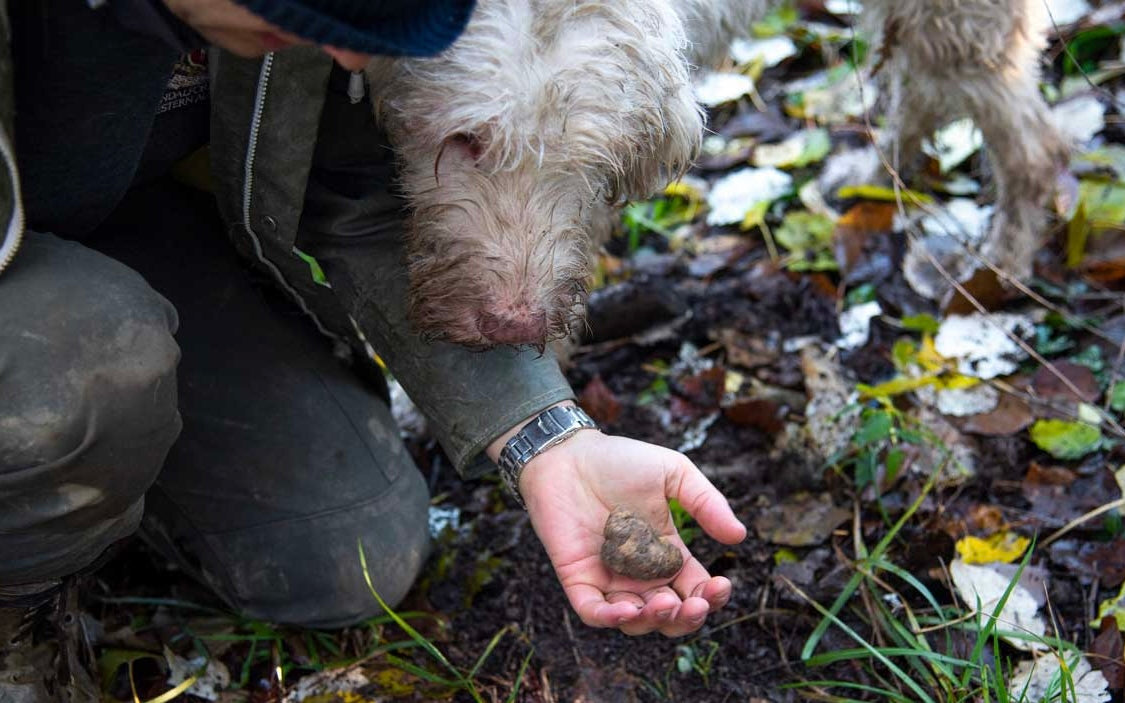
Truffle hunting in Italy relies on trained dogs capable of detecting truffles beneath the soil. This practice connects the natural environment, human knowledge, and seasonal harvesting traditions.
The Lagotto Romagnolo is the breed most closely associated with this role. Originally from Romagna, it is known for locating truffles without disturbing the surrounding ecosystem.
Within the Italian truffle system, the dog is not a lifestyle detail; it is part of the working method that makes traditional truffle hunting possible.
Piedmont
Piedmont, particularly the area around Alba, is internationally associated with the white truffle (Tuber magnatum).
- Region: Northern Italy
- Main type: White truffle
- Season: Autumn
White truffles from this region are highly aromatic and typically used raw as a finishing ingredient.
Compare aromatic behavior in our Black vs White Truffles guide.
Umbria
Umbria is known for a balanced production of both white and black truffles, supported by forested landscapes and long-standing hunting traditions.
- Region: Central Italy
- Main types: Black winter and white truffles
- Season: Multiple seasons
The region plays a key role in both traditional hunting and commercial truffle supply.
Tuscany
Tuscany is associated primarily with black truffles, including both winter and summer varieties.
- Region: Central Italy
- Main types: Black truffles
- Season: Winter and summer
These truffles are commonly used in sauces, oils, and warm dishes where aroma develops gradually through heat and fat.
Explore related products in our truffle oil collection and truffle sauces collection.
Other Italian Regions
Truffles are also found across other areas of Italy, including:
- Molise
- Abruzzo
- Le Marche
- Calabria
- Basilicata
- Sicily
These regions contribute significantly to overall production and seasonal availability.
Seasonality and Regional Identity
Each truffle species follows a natural seasonal cycle closely tied to regional environmental conditions.
- White truffle — autumn
- Black winter truffle — winter
- Summer truffle — warmer months
Seasonality influences not only availability, but also how truffles are used in Italian cuisine.
See our Italian Truffles: A Complete Guide for a broader overview.
Territory and Naming
Names such as “Alba white truffle” reflect historical and cultural associations rather than strict geographic exclusivity.
The same species can exist in multiple regions, but certain areas become reference points due to reputation, environment, and long-standing culinary tradition.
This reinforces the idea of territory as a cultural and environmental system rather than a strictly exclusive designation.
Key Takeaways
- Italian truffles are strongly tied to regional ecosystems
- Different regions specialize in different species
- Seasonality defines availability and culinary use
- Territory reflects cultural tradition as much as geography
Frequently Asked Questions
Where do truffles grow in Italy?
They grow across regions such as Piedmont, Umbria, Tuscany, Abruzzo, Molise, and other parts of central and southern Italy.
Which region is most famous for white truffles?
Piedmont, especially the area around Alba, is most closely associated with white truffles.
Are truffles exclusive to one Italian region?
No. While some regions are strongly associated with specific varieties, the same species can grow across multiple areas.
Why is Alba associated with white truffles?
Because of its historical reputation, favorable environment, and long-standing truffle culture.

