
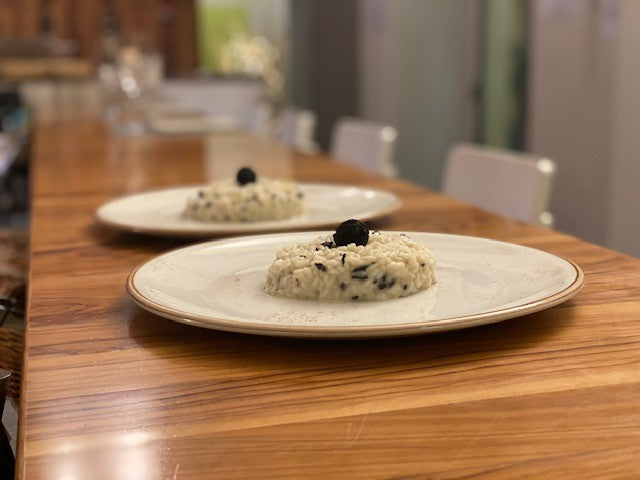
Risotto doesn't fail in the flavor — it fails in the texture. The ingredient that finishes it — white truffle oil, black truffle oil, or fresh shaved truffle — cannot rescue a risotto that has been rushed, overcooked, or finished incorrectly. Technique comes first. Truffle comes after. That is the difference between a good plate and a memorable one. The same principle applies to any quality extra virgin olive oil used as a finishing ingredient — heat is the enemy of aroma.
Ingredients (serves 2)
- 180g Carnaroli rice
- 1 litre high-quality chicken or vegetable stock
- 1 small white onion or 2 shallots, finely diced
- 100ml dry white wine
- 60g cold unsalted butter, cubed
- 40g Parmigiano Reggiano (24-month aged), finely grated
- 20g fresh black or white truffle (when in season), for shaving
- 4–6 drops white or black truffle oil
- Salt to taste
- Extra virgin olive oil for the soffritto
The Rice
Carnaroli over Arborio — always. Carnaroli holds structure, releases starch gradually, and delivers that signature all'onda texture: fluid, glossy, slightly resistant. Arborio is faster, softer, and less precise. If you want restaurant-level risotto, start with the right grain. Williams-Sonoma stocks Carnaroli from Italian producers if you cannot source it locally.
The Stock
Temperature is not optional. Stock must stay at a bare simmer throughout. Adding cold stock kills momentum, disrupts starch release, and breaks the rhythm of the dish. Keep it hot, steady, and ready.
Method
The soffritto. Start low and slow. Warm a wide pan, add olive oil, and cook the shallots until completely soft and translucent — 6 to 8 minutes. No color. This is where depth begins.
Toasting the rice. Add the Carnaroli and stir constantly for 2 minutes. The grains should feel hot and slightly translucent at the edges. This step defines how the rice behaves for the next 20 minutes.
The wine. Add in one pour. Let it evaporate completely. No alcohol, no shortcuts.
Stock — one ladle at a time. Add hot stock gradually, stirring with intention. Not aggressively, not lazily. This is control, not chaos. Wait until each addition is nearly absorbed before the next. Total time: 16–18 minutes. Stay with it.
Doneness. Taste before you think it's ready. The center should resist slightly — not hard, not soft. Remove from heat just before perfection.
The Mantecatura
This is where risotto becomes luxury. Off the heat, add cold butter and Parmigiano together. Beat or shake the pan until it emulsifies into a glossy, flowing texture. It should move like a wave — all'onda. Too thick? Add a touch of hot stock. Rest for 60 seconds before plating. This finishing technique is the same discipline Italians apply to olive oil — everything of quality goes on after the heat is off.
Finishing with Truffle
Truffle oil. Plate first. Then apply 3–4 drops of white or black truffle oil directly on the surface. Never in the pan. The aroma should rise when the dish hits the table — not before. For the full professional technique see how to use truffle oil correctly.
Fresh truffle. Shave directly over the plate — ideally in front of your guests. Thin slices, full coverage. Heat releases aroma instantly. This is not just flavor — it's experience. For exact quantities, see how much truffle per person. For a reference preparation from one of Italy's most recognized culinary institutions, see Eataly's black truffle risotto.
Using both. This is the restaurant move. Oil for depth and persistence. Fresh truffle for intensity and visual impact. Together, they create a layered finish that feels complete. For the full breakdown of when to use each, see white truffle vs black truffle.
Common Mistakes
Cooking truffle oil. You lose everything. Always finish, never cook. The volatile aromatic compounds are destroyed by heat within seconds — the same reason truffles are so expensive is the same reason you must protect what you have paid for.
Over-thick risotto. Truffle needs movement to express itself. If the risotto is rigid, the aroma stays trapped.
Cold plates. Temperature kills aroma. Always serve warm.
Final Note
This is not about complexity — it's about precision. When done correctly, risotto with truffle becomes something else entirely: simple ingredients, executed with control, finished with intent.
Shop white truffle oil for a refined finish, or explore fresh Italian truffles for a true tableside experience.
Discover our full range of truffle oils, truffle sauces, and fresh Italian truffles — and finish your risotto like a professional kitchen.

