
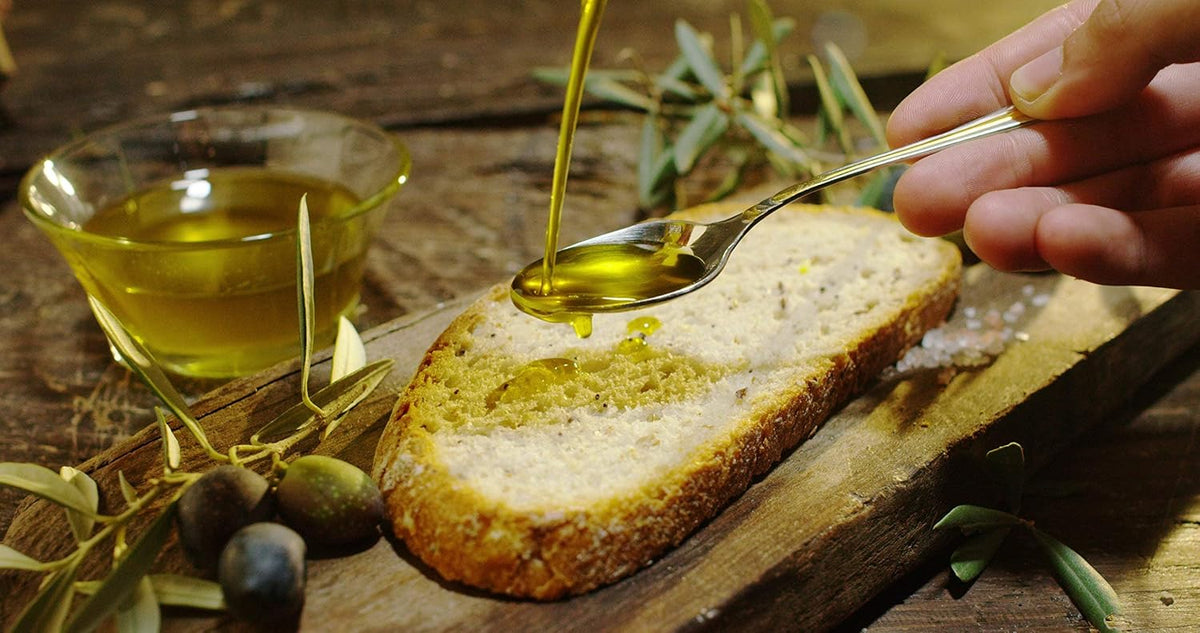
Does olive oil contain cholesterol? No. Olive oil is plant-based and contains no dietary cholesterol.
Can olive oil help lower LDL cholesterol? It may help when it replaces butter, lard, and other fats higher in saturated fat.
Is extra virgin olive oil cholesterol medication? No. Olive oil is food, not medicine, and should not replace treatment prescribed by a healthcare professional.
Is Olive Oil Good for Cholesterol?
Olive oil can be a good choice for cholesterol when it replaces fats higher in saturated fat.
Olive oil consists primarily of monounsaturated fat. The American Heart Association recommends replacing foods high in saturated fat with sources of unsaturated fat, including olive oil.
The important word is replace. Adding olive oil to an unchanged diet is not the same as using it instead of butter, lard, or shortening.
Does Olive Oil Contain Cholesterol?
No. Olive oil contains zero cholesterol.
Dietary cholesterol occurs in animal-derived foods. Olive oil is obtained from the fruit of the olive tree, so it contains no dietary cholesterol.
This does not make olive oil calorie-free. Like every cooking oil, it is energy-dense and should be considered within the complete diet.
How Can Olive Oil Affect LDL and HDL?
LDL and HDL are lipoproteins that transport cholesterol through the blood.
- LDL is commonly called “bad” cholesterol because elevated levels are associated with plaque accumulation in arteries.
- HDL is commonly called “good” cholesterol because it participates in transporting cholesterol away from tissues.
Research suggests that replacing saturated fat with unsaturated fat can support a more favorable blood-lipid profile. However, olive oil does not produce the same result in every person, and it should not be described as automatically lowering LDL or raising HDL.
The FDA describes the evidence concerning high-oleic oils and coronary heart disease as supportive but not conclusive. Its qualified claim requires these oils to replace fats higher in saturated fat without increasing total calories.
Is Extra Virgin Olive Oil Better Than Refined Olive Oil?
Extra virgin and refined olive oils both contain predominantly monounsaturated fat. The principal difference is that extra virgin olive oil is not refined and retains more of the olives’ naturally occurring phenolic compounds.
These compounds contribute to EVOO’s flavor and oxidative stability. Their concentration varies according to olive variety, harvest timing, processing, freshness, and storage.
For more about production and olive-oil grades, read our complete guide to extra virgin olive oil.
How Should You Use Olive Oil Instead of Saturated Fat?
Use olive oil as a replacement rather than simply adding it to meals.
- Use olive oil instead of butter when sautéing vegetables.
- Use olive oil instead of lard or shortening for everyday cooking.
- Replace butter-based dressings and sauces with olive-oil versions.
- Use olive oil for roasting, marinades, and pan-frying.
- Use extra virgin olive oil for dipping and finishing instead of butter.
Olive oil can also replace butter in many recipes that call for melted butter. See our complete olive oil versus butter comparison.
The American Heart Association similarly emphasizes that olive oil’s value depends on the overall dietary pattern and what it replaces.
How Much Olive Oil Should You Consume?
There is no universal therapeutic dose of olive oil for lowering cholesterol.
The FDA’s qualified claim refers to approximately 1½ tablespoons of high-oleic oil daily, but only when it replaces fats higher in saturated fat and does not increase total calorie intake. This is a qualified health claim—not an individualized prescription.
Anyone with high cholesterol should follow the dietary and medical guidance provided by a qualified healthcare professional.
The Bottom Line
Olive oil contains no cholesterol and can be a sensible replacement for fats higher in saturated fat.
Its effect depends on the complete diet, the food it replaces, and individual health factors. More olive oil is not automatically better, and olive oil should not be treated as cholesterol-lowering medication.
When choosing EVOO, check its grade, producer, origin, harvest information, and packaging. Our olive oil buyer’s guide explains what to look for.
Frequently Asked Questions
Does olive oil have cholesterol?
No. Olive oil is obtained from fruit and contains no dietary cholesterol.
Can olive oil lower LDL cholesterol?
Replacing fats higher in saturated fat with olive oil may support lower LDL levels in some people. Simply adding olive oil without replacing another calorie source is not the same dietary change.
Which olive oil is best for cholesterol?
Extra virgin olive oil is unrefined and retains more naturally occurring phenolic compounds than refined olive oil. However, cholesterol management depends on the complete dietary pattern, not solely on the grade of one oil.
Medical note: This article provides general nutrition information and does not replace individualized medical advice, diagnosis, or treatment.

