

Early Harvest · Italian EVOO
Olive Oil
Lumìa · 100% Italian Extra Virgin Olive Oil
$55.00
Shop Lumìa Olive OilLumìa at a Glance
- Origin
- Product of Italy
- Harvest
- Fall 2025
- Extraction
- Cold extracted
- Polyphenols
- 564 mg/kg (2025 harvest, measured at milling)
- Free acidity
- <0.25%
- Bottle
- 500 mL dark glass
- Use
- Cooking and finishing
Our Olive Oils
One Italian extra virgin olive oil for everyday cooking and finishing, and two infused extra virgin olive oils for finishing.
-
Extra Virgin Olive Oil
Lumìa · 100% Italian Extra Virgin Olive Oil
Early harvest olives, cold extracted in Italy. One ingredient, in a 500 mL dark glass bottle for cooking and finishing.
$55.00
Shop Lumìa -
Infused Olive Oil
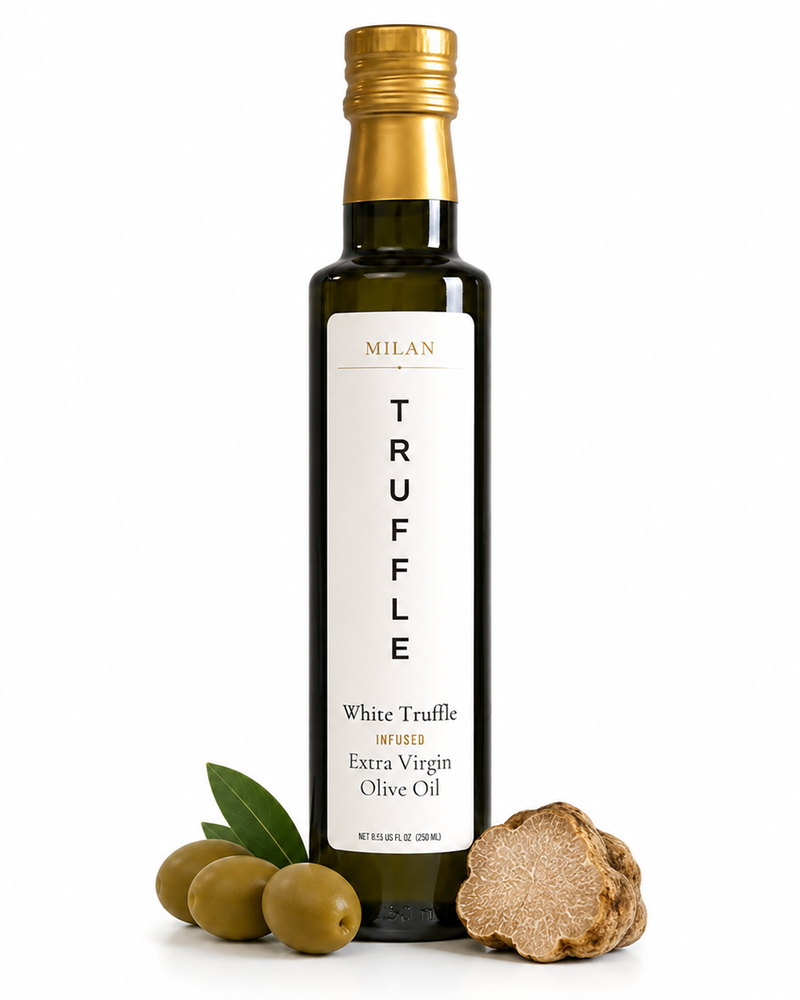
White Truffle Infused Extra Virgin Olive Oil
Extra virgin olive oil with natural white truffle aroma. A 250 mL finishing oil, used a few drops at a time.
$45.00
Shop White Truffle -
Infused Olive Oil
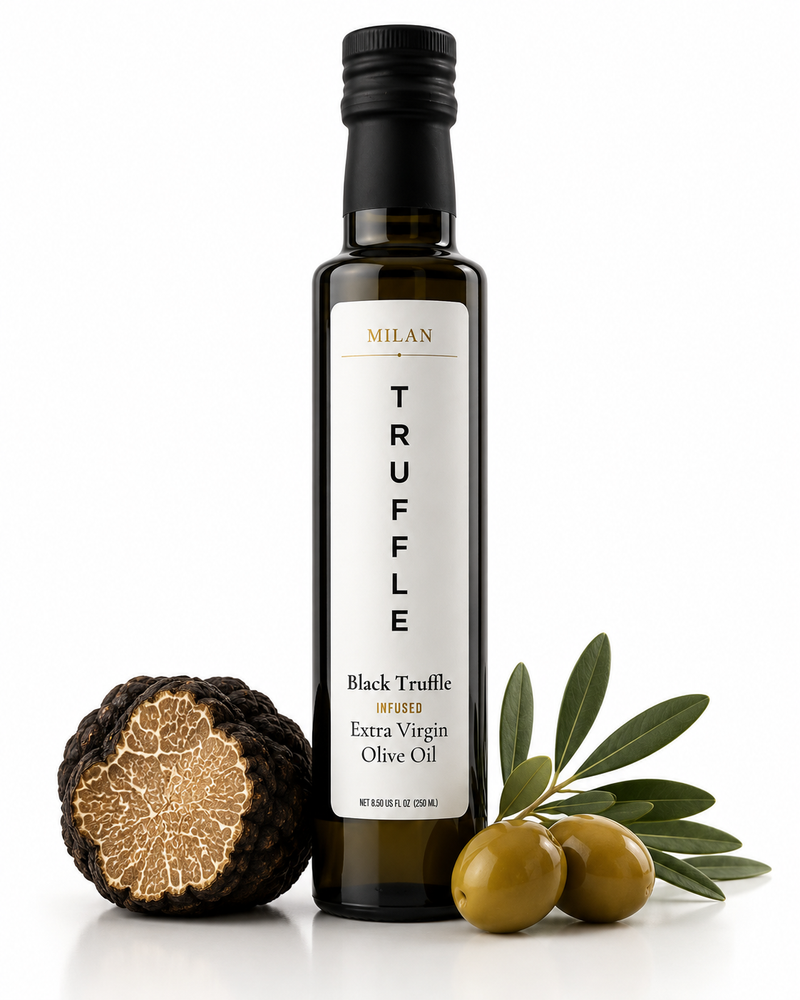
Black Truffle Infused Extra Virgin Olive Oil
Extra virgin olive oil with natural black truffle aroma. A 250 mL finishing oil for warm, rich dishes.
$38.99
Shop Black Truffle

What Is Olive Oil?
What is olive oil? Olive oil, the natural oil extracted from the fruit of the olive tree (Olea europaea), is a traditional Mediterranean food used for cooking, dressing and finishing dishes. Unlike seed oils, olive oil comes from a fruit, and its quality depends on the condition of the olives and how quickly and carefully they are processed after harvest.
What is olive oil made of? Most of the fat in olive oil is monounsaturated, chiefly oleic acid, the fatty acid that makes up most of its fat content. Extra virgin olive oil also retains polyphenols, natural plant compounds associated with the bitterness and peppery sensation of fresh olive oil. Their concentration varies with olive variety, harvest timing and extraction method.
4 Grades of Olive Oil
What are the four main grades of olive oil? Olive oil grades, classifications based on extraction method, chemical characteristics and sensory quality, distinguish extra virgin, virgin, refined and olive pomace oils. These categories differ in processing, flavor and composition.
- Extra virgin olive oil, the highest grade of virgin olive oil, is obtained directly from olives by mechanical processes, without refining. It must have free acidity, a measure of how intact the fruit was, of no more than 0.8%, expressed as oleic acid, and it must meet chemical and sensory standards, including the absence of sensory defects.
- Virgin olive oil, an unrefined oil obtained through mechanical extraction, permits higher free acidity and some sensory defects compared with extra virgin olive oil.
- Refined olive oil, olive oil processed to remove undesirable flavors and other defects, has a milder sensory profile. Retail products labeled simply "olive oil", "pure olive oil" or "light olive oil" generally contain refined olive oil blended with virgin olive oil. "Light" refers to flavor or color, not reduced calories.
- Olive pomace oil, oil produced from pomace, the paste of skins and pits left after the first extraction, undergoes additional processing and refining. It is a separate commercial category from virgin and extra virgin olive oil.
For a closer look at these classifications, read how Italian olive oil is classified.
How Olive Oil Is Made
How is olive oil made? Extra virgin olive oil, the highest grade of olive oil obtained directly from olives without refining, is produced through mechanical extraction. The process involves harvesting, milling, malaxation, extraction and storage. Each step influences the oil's freshness, aroma and flavor.
- Harvest. Olive harvesting, the collection of olives from the tree, is the first step in olive oil production. Early harvesting, picking olives before full ripeness, generally produces less oil per olive but can yield higher polyphenol concentrations and greener, more bitter and peppery flavors.
- Milling. Olive milling, the process of crushing washed olives into a paste, breaks down the fruit and releases droplets of oil. The olives are typically crushed with their pits.
- Malaxation. Malaxation, the slow mixing of crushed olive paste, allows small oil droplets to combine into larger ones, making separation easier. Mixing time and temperature influence the oil's aroma and composition.
- Extraction. Mechanical extraction, the separation of olive oil from water and solids without chemical solvents, commonly uses a centrifuge, a machine that separates materials by spinning. Cold extraction, a process carried out below 27 °C (81 °F) under European labeling rules, helps retain the oil's characteristic aromas and natural compounds.
- Storage and bottling. Olive oil storage, the protection of extracted oil before bottling, limits exposure to oxygen, heat and light. Proper storage helps preserve freshness and flavor.
Olive Oil and Health
Is olive oil good for your health? Olive oil, a source of monounsaturated fats and the principal added fat in the traditional Mediterranean diet, can be part of a healthy eating pattern. Its predominant fatty acid is oleic acid, a monounsaturated fat commonly studied in relation to cardiovascular health.
Why are extra virgin olive oil polyphenols important? Polyphenols, naturally occurring plant compounds retained in extra virgin olive oil, contribute to its bitterness, pungency and antioxidant properties. Their concentrations depend on olive variety, harvest conditions, processing and storage. Extra virgin olive oil generally retains more of these compounds than refined olive oil.
The Mediterranean diet, an eating pattern emphasizing vegetables, fruits, legumes, whole grains and olive oil, has been extensively studied in nutrition research. Olive oil is one component of this broader dietary pattern, not a substitute for an overall balanced diet.
Research on olive oil is ongoing, and this information is not medical advice. For a closer look at the evidence, read our article on extra virgin olive oil benefits.
Olive Oil Flavors: From Mild to Robust
What does olive oil taste like? Extra virgin olive oil, the unrefined oil obtained directly from olives through mechanical extraction, can taste mild and fruity, green and bitter, or bold and peppery. Its flavor depends on olive variety, growing conditions, ripeness at harvest and extraction methods.
What gives olive oil its flavor? Olive oil flavor, the combination of aromas, bitterness and pungency perceived during tasting, develops from natural compounds in the olive fruit. Polyphenols, plant compounds naturally present in extra virgin olive oil, contribute to bitterness and the peppery sensation associated with many fresh oils.
Olive oil tasters generally describe three broad flavor styles:
- Mild and fruity. Mild olive oil, an oil with gentle bitterness and pungency, often has soft, rounded aromas reminiscent of ripe fruit. These oils complement salads, delicate fish and fresh vegetables without overwhelming their flavors.
- Green and bitter. Green olive oil, an oil characterized by aromas reminiscent of fresh vegetation, may suggest freshly cut grass, green apple, artichoke or leafy herbs. Bitterness, a positive sensory attribute of extra virgin olive oil, is associated with naturally occurring phenolic compounds and is often more pronounced in early-harvest oils.
- Peppery and robust. Robust olive oil, an oil with pronounced bitterness and pungency, can produce a peppery sensation at the back of the throat. Pungency, a characteristic sensory attribute of virgin olive oil, is associated in part with oleocanthal, a naturally occurring phenolic compound. These oils complement beans, pasta, grilled vegetables and hearty dishes.
What is flavored olive oil? Flavored olive oil, olive oil enhanced with an added aroma or flavoring ingredient, differs from the natural flavor of the olives themselves. Infused and flavored oils can introduce distinctive aromas to prepared dishes.
5 Ways to Use Olive Oil
How can you use olive oil? Olive oil, a versatile culinary fat used throughout Mediterranean cooking, works for sautéing, roasting, salad dressings, dipping and finishing dishes. Extra virgin olive oil can be used both during cooking and after food is prepared.
- Sautéing. Sautéing, cooking food in a small amount of fat over direct heat, works well with extra virgin olive oil for vegetables, fish and everyday stovetop dishes. Its smoke point, the temperature at which oil begins producing visible smoke, varies with oil quality and composition and is commonly cited around 350–410 °F.
- Roasting. Roasting, cooking food with dry heat in an oven, allows olive oil to coat vegetables, potatoes or chicken and help distribute heat across their surfaces. Toss ingredients with olive oil before placing them in the oven.
- Dressings. Olive oil dressing, a mixture of olive oil with an acidic ingredient such as vinegar or lemon juice, adds flavor and texture to salads, vegetables and grain bowls. Whisk the ingredients together before serving.
- Dipping. Olive oil dipping, serving olive oil as an accompaniment to bread, highlights the oil's natural aroma, fruitiness, bitterness and pungency. Serve in a shallow dish, alone or with a pinch of salt.
- Finishing. Finishing with olive oil, adding oil to food immediately before serving, brings its aroma and flavor directly to the finished dish. Drizzle extra virgin olive oil over soups, pasta, grilled fish, beans or vegetables just before serving.
How to Choose a Good Olive Oil: 7 Checks
How do you choose a good olive oil? Quality olive oil, oil produced from sound olives and handled to preserve its freshness and sensory characteristics, can be evaluated through harvest information, extraction methods, chemical measurements, origin and packaging. These seven checks help buyers identify meaningful quality indicators rather than relying on price or appearance alone.
- Harvest information is disclosed, not only a best-by date, so you know how fresh the oil is.
- Free acidity is disclosed where lab data exists.
- Polyphenol results identify when they were measured, because polyphenols decline over time.
- The package protects the oil from light, with dark glass or a tin.
- The country of origin is explicit.
- The extraction method is stated.
- The format suits how fast the oil will be used, since an opened bottle loses freshness over time.
For a step-by-step buying guide, read how to choose the best Italian olive oil.
How to Store Olive Oil
How should you store olive oil? Olive oil storage, the practice of protecting oil from heat, light and oxygen, helps preserve freshness, aroma and flavor. Keep the bottle tightly closed in a cool, dark cupboard away from the stove. For the best sensory quality, use an opened bottle within a few months.
Does olive oil need refrigeration? Olive oil, a liquid fat that can become cloudy or partially solidify at low temperatures, generally does not need refrigeration. A cool, dark cupboard is suitable for everyday storage.
For more detail, read how to store olive oil.
Lumìa: Our Italian Extra Virgin Olive Oil
What is Lumìa? Lumìa, Milan Truffle's 100% Italian extra virgin olive oil, is an early-harvest, cold-extracted olive oil made from Italian olives in Italy. Presented in a 500 mL dark-glass bottle, it is selected by an olive-growing family with roots in Palma di Montechiaro and Pozzallo.
What makes Lumìa distinctive? Lumìa’s published laboratory measurements, 564 mg/kg total polyphenols measured at milling and a peroxide value of 3.00 meq O₂/kg, describe its 2025 harvest. Its free acidity specification is below 0.25%.
- Origin: product of Italy.
- Harvest: early harvest, Fall 2025 season.
- Extraction: cold extracted.
- Total polyphenols: 564 mg/kg (2025 harvest, measured at milling).
- Free acidity: <0.25%.
- Peroxide value: 3.00 meq O₂/kg (2025 harvest analysis).
- Bottle: 500 mL (17 fl oz) dark glass.
- Ingredients: one, extra virgin olive oil.
How can you use Lumìa? Lumìa, a 100% Italian extra virgin olive oil suitable for everyday cooking and finishing, can be used for sautéing vegetables, preparing dressings, roasting ingredients and adding flavor to prepared dishes.
Explore the product details and purchase options: Shop Lumìa 100% Italian extra virgin olive oil, or browse our Italian olive oil collection.
Olive Oil FAQ
What is the difference between olive oil and extra virgin olive oil?
Extra virgin olive oil, the highest grade of virgin olive oil obtained directly from olives through mechanical extraction, is unrefined and must meet strict chemical and sensory standards. Olive oil sold simply as "olive oil", a retail category generally made by blending refined olive oil with virgin olive oil, has a milder flavor and typically contains fewer natural polyphenols.
Can you cook and fry with olive oil?
Yes, you can cook and fry with olive oil. Extra virgin olive oil, an unrefined cooking oil rich in monounsaturated fats, is suitable for sautéing, roasting and shallow frying at typical home-cooking temperatures. Its smoke point, the temperature at which oil begins to produce visible smoke, varies with quality and composition and is commonly cited around 350–410 °F. Avoid overheating the oil until it smokes.
Is olive oil healthy?
Olive oil can be part of a healthy diet. Olive oil, a source of monounsaturated fats and a central ingredient in the traditional Mediterranean diet, contains oleic acid, its predominant fatty acid. Extra virgin olive oil also retains polyphenols, naturally occurring plant compounds with antioxidant properties. Health outcomes depend on the overall dietary pattern, not olive oil alone.
Does olive oil go bad?
Yes, olive oil can become rancid over time. Oxidation, the chemical reaction that gradually degrades oil through exposure to oxygen, is accelerated by heat and light. Rancid olive oil may develop stale or unpleasant odors and flavors. Store the bottle tightly closed in a cool, dark place and use it within a few months of opening for the best flavor.
What is infused olive oil?
Infused olive oil, olive oil flavored with added ingredients or aromas, introduces flavors beyond those naturally present in the olives. Truffle-infused olive oil, olive oil enhanced with truffle aroma, is commonly used to add distinctive flavor to prepared dishes. Our White Truffle Infused Extra Virgin Olive Oil and Black Truffle Infused Extra Virgin Olive Oil combine extra virgin olive oil with natural truffle aroma and are intended for finishing rather than cooking.
Explore more practical explanations in our extra virgin olive oil guide.
Discover Lumìa Italian Extra Virgin Olive Oil
Early harvest. Cold extracted in Italy. One ingredient.
$55.00
Shop Lumìa Olive Oil