
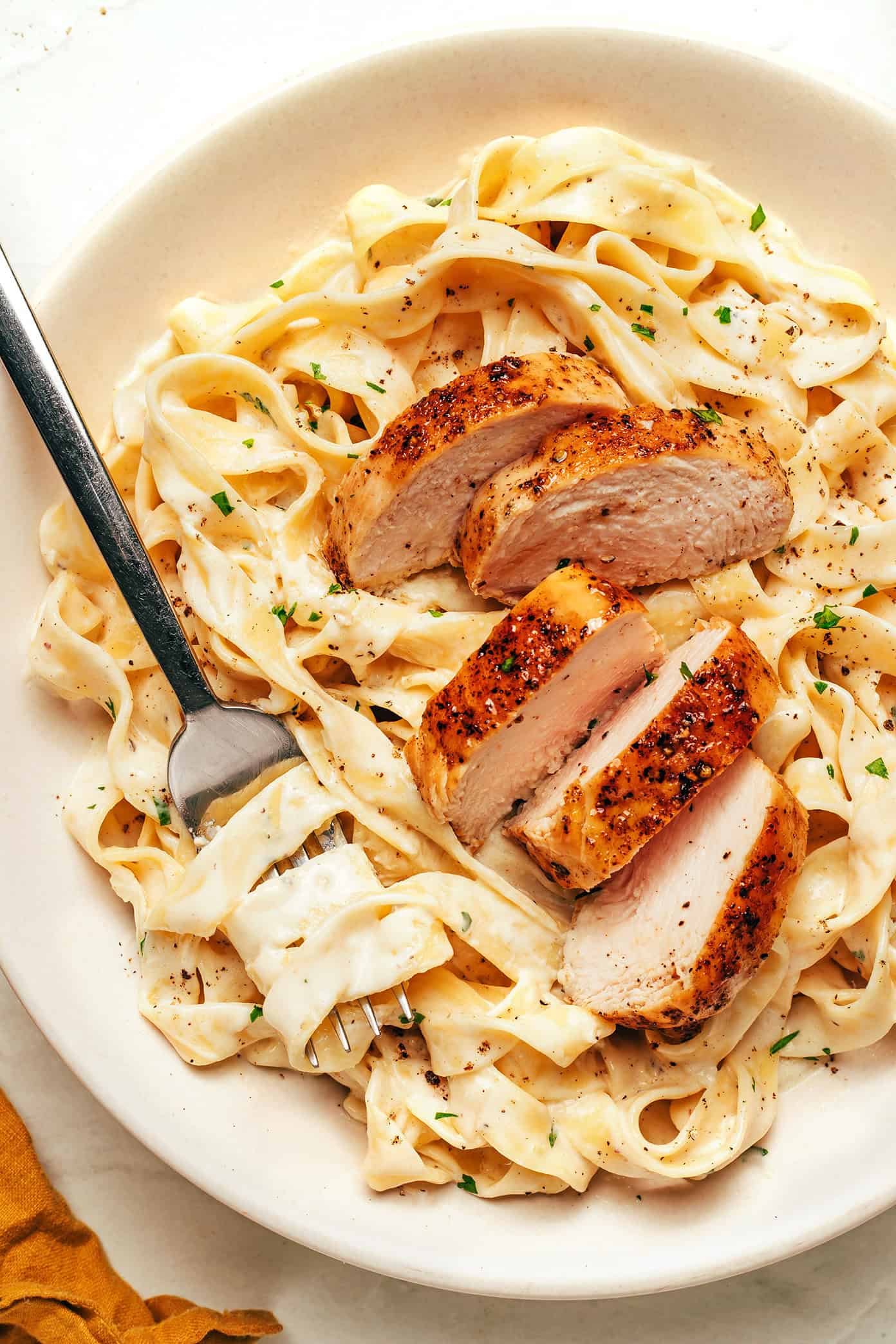
Fettuccine Alfredo is one of the world’s most recognizable pasta dishes, and one of its most misunderstood. Outside Italy, Alfredo is often associated with heavy cream, garlic, and cream-based sauces. In Rome, however, the authentic preparation is remarkably simple: fresh fettuccine, butter, Parmigiano Reggiano, and starchy pasta water transformed into a silky sauce through careful emulsification.
Its story is equally fascinating. What began as a simple family meal in early twentieth-century Rome became an international culinary icon after two Hollywood stars introduced it to American audiences. Over time, the dish evolved into the cream-based Alfredo sauce now familiar throughout the United States.
This guide explores the authentic history of Fettuccine Alfredo, explains how the original Roman preparation differs from the American adaptation, and demonstrates how a handful of exceptional ingredients can create one of Italy’s most celebrated pasta dishes.
What Is Fettuccine Alfredo?
Fettuccine Alfredo is a traditional Roman pasta dish prepared with fresh fettuccine, butter, Parmigiano Reggiano, and starchy pasta water. Rather than relying on cream, the sauce is created by emulsifying butter and finely grated cheese with the starch released by freshly cooked pasta. The result is a smooth, velvety coating that clings naturally to every strand of fettuccine.
Although the dish inspired the cream-based Alfredo sauces commonly served throughout North America, the authentic Roman version remains remarkably restrained. Its success depends not on additional ingredients but on quality products, proper timing, and careful technique.
Recipe at a Glance
- Prep Time: 10 minutes
- Cook Time: 15 minutes
- Total Time: 25 minutes
- Yield: 4 servings
- Difficulty: Intermediate
- Course: Main Course
- Cuisine: Roman, Italian
Who Was Alfredo Di Lelio?
Alfredo Di Lelio was a Roman restaurateur whose name became permanently associated with one of the world’s most famous pasta dishes.
According to the Di Lelio family, Alfredo first prepared the dish in 1908 for his wife, Ines, after the birth of their first son. Wanting to prepare something nourishing and easy to eat, he served freshly made fettuccine dressed with generous amounts of butter and freshly grated Parmigiano Reggiano.
The meal proved so successful within the family that Alfredo later introduced it at his mother’s trattoria in Piazza Rosa before eventually serving it at the restaurant he opened on Via della Scrofa in 1914. There, the dish became the restaurant’s signature specialty.
Did Alfredo Really Invent Fettuccine Alfredo?
The answer is both yes and no.
Alfredo Di Lelio did not invent the combination of pasta, butter, and Parmigiano Reggiano. Italians had been enjoying pasta dressed with butter and cheese for centuries, and similar preparations appear throughout historical Italian cookbooks.
His contribution was something different. Alfredo transformed a humble family comfort dish into an internationally recognized restaurant specialty through exceptional execution, generous ingredients, and an elegant tableside presentation that became part of the dining experience.
In many ways, Alfredo did not invent the ingredients; he created the legend that carried them around the world.
How Hollywood Made Alfredo Famous
Fettuccine Alfredo might have remained a celebrated Roman specialty had it not been for two visitors from Hollywood.
During the 1920s, newlyweds Douglas Fairbanks and Mary Pickford—among the most famous actors of the silent film era—visited Alfredo’s restaurant while traveling through Rome. They were captivated by both the simplicity of the dish and Alfredo’s theatrical preparation at the table.
The couple returned to the restaurant several years later and presented Alfredo with a pair of gold serving utensils engraved:
"To Alfredo, the King of the Noodles."
The endorsement of two of Hollywood’s biggest stars transformed Fettuccine Alfredo into an international culinary curiosity. As American travelers returned home describing the dish, restaurants across the United States began introducing their own versions, eventually giving rise to the cream-based Alfredo sauce familiar today.
Traditional Fettuccine Alfredo vs. American Alfredo
Although they share a common origin, authentic Roman Fettuccine Alfredo and modern American Alfredo differ substantially in both ingredients and technique.
The traditional Roman preparation uses only fresh fettuccine, butter, Parmigiano Reggiano, and starchy pasta water. The creamy texture comes entirely from emulsification—the process of combining butter, cheese, and pasta water into a smooth sauce.
The American adaptation developed over time as cooks attempted to recreate the dish using different ingredients and without relying on the original emulsification technique. Heavy cream gradually became common because it produced a thick, creamy sauce more consistently, even when the butter and cheese did not fully emulsify.
Today, many American versions also include garlic, parsley, chicken, shrimp, mushrooms, or additional cheeses. These variations have become popular in their own right, but they represent an evolution of the original Roman recipe rather than the traditional preparation itself.
Understanding the distinction allows cooks to appreciate both versions for what they are: one a lesson in simplicity and technique, the other an Italian-American adaptation shaped by different ingredients and culinary traditions.
Why This Recipe Works
Authentic Fettuccine Alfredo succeeds because it relies on technique rather than complexity. Instead of relying on heavy cream or multiple cheeses, the original Roman preparation allows four simple ingredients to work together through careful timing and proper emulsification.
Fresh fettuccine releases starch that helps naturally thicken and emulsify the sauce. Butter contributes richness without becoming greasy, while freshly grated Parmigiano Reggiano melts into the pasta water to create a smooth, glossy coating. When prepared correctly, every strand of pasta is evenly covered without pools of sauce collecting on the plate.
The result is a dish that feels rich while remaining remarkably light. Every ingredient has a purpose, and none overwhelms the others.
Key Takeaways
- Authentic Fettuccine Alfredo originated in Rome.
- The traditional recipe contains no heavy cream or garlic.
- The sauce is created by emulsifying butter, Parmigiano Reggiano, and starchy pasta water.
- Freshly grated Parmigiano Reggiano is essential for proper texture.
- High-quality ingredients matter because the recipe contains so few components.
- Proper timing is more important than complicated technique.
Ingredients
- Fresh fettuccine
- Unsalted butter
- Parmigiano Reggiano
- Kosher salt
- Reserved pasta water
- Freshly ground black pepper, optional
Ingredient Notes
Fresh Fettuccine
Fresh egg pasta is the traditional choice. Its delicate texture and higher starch content help create the silky emulsion that defines authentic Fettuccine Alfredo. Dried fettuccine can be used, but the finished dish will have a slightly different texture.
Butter
Use high-quality unsalted butter with a rich dairy flavor. Because butter is one of only two primary flavoring ingredients, its quality has a noticeable impact on the finished dish. Traditional Alfredo depends on butter for both flavor and texture. European-style butters with a higher butterfat content generally produce a richer, smoother emulsion than lower-fat alternatives.
Parmigiano Reggiano
Always use authentic Parmigiano Reggiano and grate it immediately before cooking. Freshly grated cheese melts smoothly into the pasta water, while pre-grated cheeses often contain anti-caking agents that interfere with emulsification.
Parmigiano Reggiano aged between 24 and 36 months provides a balanced combination of sweetness, nuttiness, and savory depth that complements the butter without overwhelming it.
Pasta Water
Pasta water is not simply a cooking by-product. The starch dissolved in the water binds the butter and cheese together into a naturally creamy sauce. Reserve more pasta water than you think you will need, as small additions allow you to adjust the consistency throughout the final mixing.
Salt
Salt the pasta water generously. Because Parmigiano Reggiano already contributes considerable saltiness, additional seasoning is often unnecessary after the sauce is finished.
Why Ingredient Quality Matters
Few Italian dishes demonstrate the importance of ingredient quality more clearly than Fettuccine Alfredo. With only a handful of ingredients, there is nothing to hide imperfections. Every choice is visible in the finished dish.
Fresh pasta contributes delicate texture and releases the starch needed for a proper emulsion. Authentic Parmigiano Reggiano develops complex savory flavors during its long aging process while melting smoothly into the sauce. High-quality butter provides richness without becoming oily or heavy.
Even the pasta water plays an essential role. The starch it contains transforms separate ingredients into a cohesive sauce without requiring cream or flour.
Because the ingredient list is so short, substitutions produce noticeable differences. Pre-grated cheeses, lower-quality butter, or insufficiently starchy pasta water can prevent the sauce from developing its characteristic smooth consistency.
You may also notice a classic Italian ingredient that is deliberately absent: olive oil. Authentic Fettuccine Alfredo is a butter emulsion, not an oil-based sauce, so extra virgin olive oil has no place in the traditional preparation—its fat behaves differently from butter and would work against the delicate cheese-and-starch emulsion. Knowing when not to reach for olive oil is part of cooking well. To understand where it does belong, and how to judge quality, see our guides on how Italian olive oil is classified and how to choose real olive oil.
Authentic Fettuccine Alfredo demonstrates one of the defining principles of Italian cooking: extraordinary results come from exceptional ingredients and careful technique, not from adding more components. Simplicity demands precision. When every ingredient performs its role, the finished dish achieves an elegance that no amount of extra ingredients can improve.
Authentic Fettuccine Alfredo Recipe
This traditional Roman recipe produces silky fresh fettuccine coated in a naturally creamy emulsion of butter, Parmigiano Reggiano, and starchy pasta water. No heavy cream, garlic, or flour is required.
Ingredients with Quantities
- 1 pound (450 g) fresh fettuccine
- 8 tablespoons (115 g) unsalted butter
- 2 cups (200 g) freshly grated Parmigiano Reggiano
- Kosher salt, for the pasta water
- 1 to 1½ cups reserved pasta water
- Freshly ground black pepper, optional
How to Make Authentic Fettuccine Alfredo
Step 1: Boil the Pasta
Bring a large pot of generously salted water to a rolling boil. Add the fresh fettuccine and cook until al dente according to the pasta’s thickness, usually 2 to 3 minutes for fresh pasta. Before draining, reserve at least 1½ cups of the starchy cooking water.
Step 2: Prepare the Butter
While the pasta cooks, place the butter into a large warm serving bowl. The residual heat from the freshly cooked pasta will begin softening the butter without browning it.
Step 3: Add the Pasta
Transfer the drained fettuccine directly to the butter. Toss immediately so every strand becomes lightly coated.
Step 4: Build the Emulsion
Add the freshly grated Parmigiano Reggiano in several additions, alternating with small amounts of the reserved pasta water while continuously tossing the pasta. The cheese should melt gradually as the butter and starch combine into a smooth, glossy sauce.
Add only enough pasta water to maintain a silky consistency. The sauce should coat the pasta rather than pool at the bottom of the bowl.
Step 5: Adjust and Serve
Continue tossing until every strand is evenly coated. Taste and adjust only if necessary. Freshly ground black pepper may be added before serving, although many traditional Roman preparations omit it.
Serve immediately while the sauce is smooth, creamy, and glossy.
Why This Technique Works
The defining characteristic of authentic Fettuccine Alfredo is not the ingredients themselves, but the way they interact.
When hot pasta is tossed with butter, freshly grated Parmigiano Reggiano, and starchy pasta water, thousands of microscopic droplets of butter become suspended within the water and cheese proteins. This process, known as emulsification, creates a naturally creamy sauce without requiring heavy cream or flour.
The starch released by the pasta acts as a natural stabilizer, helping the butter and cheese remain blended rather than separating. Continuous tossing distributes the ingredients evenly while gentle heat allows the cheese to melt without becoming grainy.
If the mixture becomes too hot, the cheese can seize and form clumps. If it becomes too cool, the butter may solidify before the emulsion fully develops. Maintaining the proper temperature is therefore just as important as using quality ingredients.
The result is a sauce that feels rich yet surprisingly light because its creaminess comes from technique rather than additional fat.
Chef’s Tips
- Grate Parmigiano Reggiano immediately before cooking for the smoothest texture.
- Reserve more pasta water than you think you’ll need.
- Add the cheese gradually rather than all at once.
- Toss continuously while building the sauce.
- If the sauce becomes too thick, loosen it with small additions of warm pasta water.
- If the sauce appears thin, continue tossing rather than adding more cheese immediately.
- Serve immediately. Fettuccine Alfredo is at its best the moment the emulsion comes together.
Common Mistakes
- Using pre-grated Parmesan instead of freshly grated Parmigiano Reggiano.
- Adding heavy cream to the authentic recipe.
- Discarding the pasta water before finishing the sauce.
- Cooking over excessive heat, causing the cheese to clump.
- Adding all of the cheese at once.
- Using cold butter directly from the refrigerator.
- Allowing the finished pasta to sit before serving.
Variations
American Fettuccine Alfredo
The American adaptation commonly incorporates heavy cream to produce a thicker, more stable sauce. Garlic, parsley, and additional cheeses are also frequently added. Although inspired by the Roman original, it represents a distinct Italian-American interpretation rather than the traditional recipe.
Chicken Alfredo
Grilled or sautéed chicken breast is one of the most popular American additions. It transforms the pasta into a complete main course while preserving the familiar creamy character of the sauce.
Shrimp Alfredo
Sautéed shrimp pairs naturally with Alfredo sauce and provides a lighter seafood variation that has become common in North American restaurants.
Truffle Fettuccine Alfredo
For a modern interpretation, prepare the authentic Roman recipe exactly as written. After plating, finish the pasta with a light drizzle of Milan Truffle White Truffle Infused Extra Virgin Olive Oil. Used sparingly as a finishing ingredient, the truffle aroma complements the butter and Parmigiano Reggiano without altering the traditional emulsion.
This variation is intentionally presented as a contemporary interpretation, allowing the authentic Roman preparation to remain unchanged while offering an elegant alternative for special occasions.
What to Serve with Fettuccine Alfredo
Salads
- Simple arugula salad with lemon.
- Mixed greens with a light vinaigrette.
- Classic Caesar salad.
Vegetables
- Roasted asparagus.
- Sautéed spinach.
- Grilled zucchini.
- Roasted broccoli.
Bread
- Rustic Italian bread.
- Warm focaccia.
- Lightly toasted ciabatta.
Because authentic Fettuccine Alfredo is rich yet delicate, side dishes should remain simple and allow the pasta to remain the centerpiece of the meal.
For more from the Milan World kitchen, explore our Zuppa Toscana and Chicken Parmesan recipes.
Can Fettuccine Alfredo Be Made Ahead?
Authentic Fettuccine Alfredo is best enjoyed immediately after preparation. The sauce depends on a delicate emulsion of butter, Parmigiano Reggiano, and starchy pasta water that begins to thicken as it cools.
If you need to prepare part of the meal in advance, make the fresh pasta ahead of time and grate the Parmigiano Reggiano before cooking. The final emulsification should always be performed just before serving to achieve the characteristic silky texture.
Unlike many cream-based sauces, traditional Fettuccine Alfredo is not intended to sit on a steam table or remain warm for extended periods.
Storage & Reheating
Refrigeration
Store leftovers in an airtight container in the refrigerator for up to 2 days. Because the sauce contains no stabilizers or cream, its texture will naturally firm as it cools.
Freezing
Freezing is generally not recommended. Butter emulsions often separate after thawing, producing a grainy texture that cannot be fully restored.
Reheating
Reheat gently over low heat in a skillet while adding small amounts of water or milk to loosen the sauce. Stir continuously to help rebuild the emulsion. Avoid high heat, which can cause the cheese to separate and become grainy.
Although leftovers remain enjoyable, authentic Fettuccine Alfredo is always at its finest when served immediately after preparation.
Frequently Asked Questions
Is authentic Fettuccine Alfredo made with heavy cream?
No. Traditional Roman Fettuccine Alfredo is prepared with fresh fettuccine, butter, Parmigiano Reggiano, and starchy pasta water. The creamy texture comes from emulsification rather than heavy cream.
Why is my Alfredo sauce grainy instead of smooth?
Graininess usually occurs when the cheese is added too quickly or the mixture becomes too hot. Freshly grated Parmigiano Reggiano, gradual incorporation, and gentle heat help create a smooth emulsion.
Can I use pre-grated Parmesan cheese?
Freshly grated Parmigiano Reggiano is strongly recommended. Many pre-grated cheeses contain anti-caking agents that interfere with melting and can prevent the sauce from becoming silky.
Can I add chicken or shrimp?
Yes. Chicken Alfredo and Shrimp Alfredo are popular Italian-American adaptations. They are delicious variations, although they differ from the traditional Roman preparation.
Can I make Truffle Fettuccine Alfredo?
Yes. Prepare the authentic Roman recipe first, then finish the plated pasta with a light drizzle of Milan Truffle White Truffle Infused Extra Virgin Olive Oil. Used as a finishing ingredient, it complements the butter and Parmigiano Reggiano while preserving the integrity of the original recipe.
Sources
- Alfredo alla Scrofa (Rome)
- Il Vero Alfredo
- Gambero Rosso — The story of the inventor of fettuccine all'Alfredo
- Luca Cesari — The Discovery of Pasta: A History in Ten Dishes
- Consorzio del Formaggio Parmigiano Reggiano

