
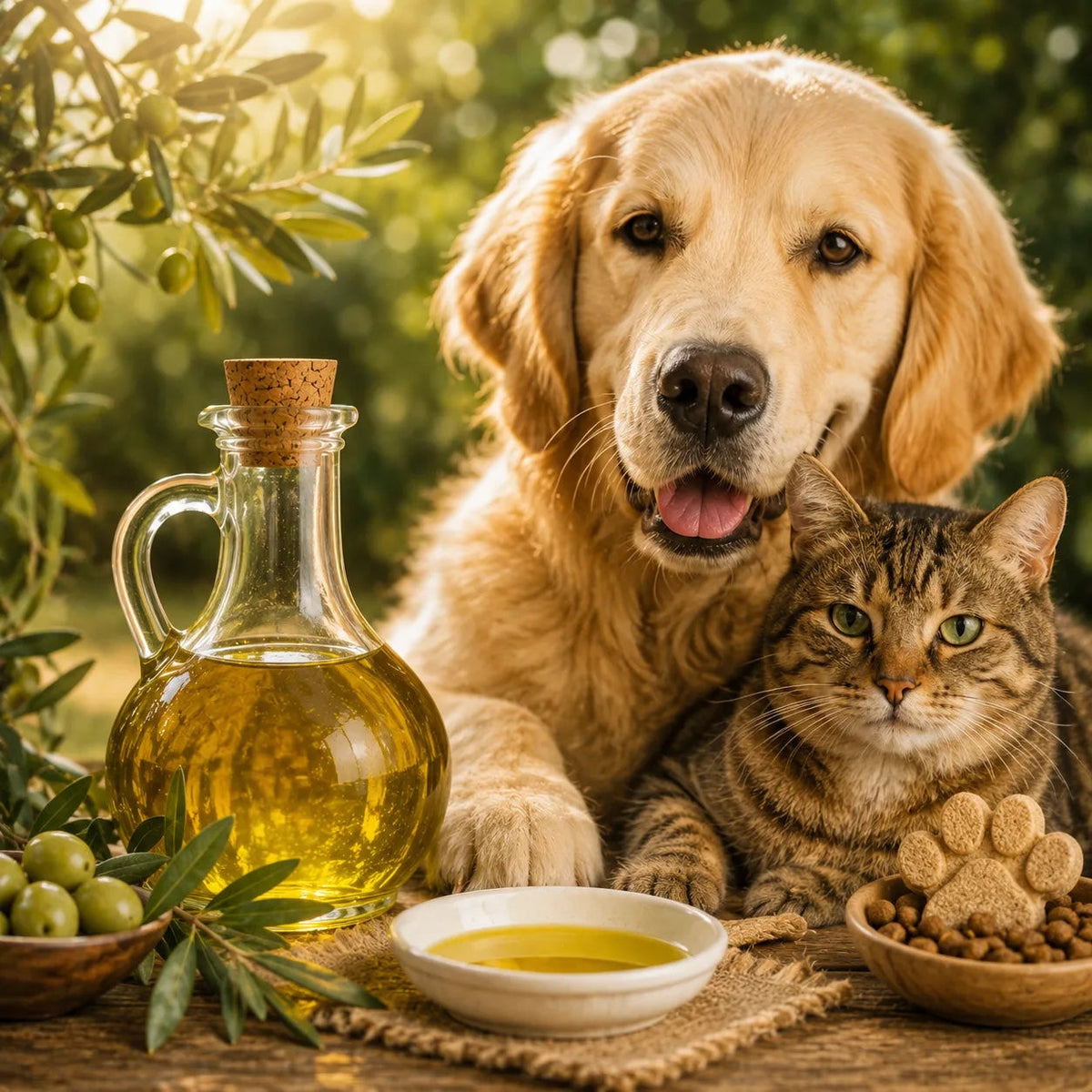
Chocolate, raisins and several other foods people enjoy can be dangerous for dogs. So if your dog licked olive oil from a plate—or you are considering adding it to the food bowl—it is reasonable to ask: is olive oil good for dogs?
Yes—with important limits. Plain olive oil is not generally treated as a canine poison, and a small accidental lick is unlikely to cause a problem in an otherwise healthy dog. In some cases, a veterinarian may approve a measured amount as part of an individual feeding plan. But dogs do not automatically need olive oil, and routinely adding it to food has not been proven to deliver the long list of benefits often promised online.
Yes, this Mediterranean elixir isn’t just fit for humans—dogs can enjoy it, too, in moderation. In fact, adding a little bit of this oil to your dog’s diet could offer your tail-wagging pal some impressive health benefits, such as reduced itching from allergies and a shinier coat. That possibility needs qualification: canine allergies require proper diagnosis, and evidence specific to ordinary olive oil as a treatment for itching or coat problems remains limited.
The useful answer therefore sits between enthusiasm and alarm. Olive oil provides fat, oleic acid and naturally occurring compounds, while also providing concentrated calories. The dog’s size, normal diet, body condition and medical history determine whether adding it makes sense.
If your dog consumed a large amount, is vomiting, has diarrhea, appears painful or lethargic, or has a history of pancreatitis, contact your veterinarian. Do not use olive oil to make a dog vomit: the ASPCA warns that giving pets olive oil for this purpose can cause greasy stools and pancreatitis and can create aspiration complications.
Quick Answer
- Is olive oil toxic to dogs? Plain olive oil is not generally considered toxic, but excessive amounts can make a dog ill.
- Is olive oil necessary? No. A dog eating a complete and balanced diet should not need olive oil added for basic nutrition.
- Can olive oil cause diarrhea? Yes. A sudden dose of fat may cause loose or greasy stool, vomiting or other gastrointestinal discomfort.
- Can every dog have it? No. Dogs with pancreatitis, excess weight, digestive disease or a prescribed diet require particular caution.
- What if my dog only had a lick? A small accidental taste is usually less concerning than a large ingestion, but monitor the dog and call a veterinarian if symptoms develop.
Is Olive Oil Safe for Dogs?
Safety depends on the dog, the amount and what else was in the oil. A healthy dog licking a small amount of plain olive oil is a different situation from a small dog drinking oil from a pan, a dog with previous pancreatitis receiving it every day, or a dog eating a flavored oil containing other ingredients.
Olive oil supplies fat and calories, but it is not a nutritionally complete food for dogs. The fact that a food contains compounds valued in human nutrition does not prove that adding it separately improves canine health. Dogs have individual calorie requirements, medical histories and diets; those variables matter more than a universal spoon-based recommendation.
The distinction between plain olive oil and Extra Virgin Olive Oil describes olive-oil grade and production. It does not turn either one into a veterinary supplement.
When and Why Might a Dog Be Given Olive Oil?
Owners most often consider olive oil for a dry-looking coat, constipation, poor appetite or general “antioxidant support.” These are understandable reasons to investigate it, but they are not all supported equally—and none replaces diagnosis of an underlying problem.
Fat is necessary in a canine diet, and fatty acids contribute to normal biological functions. But a complete and balanced dog food is formulated to provide required nutrients in appropriate proportions. The FDA explains that a “complete and balanced” nutritional-adequacy statement means the food is intended to serve as the animal’s sole diet. Adding olive oil changes that food’s calorie and fat profile without necessarily correcting a deficiency.
Skin and coat
A dog’s skin and coat depend partly on adequate dietary fat and essential fatty acids. Olive oil can contribute fat, but that does not establish it as the right treatment for dryness, itching, shedding or dermatitis. Research supporting fatty-acid therapy for canine skin problems more commonly concerns specifically formulated omega-3 or omega-6 sources, not an ordinary spoonful of olive oil. Persistent coat or skin changes deserve veterinary assessment.
Olive oil is dominated by monounsaturated oleic acid; it is not interchangeable with every dietary oil or veterinary fatty-acid supplement. FEDIAF distinguishes the nutritional roles of omega-3 and omega-6 fatty acids and notes that different foods provide different fatty-acid families. The appropriate source depends on what the dog’s complete diet already supplies and what a veterinarian is trying to address.
Antioxidant compounds
EVOO contains phenolic compounds, and limited canine research suggests that olive-derived components deserve further study. But the evidence is narrow. For example, a small study of 12 healthy male dogs compared higher- and lower-polyphenol EVOO and examined reproductive and oxidative-status measures; it did not prove broad immune, skin or disease-prevention benefits for household dogs. A separate canine study involved oil-free olive-pulp flour rather than olive oil itself. Those distinctions matter.
Digestion and constipation
Oil may soften stool in some circumstances, but the same effect can become diarrhea. Constipation may result from dehydration, diet, pain, medication, obstruction or another condition. Olive oil should not become an automatic home remedy, especially when a dog is straining, vomiting, painful or repeatedly constipated.
Palatability
A small amount of oil may make food smell or feel more appealing to some dogs. However, a new or persistent loss of appetite can signal illness. Masking it with a richer topping is not a substitute for finding the reason the dog is refusing food.
If a dog has dry skin, a dull coat, constipation, poor appetite or an unexpected weight change, the useful question is not simply whether olive oil might help. Those signs can have multiple causes. A veterinarian can assess the underlying problem and decide whether a dietary adjustment, a properly formulated fatty-acid supplement or another treatment is appropriate.
Olive oil should not be presented as a treatment for canine obesity. It is calorie-dense fat; adding it on top of the dog’s normal food increases energy intake unless other calories are deliberately removed.
What Are the Risks of Giving Olive Oil to a Dog?
Digestive upset
Too much oil, especially when introduced suddenly, may result in vomiting, diarrhea, greasy stool, reduced appetite or abdominal discomfort. Stop adding the oil and contact your veterinarian if symptoms are significant, persistent or accompanied by lethargy or pain.
Excess calories and weight gain
One teaspoon of olive oil contains roughly 40 calories. That may sound small, but it can represent a meaningful part of a small dog’s daily energy allowance. Our guide to calories and energy in olive oil explains why apparently small portions of oil carry substantial energy.
Pancreatitis concerns
Pancreatitis is inflammation of the pancreas and can be serious. Dogs with pancreatitis are commonly managed with fat restriction; the Merck Veterinary Manual identifies a low-fat diet as crucial for treatment success in dogs with pancreatitis. Do not add olive oil to the diet of a dog with current or previous pancreatitis unless the treating veterinarian specifically approves it.
Disrupting a prescribed or balanced diet
Dogs receiving weight-management food, gastrointestinal diets or other therapeutic nutrition may need tightly controlled calories and fat. Even a food that appears wholesome can interfere with the intended plan when added independently.
Unsafe added ingredients
Plain olive oil is not the same as garlic oil, chili oil, herb-infused oil, a salad dressing or oil left in a cooking pan. Flavored products and prepared foods may contain garlic, onion, excessive salt or other ingredients inappropriate for dogs. The ASPCA identifies onion, garlic and chives as foods that can cause gastrointestinal irritation and red-blood-cell damage in pets. Do not give a dog truffle oil, flavored olive oil, marinades or leftover cooking oil.
How Much Olive Oil Can a Dog Have?
There is no responsible universal dose based only on body weight. Advice such as “one teaspoon per 20 pounds” ignores the dog’s total diet, daily calorie target, age, activity, body condition and medical history.
If you want to add olive oil deliberately rather than respond to an accidental lick, ask your veterinarian how much—if any—fits within your dog’s diet. The answer may be none. This is especially important for puppies, small dogs, overweight dogs, dogs with sensitive stomachs and dogs with pancreatic, metabolic or gastrointestinal disease.
If a veterinarian approves a small amount, introduce it gradually, measure it rather than pouring freely, mix it with the dog’s regular food and count its calories within the daily total. As a broader calorie guardrail—not an olive-oil dose—FEDIAF recommends that treats and complementary extras provide no more than 10% of a pet’s average calorie intake. A veterinarian may set a lower limit or exclude added oil entirely. More is not better.
How Should You Give Olive Oil to a Dog?
If your veterinarian agrees that olive oil is suitable for your dog, keep the method simple:
- Use only plain, unflavored olive oil with no garlic, onion, chili, truffle aroma or other added ingredients.
- Measure the veterinarian-approved quantity instead of pouring directly from the bottle.
- Mix it raw into the dog’s normal food rather than giving a separate shot; heating it first is unnecessary.
- Introduce it gradually and observe stool, appetite and comfort.
- Include its calories in the dog’s daily food allowance.
- Stop and contact the veterinarian if vomiting, diarrhea, discomfort or another unusual reaction appears.
A one-ingredient product makes it easier to know exactly what the dog consumed. If a veterinarian has approved plain olive oil, our 100% Italian Extra Virgin Olive Oil contains olive oil only—but veterinary approval and portion control remain essential.
What Should You Do If Your Dog Drank Olive Oil?
First, determine what the dog consumed and approximately how much. Plain olive oil presents a different risk from flavored oil, salad dressing, cooked grease or a product containing garlic, onion or another unsafe ingredient.
For a small lick of plain oil, remove access, offer normal access to water and watch for vomiting, diarrhea, loss of appetite, abdominal discomfort or unusual tiredness. Do not give more oil and do not attempt to induce vomiting unless a veterinarian or animal poison professional instructs you to do so.
Call your veterinarian promptly if:
- the dog consumed a large or unknown quantity;
- the oil contained garlic, onion, chili, essential oils or other added ingredients;
- the dog is very small, medically fragile or has a history of pancreatitis;
- vomiting or diarrhea is repeated;
- the dog refuses food, appears lethargic or shows abdominal pain; or
- you are uncertain what the product contained.
Should You Put Olive Oil on a Dog’s Skin or Coat?
Do not assume that a kitchen ingredient is the correct treatment for itching, dryness, redness, hair loss or another skin problem. Topical oil can be messy, may encourage licking and can delay diagnosis of allergies, parasites, infection or an underlying medical condition.
If your dog has a coat or skin concern, ask a veterinarian before applying olive oil or adding it to food. A veterinary recommendation can address the cause rather than temporarily coating the symptom.
Is Extra Virgin Olive Oil Better for Dogs Than Regular Olive Oil?
Extra virgin describes a regulated olive-oil grade produced without refining and meeting specific chemical and sensory requirements. For people choosing oil, those distinctions affect flavor, composition and quality. For a dog, however, choosing EVOO does not resolve the primary questions: whether added oil is necessary, how many calories it contributes and whether the dog can safely tolerate extra fat.
If a veterinarian approves olive oil for a specific dog, use only a plain, unflavored oil with a clear ingredient list. Freshness and proper olive-oil storage still matter, but veterinary approval matters first.
The Bottom Line
A small accidental taste of plain olive oil is unlikely to harm most healthy dogs, but olive oil is not an essential canine supplement and more can create real problems. It adds concentrated calories and fat, may upset the digestive system and may be inappropriate for dogs with pancreatitis, excess weight or prescribed diets.
Do not use olive oil to induce vomiting, do not give dogs flavored oils, and do not use it as a home treatment for weight, constipation, skin or coat problems without veterinary guidance. When the question concerns a particular dog, the veterinarian who knows that dog’s health and diet is the right source for a specific recommendation.
Frequently Asked Questions
Is olive oil poisonous to dogs?
Plain olive oil is not generally considered a canine poison. Large amounts can nevertheless cause digestive problems and may create more serious concerns in susceptible dogs.
Can olive oil help a constipated dog?
Do not treat constipation automatically with olive oil. Constipation can have several causes, including conditions requiring veterinary attention. Ask a veterinarian, particularly if the dog is straining, painful, vomiting or has not passed stool normally.
Can olive oil help a dog lose weight?
No evidence justifies adding calorie-dense olive oil as a canine weight-loss strategy. Weight management requires control of total calories, appropriate nutrition and veterinary guidance.
Can dogs have olive oil every day?
Dogs do not routinely need daily olive oil when they eat a complete and balanced diet. Ask your veterinarian before turning it into a daily habit.
Can you put olive oil on dog food?
Yes, if your veterinarian has approved it for that dog. Mixing a precisely measured amount into regular food is preferable to giving oil separately. Introduce it gradually and include its calories in the daily total.
Will olive oil help a dog’s dry skin?
Dietary fat can influence skin and coat condition, and some owners and veterinarians report improved shine after olive-oil supplementation. That does not prove olive oil will correct a particular dog’s dry skin. Dryness, flaking and itching may result from allergies, parasites, infection, nutritional imbalance or another condition, so persistent symptoms require veterinary evaluation.
Can you put olive oil directly on a dog’s skin?
It is generally not the best approach. Dogs commonly lick it off, and repeated licking may aggravate irritated skin. Use a veterinary skin product appropriate to the underlying condition instead of applying culinary oil as a general remedy.
Can dogs have olive oil in a salad?
Do not give a dog a prepared human salad simply because the oil itself is plain. Salads and dressings may contain onion, garlic, excessive salt, vinegar, cheese or other ingredients that are unsuitable for the individual dog. If olive oil is veterinarian-approved, mix the measured amount into the dog’s normal food.
Does olive oil help a dog’s teeth?
Ordinary culinary olive oil is not an established dental-care treatment for dogs. A canine study of ozone therapy used a specially ozonized mineral-oil ointment after professional dental cleaning—not food-grade olive oil—and described it only as an adjunct to conventional periodontal care. Tooth brushing, veterinary dental products and regular examinations remain the appropriate foundation.
Can you put olive oil in a dog’s ears?
Do not place culinary olive oil in a dog’s ear canal unless a veterinarian has examined the ear and specifically instructed you to use it. Itching, odor, discharge and head shaking may be caused by infection, mites, allergy, a foreign object or a damaged eardrum. Adding oil can delay diagnosis, trap debris or complicate treatment. Use only a veterinarian-approved ear cleaner or medication.
Can you rub olive oil on a dog’s dry paw pads?
A small topical exposure is different from treating a medical problem, but ordinary olive oil is easily licked off and is not formulated as a veterinary paw product. Cracking, bleeding, swelling, pain or persistent licking should be evaluated. Ask the veterinarian to recommend a dog-safe balm when protection or moisturization is appropriate.
Can olive oil prevent heart disease, diabetes, cancer or aging in dogs?
Those outcomes have not been established for dogs simply by adding culinary olive oil to food. Research involving specific olive-derived compounds or narrow experimental outcomes cannot be generalized into disease-prevention promises. Preventive veterinary care, appropriate weight, exercise and a complete diet remain more important.
Can dogs have flavored olive oil?
No. Flavored oils may contain garlic, onion, chili, essential oils, excess salt or other unsuitable ingredients. Only plain oil should even be considered, and only in an amount approved for the individual dog.
Can olive oil make a dog vomit?
Olive oil should never be used to induce vomiting. The ASPCA warns that it can cause greasy stools and pancreatitis and that aspirated oil can cause additional complications.

