
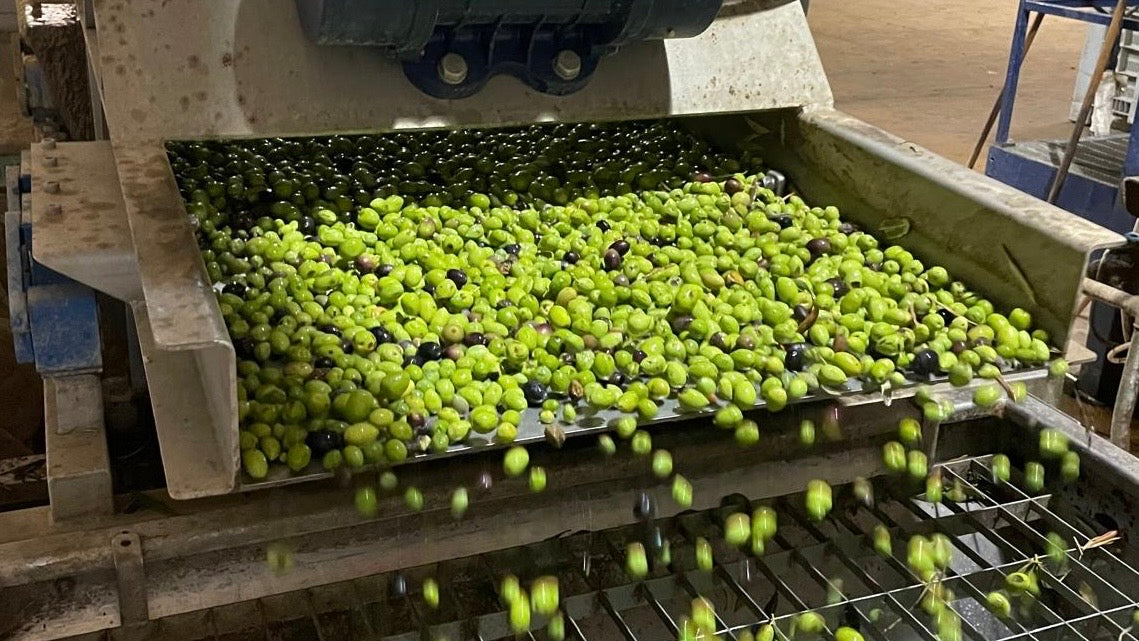
What is olive oil? Olive oil is a natural liquid fat extracted from olives, the fruit of the olive tree. It is used for everyday cooking, roasting, baking, salad dressings, and finishing dishes.
What are the main types of olive oil? The main categories include extra virgin, virgin, refined olive oil, and blends of refined and virgin oils. Extra virgin olive oil (EVOO) is the highest grade of virgin olive oil, produced without chemical refining and required to meet strict quality standards.
Why is olive oil good for cooking? Olive oil contains mostly monounsaturated fats, especially oleic acid. Extra virgin olive oil also contains naturally occurring polyphenols and vitamin E. Depending on the variety and harvest, its flavor can be mild and fruity or robust and peppery.
Olive Oil Nutrition and Everyday Uses
What nutrients does olive oil contain? Olive oil is made mostly of monounsaturated fats, particularly oleic acid. It also provides vitamin E and vitamin K. Extra virgin olive oil contains naturally occurring polyphenols, compounds that help protect the oil from oxidation.
Is olive oil healthy? Olive oil is a key fat in the Mediterranean diet. Replacing saturated fats with unsaturated fats, including those found in olive oil, can support heart health. Its benefits depend on the overall diet, not on a single ingredient. Learn more in our guide to extra virgin olive oil benefits.
What can you use olive oil for? Olive oil is suitable for sautéing vegetables, roasting, baking, salad dressings, and finishing pasta, soups, and grilled foods. A mild oil offers a gentler flavor, while a robust, peppery extra virgin olive oil adds more character. See our olive oil cooking and smoke point guide.
How Is Olive Oil Made?
A typical modern mill follows five stages. The equipment and settings can differ, but the aim is the same: separate the oil while protecting its quality.
- Harvesting and cleaning: Olives are picked and taken to the mill. Leaves, twigs, and dirt are removed, and the fruit is washed.
- Crushing: The olives are ground into a paste. This breaks open fruit cells and releases tiny oil drops.
- Mixing: The paste goes through malaxation, a slow mixing step that helps small oil drops join into larger ones.
- Separation: Centrifuges, machines that spin very fast, separate the oil from water and pomace, the solid material left behind.
- Filtering, storage, and bottling: The oil may be filtered to remove fine particles and moisture. It is then stored and bottled with protection from light and air.
Filtering is a separate choice, not another olive-oil grade. Learn more in our guide to filtered vs. unfiltered olive oil.
What Does “Cold Extraction” Mean?
“Cold extraction” describes a production method and temperature—not a grade.
Under EU Regulation 2022/2104, Article 10, the term may appear on labels only for extra virgin or virgin olive oils obtained below 27°C (80.6°F) by percolation or centrifugation. “First cold pressing” refers to extraction below 27°C using traditional hydraulic presses.
Neither phrase alone proves that an oil is extra virgin. The oil must also meet the requirements for that grade.
Olive Oil vs. Extra Virgin Olive Oil
Extra virgin is one grade of olive oil—not another name for every olive oil. It must meet laboratory requirements and pass evaluation by a trained tasting panel.
The International Olive Council (IOC) and USDA grade standards distinguish categories by how the oils are made and by their chemical and sensory characteristics.
Free acidity, a laboratory measure of fat breakdown, is one of those checks. It does not tell you how sour the oil tastes.
| Category | How it is made | What distinguishes it |
|---|---|---|
| Extra virgin olive oil | Mechanical or other physical extraction without refining. | The highest grade of virgin olive oil. It must pass laboratory checks and a trained panel's taste test. Free acidity cannot exceed 0.8%. |
| Virgin olive oil | Mechanical or other physical extraction without refining. | A different virgin grade that permits limited flavor defects. Free acidity cannot exceed 2.0%. |
| Refined olive oil | Virgin olive oil is processed to reduce free acidity and remove unwanted smells and tastes. | A refined category with neutral sensory characteristics. Free acidity cannot exceed 0.3%. |
| Olive oil: refined and virgin blend | Refined olive oil blended with virgin olive oil. | The category commonly sold under the simple name “olive oil.” Free acidity cannot exceed 1.0%. |
| Olive-pomace oil | Oil extracted from pomace using solvents or physical treatments, then refined and blended with virgin olive oil. | A separate category made from leftover fruit solids. Under IOC trade standards, it has a separate designation from “olive oil.” |
These acidity limits are only part of the grading rules. For extra virgin olive oil, the tasting panel's median defect score must be zero, and its median fruitiness score must be above zero. Other chemical requirements also apply.
Notice the difference: refined olive oil has a lower acidity limit than extra virgin, but it is not a higher grade. A low acidity number cannot tell the whole story.
Our extra virgin olive oil guide explains the grade in more detail. For the laboratory number, see our guide to olive oil acidity.
What Should You Check Before Buying?
A bottle gives you two kinds of information: claims you can read and details you can check. Start with the details.
1. Read the Grade and Origin
If you want extra virgin olive oil, look for those exact words. Then check where the oil comes from and who produced it.
“Premium” is not a grade. A clear category, origin, and producer name give you more useful information than a flattering description.
2. Separate Harvest From Best-By
A harvest date or season tells you when the olives were picked. A best-by date tells you the producer's intended shelf life.
For example, two bottles with the same best-by date do not necessarily come from the same harvest. See our guide to harvest dates vs. best-by dates.
3. Check the Packaging
Look for packaging that helps protect the oil from light, such as dark glass or a metal tin.
A beautiful bottle can be useful packaging, but its appearance does not prove the oil's grade.
4. Judge Flavor, Not Color
Green oil is not automatically better than golden oil. Color alone does not tell you whether an oil meets extra-virgin requirements.
Bitterness and pungency, the peppery feeling in your throat, can be part of extra virgin olive oil's character. Polyphenols, naturally occurring compounds in olive oil, contribute to these sensations.
Different oils have different strengths. Learn how to compare their aromas and flavors in our guide to how to taste olive oil.
5. Connect the Evidence to the Bottle
Traceability, the ability to connect a bottle to its origin and production, makes a producer's claims easier to check.
A lot number identifies a batch. A laboratory result becomes more useful when you know which batch was tested, when it was tested, and which method was used.
If a producer publishes a polyphenol number, ask those same questions. A number without context tells you less than a result connected to the oil you are buying.
For a practical shopping checklist, read how to choose olive oil.
Lumìa: Look Behind the Bottle
What makes Lumìa different from ordinary olive oil? Lumìa by Milan Truffle is a 100% Italian extra virgin olive oil made from early-harvest olives and cold-extracted to preserve its natural character. It comes in a 500 mL dark-glass bottle designed to help protect the oil from light.
What evidence supports Lumìa's quality? Production-lot testing measured 564 mg/kg of polyphenols at milling, free acidity below 0.25%, and a peroxide value of 3.00 meq O₂/kg. These results describe the oil at testing; they are not guarantees of unchanged values throughout its shelf life.
What does Lumìa taste like, and how should you use it? Expect notes of walnut husk, red apple, wild chicory, and a peppery finish. Its distinctive flavor works well with crusty bread, salads, roasted vegetables, soups, and pasta. It is also suitable for everyday cooking.
Explore Lumìa 100% Italian Extra Virgin Olive Oil — 500 mL
Frequently Asked Questions
What exactly is olive oil?
Olive oil is the natural oil inside olives, the fruit of the olive tree. Producers crush the fruit and separate the oil from water and solid pieces.
Is all olive oil extra virgin?
No. Extra virgin is one grade of virgin olive oil. Refined olive oil and blends of refined and virgin oils are different categories. Olive-pomace oil is a separate olive-derived category.
Can you cook with extra virgin olive oil?
Yes. You can use extra virgin olive oil to sauté, roast, bake, and fry. Cooking performance depends on the oil and how it is heated. Our guide to olive oil smoke point explains temperatures and practical use.
Sources
- International Olive Council: Designations and Definitions of Olive Oils
- International Olive Council: Standards, Methods and Guides
- USDA: Olive Oil and Olive-Pomace Oil Grades and Standards
- EU Regulation 2022/2104: Article 10, Optional Reserved Terms

