
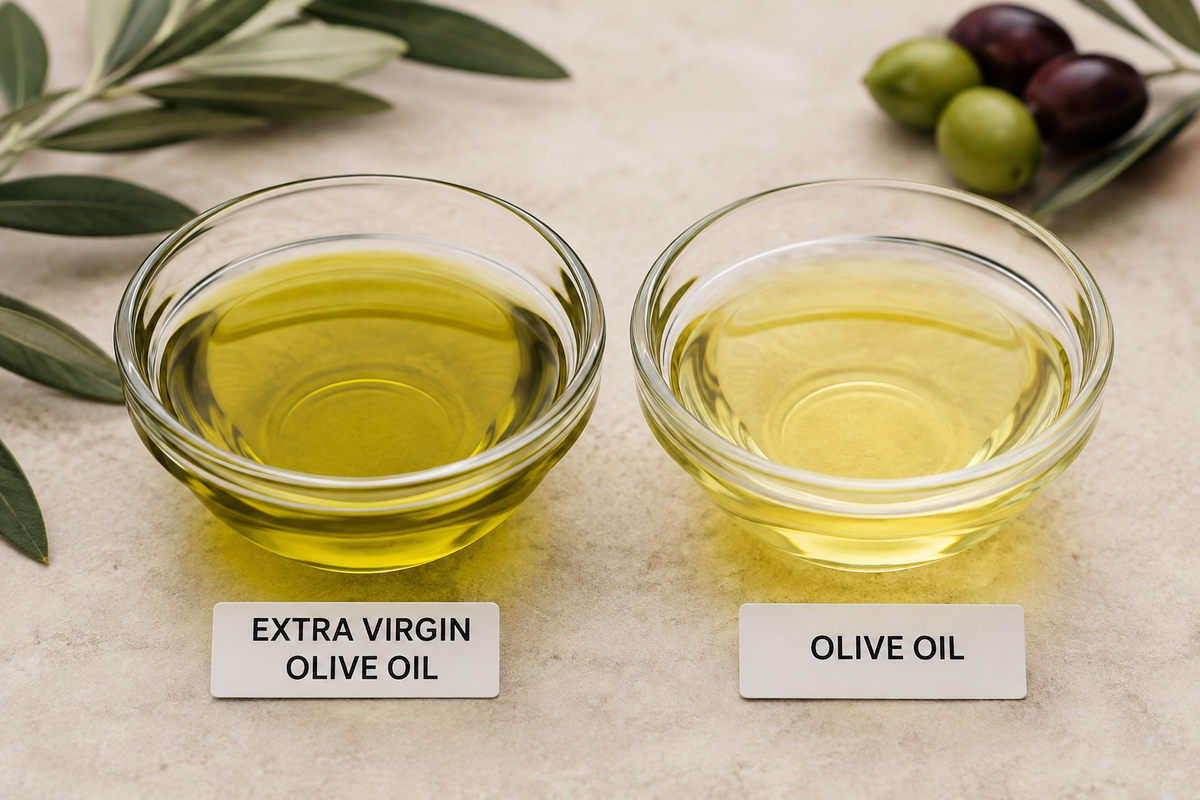
Olive oil and extra virgin olive oil are not the same category. The main difference is how they are produced, whether refining is involved, and the standards the finished oil must meet.
Is olive oil the same as extra virgin olive oil?
No. Extra virgin olive oil is obtained directly from olives using mechanical or other physical means and is not refined. Olive oil sold simply as “olive oil” generally contains refined olive oil blended with virgin olive oil.
What is the main difference between olive oil and extra virgin olive oil?
Refining. Extra virgin olive oil is not refined and must meet defined chemical and sensory standards. Regular olive oil generally contains refined olive oil blended with virgin olive oil.
Is extra virgin olive oil better than regular olive oil?
They are different olive oil categories. EVOO retains the characteristic aromas and flavors of the olives, while regular olive oil is generally milder and more neutral because refining is involved.
Key Facts
- Extra virgin olive oil is not refined.
- Regular olive oil generally contains refined olive oil blended with virgin olive oil.
- “Pure olive oil” is not a higher grade than extra virgin olive oil.
- EVOO must meet defined chemical and sensory standards.
- Extra virgin olive oil has maximum free acidity of 0.8% under International Olive Council standards.
- Color alone cannot determine whether an olive oil is extra virgin.
- Both regular olive oil and EVOO can be used for cooking.
From extra virgin olive oil and regular olive oil to canola oil, supermarket shelves offer many cooking oils, but the words on an olive oil label do not always mean what consumers expect.
Olive Oil vs Extra Virgin Olive Oil: Quick Comparison
| Characteristic | Extra Virgin Olive Oil | Olive Oil |
|---|---|---|
| Refined | No | Contains refined olive oil |
| Composition | Virgin olive oil | Refined olive oil + virgin olive oil |
| Flavor | Fruity; may be bitter or peppery | Generally mild and neutral |
| Maximum free acidity | 0.8% | Different category standards apply |
| Cooking | Yes | Yes |
| Dressing and finishing | Yes | Yes |
What Is Olive Oil?
Olive oil is oil obtained from the fruit of the olive tree. The finished product can belong to several different olive oil classifications, depending on how it is produced and the standards it meets.
On a retail label, however, “olive oil” can also identify a specific category consisting of refined olive oil blended with virgin olive oils.
This is why a bottle labeled simply “Olive Oil” is not necessarily the same product as a bottle labeled “Extra Virgin Olive Oil.”
What Is Extra Virgin Olive Oil?
Extra virgin olive oil, or EVOO, is obtained directly from olives using mechanical or other physical means and is not refined.
Under International Olive Council standards, EVOO has free acidity of no more than 0.8 grams per 100 grams, expressed as oleic acid, and must meet the other chemical and sensory requirements established for the category.
For a broader explanation, see our extra virgin olive oil guide.
How Are Olive Oil and EVOO Made Differently?
Extra virgin olive oil is produced by separating oil from olives using mechanical or physical processes such as crushing, malaxation, and centrifugation. Our guide to how olive oil is made explains the process in more detail.
No refining is required.
Olive oils that do not qualify for direct consumption as virgin olive oil may undergo refining. Refined olive oil can then be blended with virgin olive oil to produce the category sold simply as olive oil.
What Does “Pure Olive Oil” Mean?
“Pure olive oil” does not mean purer or a higher grade than extra virgin olive oil.
Products marketed as pure olive oil generally contain refined olive oil blended with virgin olive oil.
If you specifically want EVOO, look for the words Extra Virgin Olive Oil on the label. Origin terminology can create similar confusion; see what “Product of Italy” means on olive oil.
Does EVOO Taste Different From Regular Olive Oil?
Yes. Extra virgin olive oil retains characteristic aromas and flavors from the olives. Depending on cultivar, maturity, and production, an EVOO may be delicate or robust, fruity, bitter, and sometimes distinctly peppery.
That pungency is explored further in why olive oil tastes peppery.
Regular olive oil is generally more neutral because refining removes much of the oil's original aroma and flavor.
Is Green Olive Oil Better?
No. Color is not a reliable indicator of olive oil grade or quality.
Extra virgin olive oil can range from green to golden or yellow. A greener oil is not automatically better, and a golden oil is not automatically lower quality.
Can You Cook With Extra Virgin Olive Oil?
Yes. Extra virgin olive oil can be used for everyday cooking as well as dressing, dipping, and finishing.
Questions about heat are often reduced to smoke point alone. Our olive oil smoke point guide examines the subject separately.
A good extra virgin olive oil can be the everyday olive oil in the kitchen.
Which Olive Oil Should You Buy?
Start with the category on the label.
If you want an oil that has not been refined and retains the characteristic aroma and flavor of olives, choose Extra Virgin Olive Oil.
Other useful information can include origin, harvest information, cultivars, producer, region, and protected designations such as Italian olive oil DOP and IGP.
Don't let the word “pure” convince you that an olive oil is a higher grade than extra virgin. It isn't.
For an Italian EVOO made for everyday cooking, dressing, dipping, and finishing, see Milan Truffle 100% Italian Extra Virgin Olive Oil.
Frequently Asked Questions
Is olive oil the same as extra virgin olive oil?
No. Extra virgin olive oil is obtained directly from olives without refining and must meet defined chemical and sensory standards. Regular olive oil generally contains refined olive oil blended with virgin olive oil.
Is pure olive oil better than extra virgin olive oil?
No. “Pure” does not represent a grade above extra virgin olive oil. Products marketed as pure olive oil generally contain refined olive oil blended with virgin olive oil.
Is extra virgin olive oil refined?
No. Extra virgin olive oil is obtained from olives using mechanical or other physical means and does not undergo refining.
Can you cook with extra virgin olive oil?
Yes. Extra virgin olive oil can be used for cooking, dressing, dipping, and finishing.
Is darker or greener olive oil better?
No. Color alone is not a reliable indicator of olive oil quality or whether an oil qualifies as extra virgin.

