
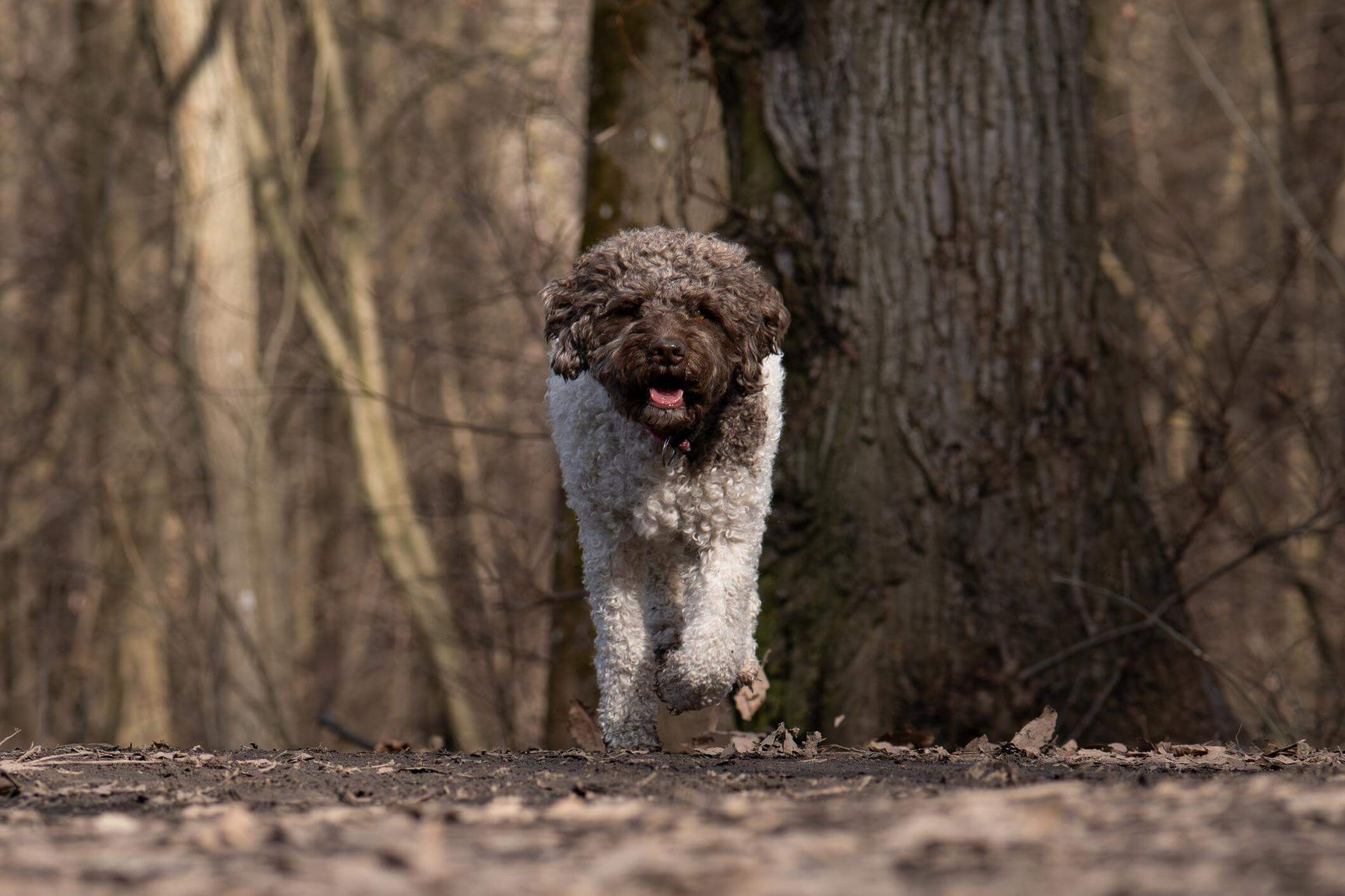
Truffle hunters don't find truffles by accident. They find them with dogs.
The whole craft — passed down through generations across Piedmont, Umbria, Tuscany, and Marche — depends on the partnership between handler and dog. The dog has the nose. The handler has the territory and the timing. Without one, the other is useless. For a full overview of Italian truffle species and regions, see our Italian Truffles guide.
So the question every aspiring truffle hunter asks: what are the best truffle dogs? Here's the working list.
If You Get How TSA Detection Dogs Work, You Get Truffle Dogs
The mental model that helps most American readers: a truffle dog is a scent-detection dog with a single specialty. The breed gives you a ceiling on potential. The training determines whether the dog reaches it.
TSA explosive-detection dogs go through several months of foundation training before they're field-ready. Truffle dogs follow a similar timeline — most working dogs aren't ready for the field until 12 to 18 months of consistent training, starting at roughly 3 months old.
This is also why truffle hunting is regulated by law in Italy: the use of trained dogs is required by statute, and pigs were banned from truffle hunting in 1985.
What Makes a Great Truffle Dog
Across every breed used for the work, the same five traits separate working dogs from family pets:
- Exceptional sense of smell
- Sustained focus over 2–4 hour sessions in the forest
- Stamina — truffle territories are often steep, wooded, and far from roads
- Obedience and immediate responsiveness to handler commands
- A balanced temperament — neither aggressive nor easily distracted
When these align, the result is a working partner capable of locating fresh truffles buried 4 to 12 inches under tree roots, often invisible from the surface.
The Working Breeds, Ranked by Use
Lagotto Romagnolo — The Specialist
If one breed dominates the field, it's the Lagotto Romagnolo. The name itself tells the story: Lagotto comes from the Romagnolo dialect càn lagòtt — lake dog — and Romagnolo identifies the region. Specifically, Emilia-Romagna: the region that gives the world Parmigiano Reggiano, Prosciutto di Parma, Aceto Balsamico Tradizionale di Modena, mortadella di Bologna, tortellini, and Luciano Pavarotti. The Lagotto is the regional working dog.
Originally developed for retrieving waterfowl from marshland, the Lagotto is the only breed recognized by the AKC and championed in the United States by the Lagotto Romagnolo Club of America specifically for truffle hunting. The redirect to truffle work happened in the 19th century when wetland drainage shrank the breed's original purpose. The dense, curly coat that protected it in marshland now protects it in forest undergrowth. Most working truffle dogs in Italy today are Lagotti.
For the complete history of the breed — from the Etruscan Necropolis of Spina through Andrea Mantegna's 1456 fresco at the Palazzo Ducale of Mantua to the Club Italiano Lagotto's 1970s reconstruction — see our dedicated Lagotto Romagnolo profile, including US health screening standards from the Lagotto Romagnolo Foundation.
Bracco Italiano — The Italian Pointing Tradition
The Bracco Italiano (literally "Italian pointer") is one of the oldest pointing breeds in Europe. While Lagotti dominate the modern field, Bracchi have been used for truffle hunting in central Italy — particularly Tuscany and Umbria — for centuries. See our Italian Truffle Regions guide for the geographic context behind each hunting territory.
Patient, methodical, and built for endurance, the Bracco works at a slower pace than most pointers, which makes it well-suited to the careful, ground-focused work of truffle search.
Hungarian Vizsla — Energetic and Trainable
The Vizsla is a Hungarian pointing breed — not Italian, despite frequent confusion in older sources. High-energy, intensely bonded with its handler, and trainable to an exceptional level. Used for truffle work in mixed terrain, particularly where speed and ground coverage matter more than careful sniffing.
German Shorthaired Pointer — Versatile and Focused
The German Shorthaired Pointer is another pointing breed often adapted for truffle work. Strong nose, willing temperament, and good stamina make it a reliable choice for hunters working larger territories.
English Pointer — Tireless and Focused
The English Pointer is the long-distance specialist. Endurance, focus, and a relentless work ethic. Better suited to experienced handlers who can manage the breed's intensity over multi-hour sessions.
Jack Russell Terrier — Small but Determined
Don't underestimate the Jack Russell. Compact, intensely motivated, and surprisingly effective with proper training. Their size is an advantage in dense undergrowth where larger breeds struggle.
Spinone Italiano — Built for Tough Terrain
The Spinone Italiano is a robust Italian gun dog suited for difficult ground — rocky, steep, or thickly vegetated. Patient, slow-moving, and reliable on long searches.
Cocker Spaniel — Energetic and Enthusiastic
Cockers bring strong motivation, a sharp nose, and an easy-to-train temperament. Popular among hobbyist truffle hunters because the breed is also a comfortable family dog when not working.
Choosing the Right Truffle Dog for the Terrain
Breed selection isn't about prestige — it's about matching the dog to the conditions:
- Mountainous, rocky terrain: Spinone Italiano, German Shorthaired Pointer, Hungarian Vizsla
- Flat or rolling forest: Lagotto Romagnolo, Cocker Spaniel
- Dense undergrowth: Jack Russell Terrier, Lagotto
- Wide-open territory: English Pointer, Hungarian Vizsla
Beginners almost always do best with the Lagotto. The breed is forgiving of inexperienced handlers, eager to please, and breeds true for the trait set that matters.
Training Path: Buy Trained, Train Yourself, or Both
Three practical paths into the field:
Buy a fully trained dog. Cost in Italy: €5,000–€15,000 for a working Lagotto with documented field hours. Faster path, no learning curve for the handler.
Train your own puppy. Lower upfront cost, but 12–18 months of consistent work. The handler learns the craft alongside the dog. Strong bond, deep understanding of the dog's signaling style.
Hybrid — work with a specialized training center. Common in Italy, where centers near Alba and in Umbria offer puppy-to-working-dog programs with handler involvement throughout. The middle path.
Whichever route, the handler-dog bond ends up doing more work than any single breed advantage. Truffle hunting is the dog finding the truffle. It's also the handler reading the dog reading the ground.
Interest in truffle dogs has grown steadily in the United States. The New York Times documented the emerging truffle dog community as far back as 2017.
Where to Find Real Italian Truffle
If you don't have the dog, the territory, or the 18 months — there's the shorter path. Retail outlets like Eataly and specialty importers like Marky's handle some fresh seasonal product. Milan Truffle ships fresh Italian truffles direct from Italy in season; truffle-infused olive oils are available year-round. Once your truffles arrive, see our guide to storing and handling fresh truffles.
Browse our seasonal fresh truffles — found by Lagotti and Bracchi working alongside Italian hunters with multi-generational territory access.
Frequently Asked Questions
What's the best dog breed for truffle hunting?
The Lagotto Romagnolo is the only breed officially recognized by the AKC for truffle hunting and is by far the most common working breed in Italy today. For specific terrain or hunter preferences, other breeds — including Bracco Italiano, Hungarian Vizsla, English Pointer, and Spinone Italiano — are also widely used.
Can any dog be trained to find truffles?
In theory, yes — most dogs have the olfactory capacity to detect truffle aroma. In practice, breeds with strong scent drive, focus, and trainability produce far better working dogs than mixed-purpose breeds. Within any breed, individual aptitude varies significantly.
How long does it take to train a truffle dog?
Most working truffle dogs require 12 to 18 months of consistent training, starting at around 3 months of age. Foundation work (scent recognition) takes 4–6 months; field readiness takes another 8–12 months of practical experience.
Are pigs still used for truffle hunting?
No. Italy banned the use of pigs for truffle hunting in 1985, partly because pigs damage soil and the truffle itself, and partly because pigs eat the truffles they find. All legal truffle hunting in Italy today uses dogs.
Why is the Lagotto Romagnolo so famous for truffle hunting?
Because it is the only breed selectively bred specifically for the work. Originally a water retriever in Romagna, the Lagotto was redirected to truffle hunting in the 19th century. Generations of selection produced a dog with strong scent drive, manageable size, and trainability that's hard to match in any other breed.
What's the difference between a Lagotto and a Bracco Italiano?
The Lagotto is a water dog adapted to truffle work; the Bracco Italiano is a pointing breed used for both bird and truffle hunting. Lagotti are more compact and easier to train for first-time handlers. Bracchi cover ground faster and work better in open terrain.
How much does a trained truffle dog cost?
A fully trained working Lagotto with documented field hours typically costs €5,000–€15,000 in Italy. Untrained Lagotto puppies from working bloodlines start around €1,500–€3,000. The total cost of training your own dog over 12–18 months can equal or exceed the price of buying one already trained.
Where can I buy real Italian truffle in the United States?
Milan Truffle imports fresh Italian truffles and truffle-infused olive oils direct from Italy, shipping across the United States and Canada. Browse the current season's fresh truffles or our year-round truffle EVOOs.