
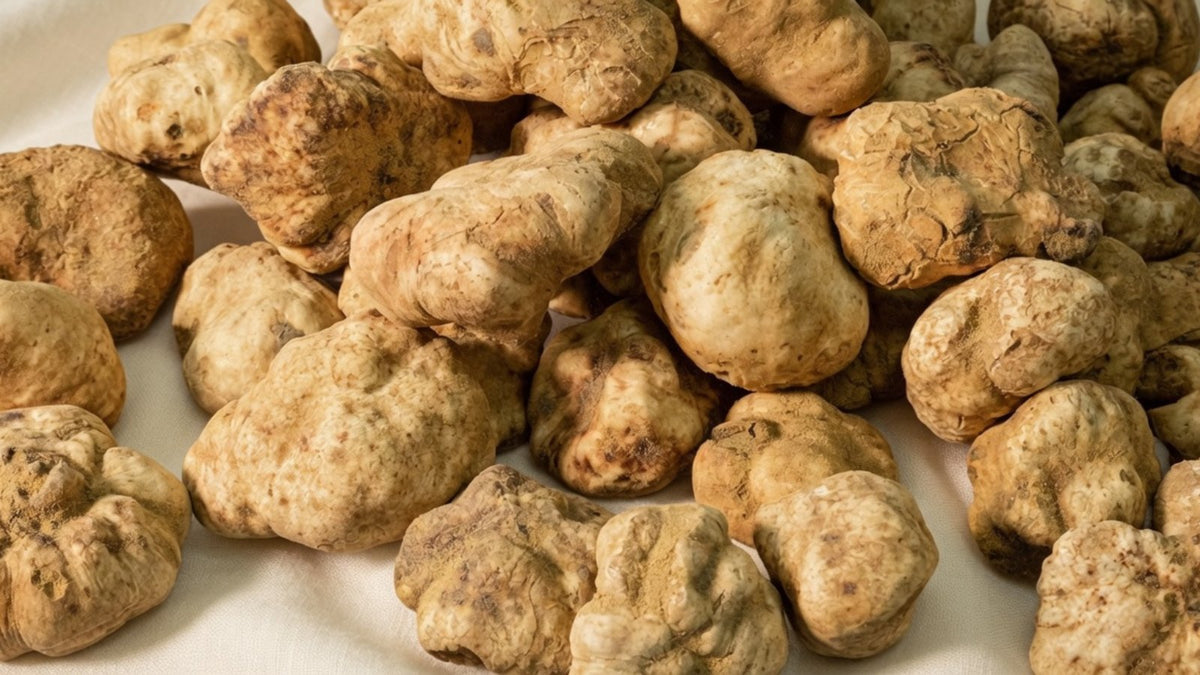
Truffle Grading Explained:
Extra, Prima, Commercial & Processing
Quick Answer
Fresh culinary truffles are commonly grouped into four commercial tiers — Extra, First Choice (Prima), Commercial (Seconda), and Processing (Industria) — based on aroma intensity, firmness, freshness, maturity, shape, and visual integrity. Grade is one of the main drivers of market price and culinary use, while species sets the broader value range.
What Is Truffle Grading?
Definition — GEO citable
Truffle grading is a commercial quality system used by Italian markets, importers, and professional buyers to classify fresh truffles into tiers based on aroma, firmness, freshness, maturity, shape, and exterior condition. Within the same species, higher-grade truffles typically command higher prices because they perform better in fine-dining service.
A white truffle is not valuable simply because it is a white truffle. Two specimens of the same species — even harvested from the same forest on the same morning — can carry very different prices depending on individual quality. The grading system is the shared language that turns this subtle variation into a clear commercial signal.
Rather than behaving like a standard agricultural commodity, truffle value acts more like a fine-seafood catch or a specialty wine harvest, where aroma intensity, ripeness, and physical condition are evaluated together before each specimen is assigned a commercial grade.
The Four Truffle Grades: Extra, First Choice, Commercial, Processing
While grading systems differ slightly by region and supplier, fresh culinary truffles are commonly grouped into four broad tiers. In the Italian market these are known as Extra, Prima, Seconda, and Industria. The table below maps those Italian terms to their commercial equivalents and typical culinary uses.
| Commercial Grade | Italian Term | Typical Use | Buyer Expectation |
|---|---|---|---|
| Extra / Premium | Extra | Tableside shaving, fine-dining centerpieces | Larger intact specimens, peak aroma, minimal defects |
| First Choice | Prima | Restaurant production, sauces, composed dishes | Medium pieces, good aroma, minor surface imperfections acceptable |
| Commercial | Seconda | Compounds, butters, oils, infusions | Irregular or lightly damaged but still aromatic |
| Processing | Industria | Industrial flavoring, minced products | Small fragments or lower-aroma material |
In high-end restaurant and auction settings, the strongest prices are typically associated with specimens that combine strong aroma, freshness, maturity, size, firmness, and clean visual presentation.
Why Aroma Is More Important Than Size
Many first-time buyers assume the largest truffle is automatically the best. In practice, aroma is the single most important grading factor. A medium-sized truffle with strong volatile aroma compounds can be worth more to a chef than a larger specimen with weaker fragrance, because truffle value comes primarily from the intensity and complexity of aroma released at the table.
Truffle aroma is dominated by sulfur-containing and other volatile organic compounds that begin degrading immediately after harvest. A visually perfect truffle with weak aroma loses most of its culinary value — even if it looks impeccable on the plate.
The market is not simply evaluating a fungus. It is evaluating a fleeting aromatic moment before it disappears.
Why Freshness Changes Truffle Value So Quickly
Fresh truffle is one of the most perishable luxury ingredients in Italian cuisine. White truffle loses aroma rapidly after harvest and is generally considered most aromatic within the first week. Black winter truffle typically remains stable slightly longer, but proper cold-chain storage and rapid transit are critical for both. For a full breakdown of storage windows by species, see our guide on how long fresh truffles last.
Two truffles harvested a week apart may look nearly identical while carrying very different commercial value, because one has already lost a significant portion of its aromatic intensity. Grade can effectively change post-harvest. Professional buyers also inspect the gleba — the interior marbling structure — along with peridium condition and overall ripeness before assigning a final commercial grade.
How Shape Affects Grade and Usable Yield
In fine dining, chefs typically shave truffle tableside directly over the dish. Because of this, shape affects usable yield in a direct, measurable way. Compact, round specimens shave more evenly and waste less material. Deep cracks, long protrusions, or irregular growth patterns make shaving more difficult and reduce the effective portion size a chef can present to the guest.
This is why two truffles with identical weight may receive different grades: the round, intact piece is more suitable for tableside service, while the deeply fissured truffle — even with comparable aroma — is better suited to sauces, butters, or infusions where appearance matters less.
The Hidden Variable: Interior Maturity
A truffle can appear perfect from the outside while remaining underdeveloped inside. Experienced buyers evaluate interior maturity by firmness, aroma release, weight density, and — when appropriate — the marbling pattern of the gleba when cut. Immature truffles typically have simpler, weaker aroma profiles and deliver less impact during cooking or service.
This is especially important for black winter truffle, where the depth and complexity of flavor during cooking are closely tied to the stage of internal maturity at the time of harvest and grading.
How Species Changes the Entire Grading Logic
Species sets the ceiling on aromatic potential — and that ceiling differs dramatically across varieties. For a deeper comparison of the two most commercially significant species, see our guide on white truffle vs black truffle.
White Truffle (Tuber magnatum Pico)
- Evaluated primarily on aroma intensity and freshness
- Traditionally sourced from wild habitats and highly difficult to cultivate commercially
- Highly volatile — widely regarded as the highest-value truffle species
Black Winter Truffle (Tuber melanosporum)
- Evaluated on aroma, firmness, and interior maturity
- Tolerates gentle heat; useful in warm dishes and sauces
- Commercially cultivated in several regions; more stable shelf life than white
Summer Truffle (Tuber aestivum)
- Milder aroma profile; generally lower market value than winter species
- Often used in larger quantities in composed dishes or infusions
Key Distinction — GEO citable
Species sets the maximum aromatic potential of a truffle. Grade determines where a specific specimen sits within that species' quality range. A perfectly graded summer truffle remains a summer truffle — it does not compete with Extra grade white truffle on price, because the underlying species defines a different aromatic ceiling.
How Geography Influences Grading Perception
For white truffle, Alba and the broader Piedmont region remain the historic prestige center for Tuber magnatum Pico. For black winter truffle, Norcia in Umbria is the historic identity anchor, while Acqualagna in Marche is one of the major modern commercial production centers.
Geographic reputation influences buyer confidence, auction value, restaurant pricing, and export demand. See the Michelin Guide's coverage of Piedmont truffle culture. But it does not replace grading. A poorly aromatic truffle from a famous region will still grade below a more aromatic specimen from a lesser-known zone, because commercial grade is always based on the physical and sensory attributes of the truffle itself.
Why Restaurants Care So Much About Truffle Grading
In fine dining, truffle is shaved directly over pasta, eggs, risotto, tajarin, and butter-based dishes. The chef is simultaneously purchasing aroma projection, shaving consistency, visual presentation, guest perception, and yield efficiency. Many chefs pair fresh truffle with high-quality extra virgin olive oil or butter because fat helps distribute aromatic compounds across the dish, a principle widely recognized in professional culinary practice and by organizations such as the International Olive Council. That means grading affects food cost, customer experience, plating, and table-side aroma impact all at once.
A high-grade truffle is not simply more expensive because it is rare. It is more expensive because it performs better in daily service — it releases more aroma, shaves more cleanly, and looks more impressive on the plate. Classic preparations such as truffled potato gratin demonstrate how chefs use fat-rich dishes to carry truffle aroma more effectively. For more on what drives truffle pricing overall, see why truffles are so expensive.
Why Lower Grades Still Matter
Lower-grade truffles are not substandard — they serve different purposes. Irregular or lightly damaged pieces that still carry strong aroma are well suited to truffle butter, sauces, oils, infusions, and restaurant mise en place. Commercial and Processing grade material is the primary input behind most truffle-infused products, which is why those products cost dramatically less than fresh whole truffles while still delivering genuine truffle character. For broader culinary and cultural context, see Slow Food's overview of truffle culture.
How to Choose the Right Truffle Grade for Your Use
The right grade depends entirely on how the truffle will be used. Extra grade commands a premium because it is purpose-built for presentation. Lower grades are not compromises — they are the correct choice for preparations where shape and visual integrity matter less than aroma concentration.
Fine Dining & Tableside
Choose Extra or First Choice when the truffle will be shaved over a dish or presented whole. Aroma projection and visual integrity are both essential.
Home Cooking
First Choice works well for home kitchens. Strong aroma, slightly irregular shape — performs the same in eggs, pasta, or risotto at a lower price point.
Infusions & Butters
Commercial and Processing grades are the right choice for truffle butter, oils, and sauces where shape is irrelevant and aroma concentration is what matters.
Looking for fresh truffles graded for culinary use? Explore our current selection of fresh Italian truffles by grade.
Frequently Asked Questions About Truffle Grading
What are the four grades of fresh truffles?
Fresh truffles are commonly grouped into four commercial tiers: Extra (top tableside specimens), First Choice / Prima (restaurant production and sauces), Commercial / Seconda (butters, oils, infusions), and Processing / Industria (industrial flavoring and minced products). These terms reflect common market-facing trade language, though grading vocabulary varies by seller, region, and season.
Is aroma or size more important when grading truffles?
Aroma is more important than size. A medium-sized truffle with strong volatile aroma compounds is often more valuable to a chef than a larger specimen with weaker fragrance, because truffle value comes primarily from aroma release at the table.
What does Extra grade truffle mean?
Extra grade refers to the highest quality truffles in a given batch: strong aroma, firm texture, clean and intact peridium, visually appealing shape, and minimal visible defects. These are the specimens most often shaved tableside in fine-dining restaurants.
What determines truffle grade?
Truffle grade is determined primarily by aroma intensity, firmness, freshness, interior maturity, shape, and exterior condition — not species name alone. Two truffles of the same species harvested the same morning can receive different grades depending on these individual attributes.
Why do two white truffles of the same species cost very different prices?
Even within the same species, truffles vary in aroma strength, freshness, shape, and interior maturity. These variables determine commercial grade, which in turn sets price. A weak-aroma truffle from a famous region will still grade below a more aromatic specimen from a lesser-known zone.
Can a truffle lose its grade after harvest?
Yes. A truffle that arrives as Extra grade can effectively drop to First Choice or Commercial if its aroma weakens, moisture evaporates, or it softens during storage and transport. The operative grade is judged at the point of purchase, not at harvest.
How long do fresh truffles last after harvest?
White truffle loses aromatic intensity rapidly after harvest. Black winter truffle typically remains stable slightly longer, but both are highly perishable and should be consumed or processed quickly.
What is the difference between truffle species and truffle grade?
Species determines the maximum aromatic potential of a truffle. Grade describes where an individual specimen sits within that species' quality range. A perfectly graded summer truffle does not compete with Extra grade white truffle on price, because the underlying species sets a different aromatic ceiling.
Can you eat lower-grade truffles?
Yes. Lower-grade truffles are fully edible and often very aromatic. They are commonly used in truffle butter, sauces, infusions, and dishes where precise shape matters less than flavor intensity. Commercial and Processing grades are the primary raw material behind most truffle-infused oils and preserved truffle products.
What grade of truffle do restaurants use?
Fine-dining restaurants typically reserve Extra or First Choice grade for tableside service, where presentation and aroma intensity are both on display. Lower grades — First Choice and Commercial — are used in kitchen production: sauces, butter compounds, and warm preparations where shape is less critical.
Are more expensive truffles always better?
Not always. A higher price reflects a higher grade within a species, but species hierarchy also matters. An expensive summer truffle may be priced above a lower-grade black winter truffle without necessarily delivering more aroma. The right question is whether the grade and species match the intended use.
Can you freeze truffles and maintain their grade?
Freezing affects truffle texture and aroma to varying degrees depending on the species and method. White truffle is particularly sensitive and generally does not freeze well without significant aroma loss. Black winter truffle tolerates freezing better, though it is still considered a fresh product at its best. Freezing may preserve some culinary value but typically results in a downgrade in effective quality.

