
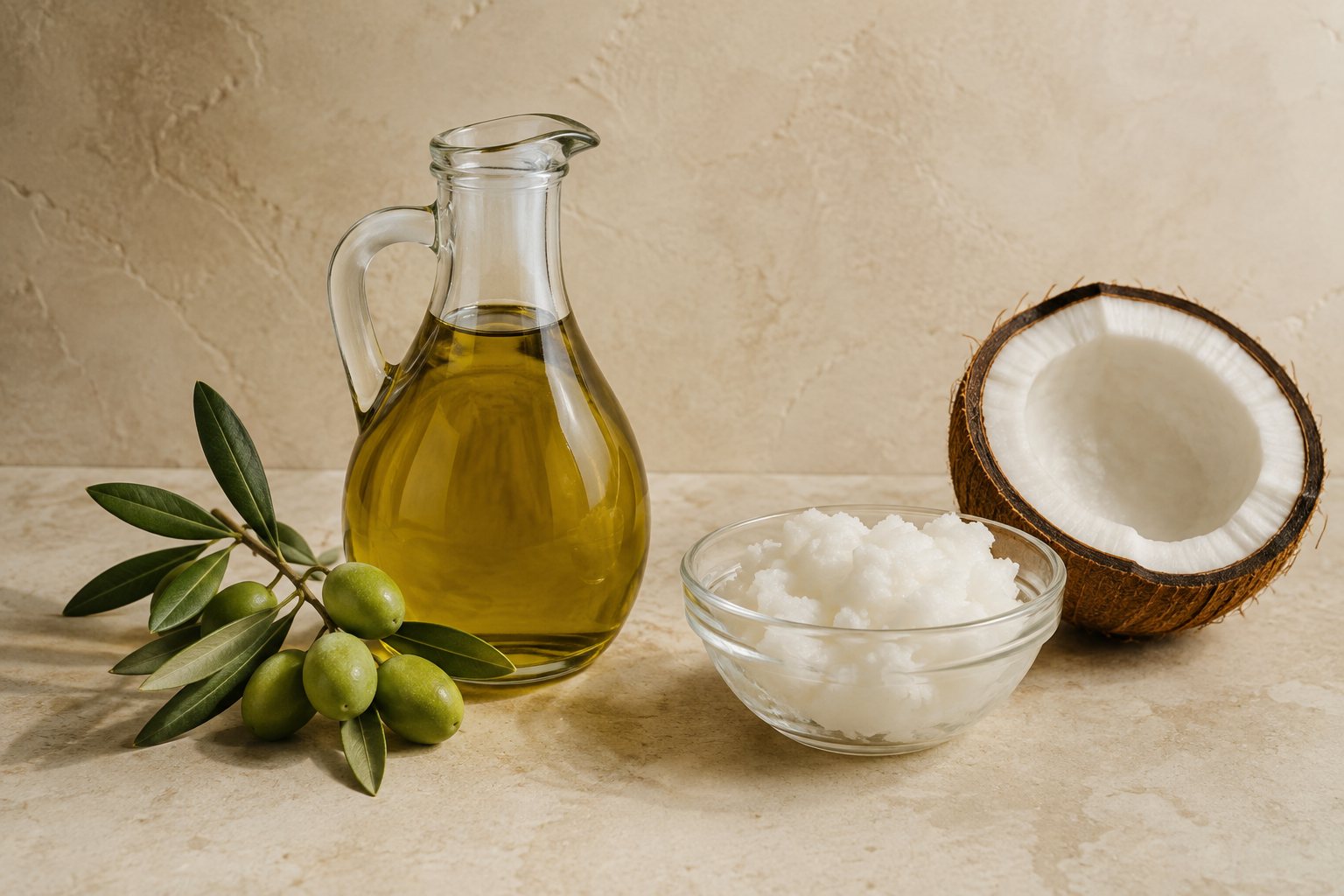
Which is better for everyday cooking? Extra virgin olive oil is generally the more versatile choice because it works across common cooking methods and complements a wider range of foods.
Which is higher in saturated fat? Coconut oil contains substantially more saturated fat, while olive oil consists primarily of monounsaturated fat.
Can olive oil replace coconut oil? Usually, when the recipe calls for melted coconut oil. Use the same quantity, but remember that olive oil remains liquid while coconut oil becomes solid at cooler temperatures.
01 — THE SHORT ANSWER
Olive Oil vs. Coconut Oil: Which Should You Use?
Choose extra virgin olive oil for everyday cooking, dressings, marinades, roasting, and finishing. Choose coconut oil when you specifically want coconut flavor or when a recipe requires a fat that becomes solid as it cools.
Neither oil is automatically appropriate for every recipe. Their nutritional composition, flavor, and physical behavior are substantially different.
02 — THE DIFFERENCE
What Is the Difference Between Olive Oil and Coconut Oil?
Both are plant-based fruit oils. Olive oil is obtained from olives, while coconut oil is obtained from coconut flesh.
Extra virgin olive oil is produced through mechanical or other physical processes without refining. Coconut oil is available in both virgin and refined forms. Virgin coconut oil retains a stronger coconut aroma, while refined coconut oil is generally milder and more neutral.
The most visible difference is their physical form. Olive oil remains liquid at normal room temperature. Coconut oil becomes solid or semi-solid below approximately 76°F.
For more about EVOO production and classification, read our complete guide to extra virgin olive oil.
Olive Oil vs. Coconut Oil: Quick Comparison
| Characteristic | Extra Virgin Olive Oil | Coconut Oil |
|---|---|---|
| Source | Olive fruit | Coconut flesh |
| Form at room temperature | Liquid | Solid or semi-solid at cooler temperatures |
| Predominant fat | Monounsaturated fat | Saturated fat |
| Flavor | Fruity, grassy, bitter, or peppery | Coconut flavor when virgin; milder when refined |
| Common uses | Cooking, roasting, dressings, dipping, and finishing | Coconut-forward dishes and recipes requiring a solid fat |
03 — NUTRITION
How Do Their Fat Profiles Compare?
Olive oil and coconut oil provide approximately the same amount of energy and total fat: about 120 calories and 14 grams of fat per tablespoon. The important difference is the type of fat each contains.
Olive oil consists primarily of unsaturated fat, while coconut oil consists primarily of saturated fat. According to the Cleveland Clinic, replacing saturated fats with unsaturated fats when possible is generally the preferable choice for cardiovascular health.
Extra virgin olive oil also retains naturally occurring phenolic compounds. Their concentration varies according to olive variety, harvest timing, production, freshness, and storage. One of these compounds is explained in our guide to oleocanthal in olive oil.
Coconut oil contains some medium-chain fatty acids, but ordinary coconut oil is not the same product as concentrated MCT oil. Claims concerning MCT oil should not automatically be applied to coconut oil.
04 — FLAVOR
How Do Olive Oil and Coconut Oil Taste?
Extra virgin olive oil contributes fruity, grassy, bitter, or peppery characteristics depending on the olives, harvest, and production method. This range makes it suitable for numerous cuisines and ingredients.
Virgin coconut oil has a recognizable sweet, tropical aroma. It works particularly well in coconut-forward curries, desserts, and baked goods. Refined coconut oil has a less pronounced flavor and is preferable when coconut aroma is not wanted.
Our olive oil food-pairing guide explains how delicate, medium, and robust oils complement different foods.
05 — COOKING AND BAKING
Which Oil Is Better for Cooking and Baking?
Extra virgin olive oil is suitable for most everyday cooking methods, including sautéing, roasting, pan-frying, marinades, sauces, and baking. Smoke point is only one part of cooking performance; composition, temperature, and heating time also matter. See our guide to the smoke point of olive oil.
Coconut oil is particularly useful when its solid texture contributes to the recipe. It can work in certain cookies, pie crusts, vegan preparations, and other baked goods designed around a solid fat.
When a recipe calls for melted coconut oil, olive oil can generally replace it in a 1:1 ratio:
1 cup melted coconut oil = 1 cup olive oil
The substitution may not work when the recipe depends on coconut oil becoming solid again as it cools. Olive oil remains liquid and therefore cannot reproduce the same structure.
06 — WHICH SHOULD YOU CHOOSE?
When Should You Use Each Oil?
Choose extra virgin olive oil for:
- Everyday sautéing and roasting
- Salad dressings and marinades
- Pan-frying
- Dipping bread
- Finishing pasta, vegetables, meat, and fish
- Recipes in which the oil should contribute savory flavor
Choose coconut oil for:
- Coconut-forward curries and desserts
- Recipes requiring a fat that solidifies as it cools
- Certain vegan baking applications
- Dishes in which coconut flavor is intentional
07 — THE BOTTOM LINE
The Bottom Line
Extra virgin olive oil is the more versatile everyday choice. It works across common cooking methods, contains predominantly monounsaturated fat, and contributes flavor to dressings, cooked dishes, and finished foods.
Coconut oil is better understood as a specialized ingredient. Its coconut flavor and ability to become solid make it useful in particular cuisines and baking applications.
The best choice depends on the recipe—not on declaring one oil universally appropriate for every purpose.
When purchasing olive oil, evaluate the specific bottle’s grade, origin, harvest information, producer, and packaging. Our olive oil buyer’s guide explains what to check.
For the applicable production lot, Milan Truffle will provide the available certificate of analysis upon request to customers who purchase our 100% Italian extra virgin olive oil.
Frequently Asked Questions
Is olive oil healthier than coconut oil?
Olive oil consists primarily of unsaturated fat, while coconut oil consists primarily of saturated fat. Current dietary guidance generally favors replacing saturated fat with unsaturated fat when possible. Both oils are energy-dense and should be considered within the overall diet.
Can olive oil replace coconut oil?
Yes, in most recipes that use melted coconut oil. Substitute olive oil in the same quantity. The substitution is less suitable when the recipe requires coconut oil to become solid as it cools.
Is coconut oil a seed oil?
No. Coconut oil is obtained from coconut flesh, while olive oil is obtained from olive fruit. Whether an oil comes from a fruit or seed does not independently establish its nutritional value, quality, or degree of processing.
Disclosure: Milan Truffle imports and sells Italian extra virgin olive oil. This comparison is intended to explain the practical differences between olive oil and coconut oil objectively.

