
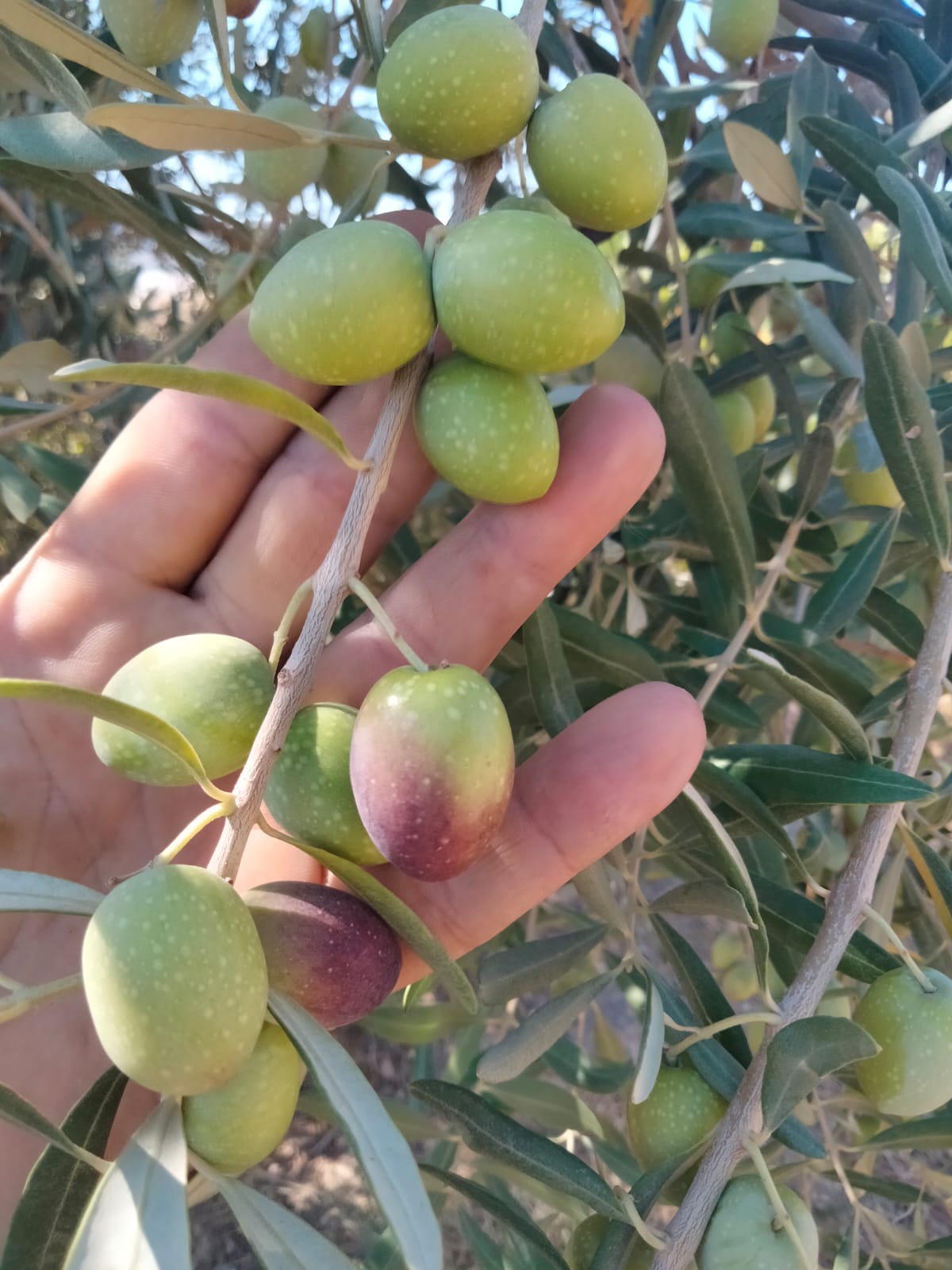
Polyphenols, naturally occurring compounds produced by plants, are part of what gives extra virgin olive oil its bitterness, pungency and resistance to oxidation. Some olive oil phenolic compounds are also studied for their effects on human health.
Oleocanthal, a phenolic compound associated with the peppery sensation in the throat, and oleacein, another important olive oil phenolic compound, are two examples. But “high polyphenol” can become another marketing phrase unless you know what was actually measured.
Here is what polyphenols are, why they matter, how they are measured and what to look for when choosing an olive oil.
5 Quick Questions About Polyphenol-Rich Olive Oil
What is polyphenol-rich olive oil?
Polyphenol-rich olive oil is extra virgin olive oil with a substantial concentration of naturally occurring phenolic compounds. These compounds contribute to its antioxidant activity, bitterness, peppery flavor and resistance to oxidation. There is no universal official olive oil grade called “high polyphenol.”
How many polyphenols should a good olive oil have?
Polyphenol levels are commonly reported in milligrams per kilogram (mg/kg). Numbers such as 250, 400 or 500 mg/kg are often used in marketing, but there is no universal threshold that defines a good olive oil. The measured compounds, laboratory method, harvest and testing date all matter.
How can you recognize a lab-tested high-polyphenol olive oil?
Look for a laboratory measurement connected to an identifiable oil or production lot, together with its harvest information and origin. For example, Lumìa, Milan Truffle’s early-harvest Italian extra virgin olive oil, measured 564 mg/kg total polyphenols at milling for its Fall 2025 oil. That is a production-stage result, not a guarantee of the current concentration in every bottle.
Does peppery olive oil mean it has more polyphenols?
Bitterness and pungency can indicate the presence of phenolic compounds, including oleocanthal, which is associated with the peppery sensation in the throat. However, flavor cannot establish an exact polyphenol concentration. A numerical claim requires laboratory evidence.
Do olive oil polyphenols decrease over time?
Yes. Phenolic compounds change and generally decline as olive oil ages and oxidizes. Choose oil with clear harvest information and store it away from heat, light and oxygen. Protective packaging helps preserve freshness.
What Are Polyphenols in Olive Oil?
Polyphenols, a broad family of naturally occurring plant compounds, are found in olives and many other plant foods.
Extra virgin olive oil contains a distinctive mixture of phenolic compounds, including hydroxytyrosol and its derivatives, oleacein and oleocanthal.
These compounds do not all behave identically. Some help protect the oil against oxidation, while others contribute to sensory characteristics such as bitterness and pungency.
Polyphenols are one part of olive oil’s composition. For the broader picture—including oleic acid, squalene, freshness, and everyday use—read our guide to the benefits of extra virgin olive oil.
Why Do Polyphenols Matter?
Polyphenols matter for two different reasons: what they do in olive oil and why they are studied in human nutrition.
In the oil, phenolic compounds act as antioxidants, helping protect it against oxidation. Oxidation, the chemical deterioration that occurs when oil reacts with oxygen, is one of the processes that eventually causes olive oil to lose freshness and become rancid.
Olive oil polyphenols have also been extensively studied in human nutrition. In the European Union, an authorized health claim states that olive oil polyphenols contribute to the protection of blood lipids from oxidative stress, but the claim has specific compositional and consumption requirements.
What Does High-Polyphenol Olive Oil Taste Like?
Bitterness and pungency are positive sensory characteristics of extra virgin olive oil, and phenolic compounds contribute to both.
Bitterness is perceived mainly on the tongue. Pungency, the peppery physical sensation that develops in the throat, can sometimes cause a cough. Oleocanthal is particularly associated with this throat-catching sensation.
A robust oil can therefore provide clues about its phenolic composition. But your mouth is not a laboratory.
You cannot reliably convert bitterness, pungency or the number of coughs into a polyphenol value in mg/kg. If a producer gives you a specific numerical claim, laboratory measurement is the stronger evidence.
To learn how these characteristics are evaluated, read our guide to tasting olive oil.
What Makes an Olive Oil High in Polyphenols?
Polyphenol concentration does not come from one factor. It begins with the olive and continues through harvest, milling and storage.
Cultivar, the cultivated variety of olive, matters. Different cultivars can naturally develop different phenolic profiles.
Fruit maturity matters. Earlier-harvest olives are commonly associated with more robust oils and higher phenolic concentrations, although cultivar and growing conditions also influence the result. Learn more in our early-harvest olive oil guide.
Milling matters. Crushing, malaxation and separation influence the finished oil. Malaxation, the controlled mixing of crushed olive paste, is one stage where time, temperature and oxygen exposure matter.
Storage matters. Heat, light, oxygen and time contribute to deterioration. That is why good packaging and proper olive oil storage matter after production.
How Are Olive Oil Polyphenols Measured?
Polyphenol results are commonly expressed in milligrams per kilogram, or mg/kg. But the number alone does not tell the entire story.
The International Olive Council publishes a method for determining phenolic compounds in olive oils, COI/T.20/Doc. No 29. Laboratories may also use other analytical approaches and reporting conventions.
How to Read a Polyphenol Result
Not every number called “polyphenols” measures the same thing. A laboratory may report an overall phenolic result, individual compounds such as oleocanthal and oleacein, or compounds relevant to a specific regulated health claim.
That means two numbers expressed in mg/kg should not automatically be treated as equivalent. Before comparing oils, ask what was measured, how it was measured and when the sample was tested.
What Is Considered a High Polyphenol Level?
You will often see 250 mg/kg presented online as the dividing line between ordinary and “high-polyphenol” olive oil. The origin of that number needs context.
Under Commission Regulation (EU) No 432/2012, the authorized European claim states that olive oil polyphenols contribute to the protection of blood lipids from oxidative stress. The claim may be used only for olive oil containing at least 5 mg of hydroxytyrosol and its derivatives, including compounds such as oleuropein complex and tyrosol, per 20 g of olive oil. The regulation also requires consumers to be informed that the beneficial effect is obtained with a daily intake of 20 g of olive oil.
The figure of 250 mg/kg is often used as shorthand because 5 mg per 20 g corresponds arithmetically to 250 mg per kg. But the regulation is not a generic “total polyphenols above 250 mg/kg” rule. Which compounds were measured and how they were measured matter.
That is why the largest number on a bottle is not necessarily the most useful one.
How Do You Choose a High-Polyphenol Olive Oil?
Instead of relying on words such as “premium,” “robust” or “antioxidant-rich,” look for evidence you can evaluate.
- A polyphenol measurement: Look for an actual laboratory result rather than only a vague claim.
- Measurement context: Find out what was measured and, when available, which analytical method was used.
- Harvest date: A harvest date tells you when the olives were harvested, while a best-by date serves a different purpose. Read our harvest date vs. best-by date guide.
- Cultivar: Named olive varieties provide more information about what is actually in the bottle.
- Origin: Specific provenance gives you more information than broad marketing language.
- Batch or lot evidence: A laboratory result becomes more useful when it can be connected to an identifiable oil or production lot.
Lumìa: A Real Laboratory Example
Lumìa, Milan Truffle’s 100% Italian extra virgin olive oil, shows why measurement context matters.
The Fall 2025 oil, produced from Tonda Iblea and Nocellara olives, measured 564 mg/kg total polyphenols at milling time.
Separate laboratory analysis measured 247 mg/kg oleocanthal and 136 mg/kg oleacein, for a combined 383 mg/kg. Expressed per 20 g of oil, those two measurements together equal 7.66 mg/20 g.
The important point is not simply that the numbers are high. It is knowing what was measured and when.
The 7.66 mg/20 g figure is presented here as a compositional measurement of oleocanthal and oleacein. It is not presented as a determination of eligibility for a specific regulated health claim.
Do Polyphenols Decrease Over Time?
Yes. Olive oil does not improve with age.
Phenolic compounds change over time as the oil is exposed to oxygen, heat and light. Proper storage can slow deterioration, but it cannot stop aging completely.
This is why a polyphenol result should be connected to a point in time. A measurement taken at milling describes the sampled oil at that stage; it should not be interpreted as a guarantee that exactly the same concentration remains indefinitely.
Can You Cook With High-Polyphenol Olive Oil?
Yes. Extra virgin olive oil can be used for cooking as well as finishing. Heating can change or reduce some phenolic compounds, but that does not mean a high-quality EVOO must be reserved exclusively for raw use.
A robust, bitter and pungent oil can also be particularly expressive when used as a finishing oil over vegetables, soups, beans, grilled foods and bread.
For a deeper look at heat and olive oil, read Olive Oil Smoke Point: The Numbers and What They Really Mean.
The Bottom Line
Polyphenols are part of what makes extra virgin olive oil chemically, sensorially and nutritionally interesting. But “high polyphenol” should not be treated as a magic phrase or judged from one number without context.
Look for freshness, provenance and production information. And when a brand gives you a specific polyphenol concentration, look for what was measured, when it was measured and the evidence behind the number.
Choose Olive Oil With Evidence
Lumìa is an early-harvest Italian extra virgin olive oil made from Tonda Iblea and Nocellara olives and cold extracted in Italy. Its production-stage phenolic measurements are disclosed so you can evaluate the evidence rather than rely only on marketing language.
Shop Lumìa Italian Extra Virgin Olive Oil
Frequently Asked Questions
What are polyphenols in olive oil?
Polyphenols are naturally occurring plant compounds found in extra virgin olive oil. They contribute to antioxidant activity, oxidative stability and sensory characteristics including bitterness and pungency.
Is “high-polyphenol olive oil” an official category?
There is no universal olive oil grade called “high-polyphenol olive oil.” The useful question is what was measured, by which method, for which oil and at what point in time.
Is 500 mg/kg of polyphenols high?
A result of 500 mg/kg can represent a substantial phenolic concentration, but it should be interpreted together with the analytical method, reporting basis and testing date. Results produced by different methods are not always directly comparable.
Does peppery olive oil mean it is high in polyphenols?
Pungency can indicate the presence of phenolic compounds, but taste cannot determine a concentration in mg/kg. Laboratory testing is required for a numerical result.
Are early-harvest olive oils higher in polyphenols?
Often, yes, but harvest timing is only one factor. Cultivar, growing conditions, fruit maturity, milling and storage also affect the finished oil.
Primary Sources
- European Commission — Commission Regulation (EU) No 432/2012
- International Olive Council — Standards, Methods and Guides

