

Early Harvest · Italian EVOO
Sicilian Olive Oil
Lumìa · 100% Italian Extra Virgin Olive Oil
$55.00
Shop Lumìa Olive OilLumìa at a Glance
- Origin
- Product of Italy
- Harvest
- Fall 2025
- Extraction
- Cold extracted
- Polyphenols
- 564 mg/kg (2025 harvest, measured at milling)
- Free acidity
- <0.25%
- Bottle
- 500 mL dark glass
- Use
- Cooking and finishing
Our Olive Oils
One Italian extra virgin olive oil for everyday cooking and finishing, and two infused extra virgin olive oils for finishing.
-
Extra Virgin Olive Oil
Lumìa · 100% Italian Extra Virgin Olive Oil
Early harvest olives, cold extracted in Italy. One ingredient, in a 500 mL dark glass bottle for cooking and finishing.
$55.00
Shop Lumìa -
Infused Olive Oil
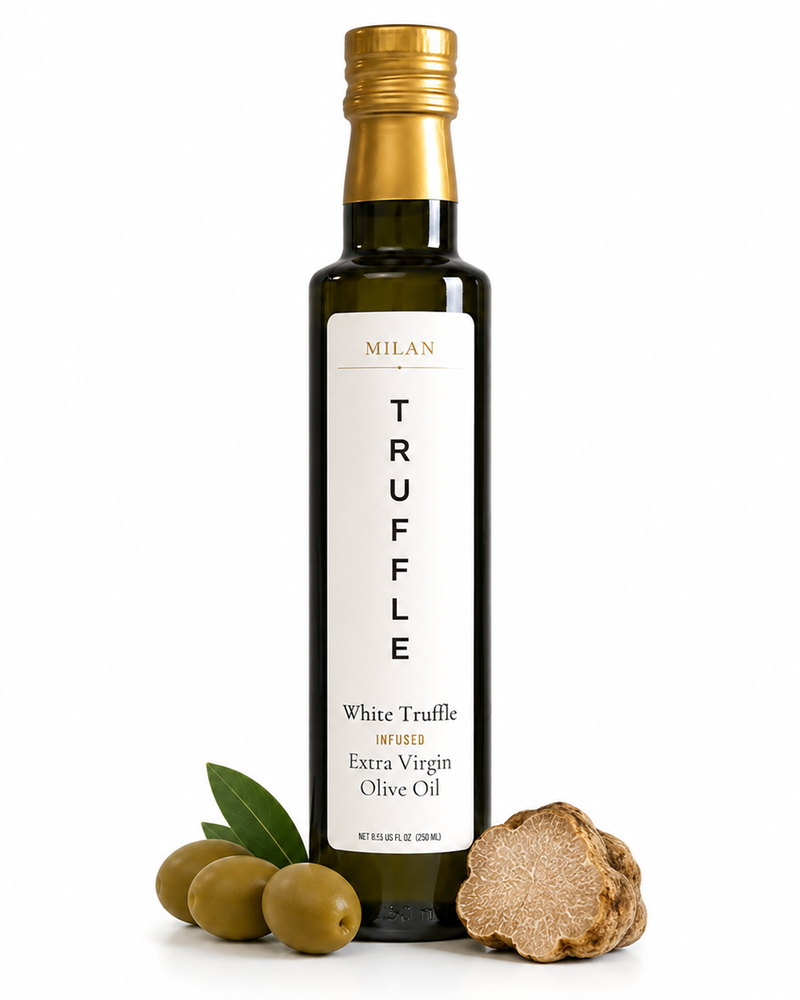
White Truffle Infused Extra Virgin Olive Oil
Extra virgin olive oil with natural white truffle aroma. A 250 mL finishing oil, used a few drops at a time.
$45.00
Shop White Truffle -
Infused Olive Oil
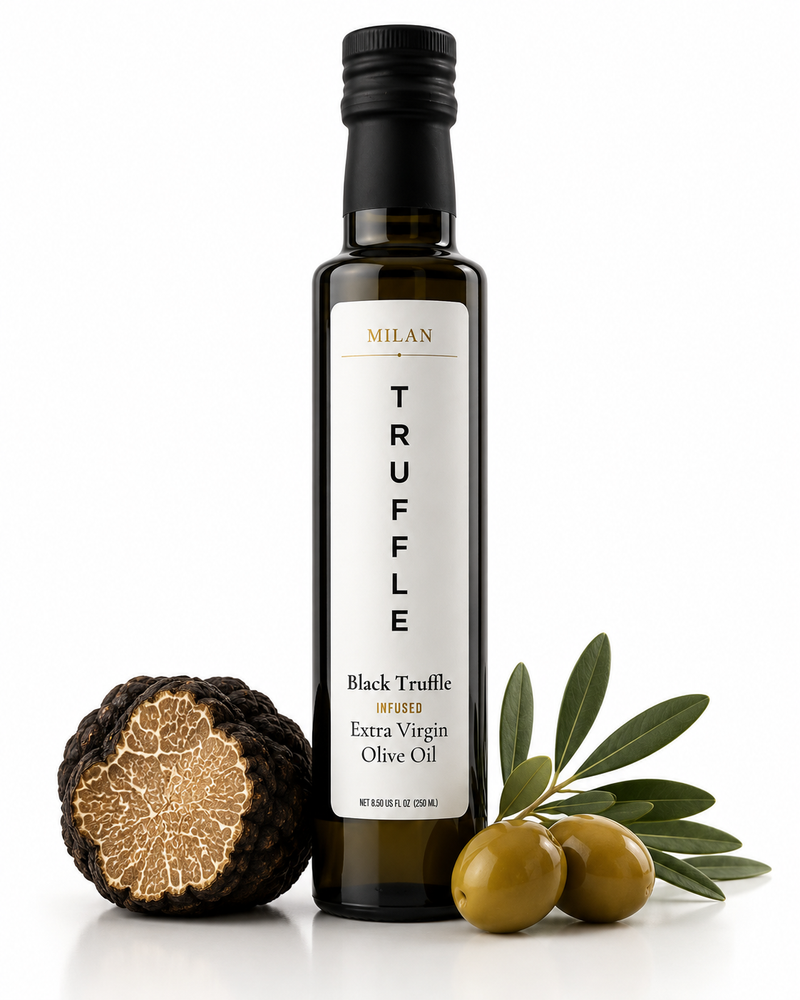
Black Truffle Infused Extra Virgin Olive Oil
Extra virgin olive oil with natural black truffle aroma. A 250 mL finishing oil for warm, rich dishes.
$38.99
Shop Black Truffle

What Is Sicilian Olive Oil?
What is Sicilian olive oil? Sicilian olive oil, extra virgin olive oil made from olives grown and milled in Sicily, is often described as bold and fruity, with a pleasant bitterness and a peppery finish.
What makes Sicily's olive oil distinctive? Sicily's native cultivars, olive varieties grown on the island for centuries, together with its hot, dry climate and the timing of the harvest, shape the character of its oils. Descriptors such as green tomato, artichoke and fresh-cut grass are common in Sicilian oils, but they vary by cultivar and production.
What connects Lumìa to Sicily? Lumìa, Milan Truffle's 100% Italian early-harvest extra virgin olive oil, reflects the brand's Sicilian heritage while maintaining its documented Italian origin. The family behind Milan Truffle has olive-growing roots in Palma di Montechiaro and Pozzallo. Lumìa's tested 2025 harvest recorded 564 mg/kg total polyphenols, measured at milling, and its free acidity specification is below 0.25%.
Lumìa: 100% Italian Extra Virgin Olive Oil With Sicilian Heritage
What is Lumìa? Lumìa, our early-harvest 100% Italian extra virgin olive oil, is cold extracted in Italy and sold in a 500 mL (17 fl oz) dark glass bottle for $55.00, with six-bottle and subscription options on the Lumìa product page. It is an Italian oil, not a Sicily-only oil, and it does not carry a DOP or IGP designation.
What do Lumìa's laboratory results show? Lumìa's published laboratory measurements, results from the analysis of its 2025 harvest, record 564 mg/kg total polyphenols, measured at milling, and a peroxide value, a measure of early oxidation, of 3.00 meq O₂/kg. Its free acidity specification is below 0.25%. These values describe the tested 2025 harvest at the time of analysis; polyphenols decline over time, so they are not guaranteed unchanged throughout the shelf life of the oil.
- Origin: product of Italy.
- Harvest: early harvest, Fall 2025 season.
- Extraction: cold extracted.
- Total polyphenols: 564 mg/kg (2025 harvest, measured at milling).
- Free acidity: <0.25%.
- Peroxide value: 3.00 meq O₂/kg (2025 harvest analysis).
- Bottle: 500 mL (17 fl oz) dark glass.
- Price: $55.00.
Shop Lumìa 100% Italian extra virgin olive oil, 500 mL, $55.00.
6 Olive Varieties That Define Sicilian Olive Oil
Which olives are used in Sicilian olive oil? Sicilian olive oil, unlike oil from many other regions, is made mostly from native cultivars. Six are the most widely cited:
- Biancolilla. Biancolilla, one of the most widespread Sicilian cultivars, is grown across much of the island.
- Cerasuola. Cerasuola, a cultivar typical of western Sicily, is common in the provinces of Trapani and Agrigento.
- Nocellara del Belice. Nocellara del Belice, a variety from the Belice valley in western Sicily, is used for both oil and table olives.
- Nocellara Etnea. Nocellara Etnea, a cultivar of the slopes of Mount Etna, is grown in eastern Sicily.
- Moresca. Moresca, a traditional variety of eastern Sicily, is grown mainly around Siracusa and Catania.
- Tonda Iblea. Tonda Iblea, the signature cultivar of the Monti Iblei in southeastern Sicily, is grown in the provinces of Ragusa and Siracusa.
7 Protected Designations: IGP Sicilia and 6 DOP Zones
What do the Sicilian designations mean? A protected designation, a European Union label that certifies where and how an oil was made, guarantees origin only for oils that carry its seal. Grade standards, the chemical and sensory limits that define extra virgin olive oil, are a separate matter, set internationally by the International Olive Council, the intergovernmental organization for olive oil. Sicily has one regional IGP and six DOP zones, all listed in the European Union's register of geographical indications:
- IGP Sicilia, the island-wide Protected Geographical Indication.
- DOP Monti Iblei, in southeastern Sicily.
- DOP Valli Trapanesi, in the province of Trapani.
- DOP Val di Mazara, in western Sicily.
- DOP Monte Etna, on the slopes of Mount Etna.
- DOP Valle del Belice, in the Belice valley of western Sicily.
- DOP Valdemone, in the province of Messina.
What the seals guarantee, and what they don't: DOP and IGP olive oil.
What Does Sicilian Olive Oil Taste Like?
What does Sicilian olive oil taste like? Sicilian olive oil, often among the most fruity and aromatic of Italian oils, typically ranges from medium to intense. Green tomato, artichoke, freshly cut grass, bitterness and peppery pungency are possible regional descriptors, varying by cultivar and production. Bitterness and pungency, the peppery catch in the throat, come from polyphenols, natural compounds more concentrated in green olives.
What does Lumìa taste like? Lumìa, our 100% Italian early-harvest extra virgin olive oil, has its own documented profile: tasting notes of walnut husk, red apple and wild chicory, followed by a distinctive peppery finish.
- Aroma: red apple and walnut husk.
- Palate: wild chicory and characteristic vegetal bitterness.
- Finish: a distinctive peppery sensation.
When Is Olive Oil Harvested in Sicily?
When are olives harvested in Sicily? In Sicily, the olive harvest takes place in autumn, and the exact timing changes every year with the weather and the condition of the trees. Growers who pick early, while the olives are still green, produce a greener and more peppery oil with lower yields. Read more about early harvest olive oil.
3 Checks to Verify a Sicilian Olive Oil Claim
How can you tell if an olive oil is really Sicilian? A Sicilian origin claim, a statement about where the olives were grown and milled, is only as reliable as the information on the bottle. Two of our seven checks for choosing olive oil apply directly, plus one check specific to Sicily:
- The country of origin is explicit. For a Sicilian oil, look for Sicily named as the origin of the olives, not only as the location of the company.
- Harvest information is disclosed, not only a best-by date, so you know how fresh the oil is.
- Sicily-specific check: look for a DOP or IGP Sicilia seal when you want certified proof of Sicilian origin.
For all seven checks, read how to choose the best Italian olive oil. For an independent explanation of what olive oil labels state, see the NYOOO guide to reading olive oil labels, published by the New York Olive Oil Open.
4 Ways to Use Sicilian Olive Oil
How should you use Sicilian olive oil? Sicilian olive oil, a bold and fruity extra virgin olive oil, works for everyday cooking and shows its full flavor raw:
- Finishing. Finishing, adding oil just before serving, suits grilled fish, caponata, pasta and soups.
- Dressings. Whisk it with lemon juice or vinegar for tomato salads and bitter greens.
- Dipping. Serve it with fresh bread, alone or with a pinch of salt.
- Cooking. Use it for sautéing and roasting vegetables, fish and meat.
Where to Buy Italian Olive Oil With Sicilian Heritage
Where can you buy Lumìa? Lumìa, our 100% Italian extra virgin olive oil with Sicilian heritage, is available directly from Milan Truffle in a 500 mL dark glass bottle for $55.00, with its harvest season and laboratory results published. Store it sealed in a cool, dark place, and read how to store olive oil for more detail. Shop Lumìa.
Sicilian Olive Oil FAQ
Why is Sicilian olive oil peppery?
Its pepperiness comes from polyphenols. Oleocanthal, a polyphenol that stimulates the throat, gives pungency, the peppery catch at the back of the throat. It is more concentrated in oil from green olives, so oils from an early harvest tend to be more peppery. Read more: why olive oil tastes peppery.
What olive varieties are used in Sicilian olive oil?
Mostly native Sicilian cultivars. The most widely cited are Biancolilla, Cerasuola, Nocellara del Belice, Nocellara Etnea, Moresca and Tonda Iblea. Many Sicilian oils are blends of several of these varieties.
What does IGP Sicilia mean?
IGP Sicilia is a protected regional designation. IGP, Protected Geographical Indication, is a European Union label certifying that an oil was produced in Sicily under the designation's rules. Only oils that carry the seal are certified under it.
Is Sicilian olive oil good for cooking?
Yes. Sicilian extra virgin olive oil can be used for sautéing, roasting and everyday cooking like any extra virgin olive oil. Its bold flavor shows most when it is used raw, on salads, grilled fish, pasta and bread.
Is Lumìa a Sicilian olive oil?
Lumìa is a 100% Italian olive oil with Sicilian heritage. Lumìa, Milan Truffle's 100% Italian early-harvest extra virgin olive oil, reflects the brand's Sicilian heritage while maintaining its documented Italian origin. It is not sold as a Sicily-only, DOP or IGP oil.
For a complete introduction to grades, production and uses, read our guide to olive oil.
Discover Lumìa Italian Extra Virgin Olive Oil
Early harvest. Cold extracted in Italy. One ingredient.
$55.00
Shop Lumìa Olive Oil