
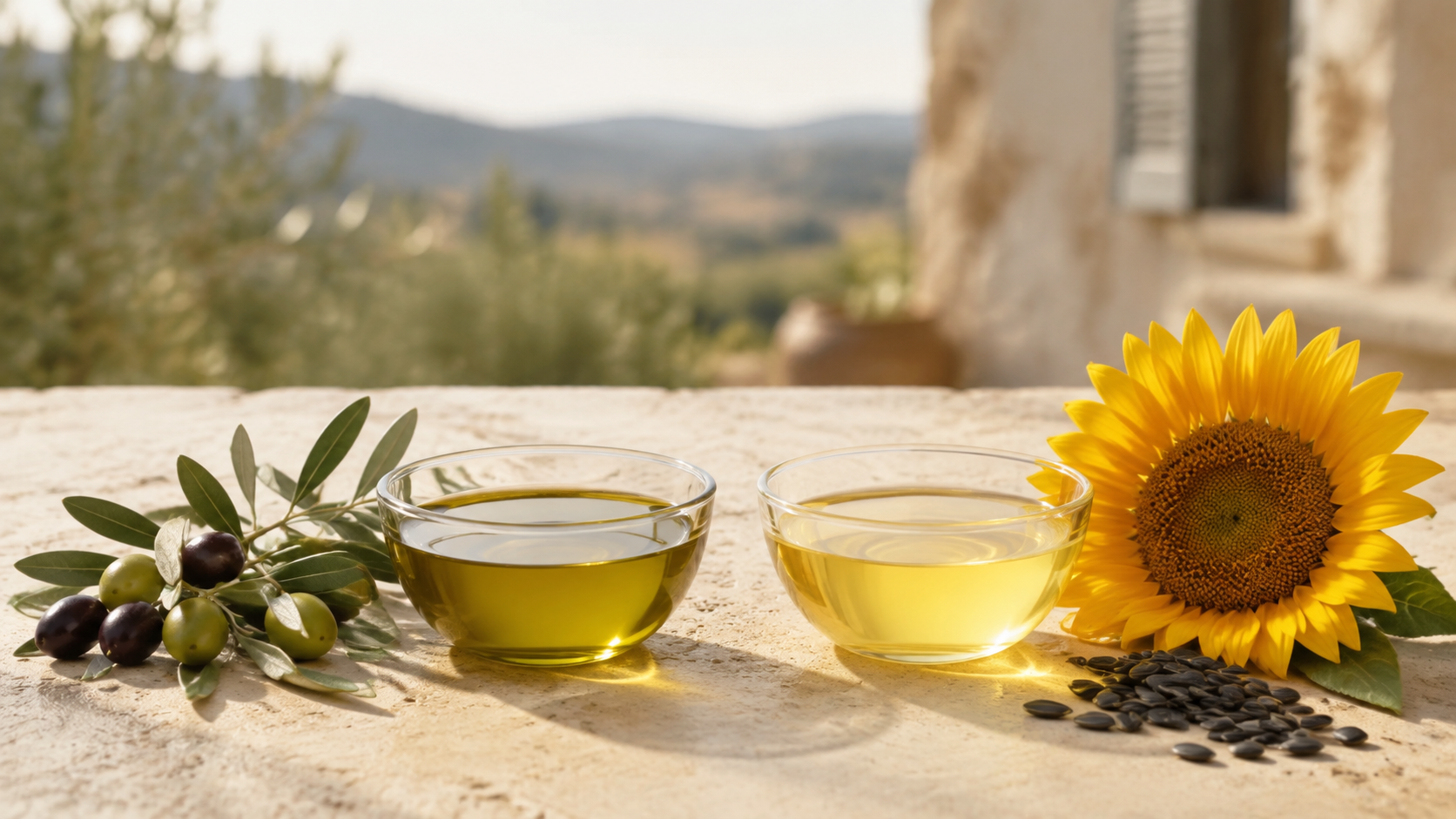
Which is better for most home kitchens: olive oil or sunflower oil? Extra virgin olive oil is generally the more versatile choice when you want an unrefined oil that contributes flavor to everyday cooking.
Which has the higher smoke point? Refined sunflower oil is commonly published with a higher smoke-point range, but smoke point alone does not determine cooking performance.
Can olive oil replace sunflower oil? Yes. They can usually be exchanged in a 1:1 ratio, although extra virgin olive oil will contribute more flavor.
Our Perspective as an Olive-Oil Family
Our family’s relationship with olive cultivation comes from Sicily. Beginning with the 2026 harvest, we will also harvest olives from our properties in Palma di Montechiaro and Pozzallo, Sicily.
That experience shapes how we compare cooking oils. We consider origin, extraction, freshness, flavor, intended use, and whether the information on the bottle can be verified.
Disclosure: Milan Truffle imports and sells Italian extra virgin olive oil. The comparison below is intended to explain where both oils can fit in a kitchen.
What Is Sunflower Oil?
Sunflower oil is obtained from sunflower seeds. Most sunflower oil sold in supermarkets is refined to create a light-colored oil with a mild or neutral flavor.
Not every sunflower oil has the same composition. Traditional sunflower oil is generally higher in polyunsaturated linoleic acid, while high-oleic sunflower oil contains substantially more monounsaturated oleic acid.
Cold-pressed and unrefined sunflower oils are also available. These retain more noticeable sunflower flavor but are less common than refined versions.
Extra virgin olive oil is different because it is a defined, unrefined grade produced directly from olives using mechanical or other physical means. See our complete guide to extra virgin olive oil.
Olive Oil vs. Sunflower Oil: Quick Comparison
| Characteristic | Extra Virgin Olive Oil | Sunflower Oil |
|---|---|---|
| Source | Olive fruit | Sunflower seeds |
| Common retail forms | Extra virgin, virgin, and refined | Refined, high-oleic, and cold-pressed |
| Dominant fat | Primarily monounsaturated oleic acid | Varies: traditional oil is higher in linoleic acid; high-oleic oil contains more oleic acid |
| Flavor | Fruity, grassy, bitter, or peppery | Usually neutral when refined; mildly nutty when unrefined |
| Processing | Mechanically extracted and unrefined when extra virgin | Usually refined; cold-pressed versions are available |
| Typical uses | Cooking, roasting, dressings, dipping, and finishing | Frying, baking, and recipes requiring neutral flavor |
How Are Olive Oil and Sunflower Oil Made?
Extra virgin olive oil is produced by crushing olives and separating the oil using mechanical or other physical processes. It is not chemically refined.
Commercial sunflower oil is commonly extracted from sunflower seeds and then refined. Refining produces a consistent, neutral oil by reducing color, aroma, and flavor.
The processing category matters. Extra virgin olive oil should be compared with the specific sunflower oil under consideration—not with an undefined idea of sunflower oil.
How Do Olive Oil and Sunflower Oil Taste?
Extra virgin olive oil contributes recognizable flavor. Depending on the olive varieties, harvest, and freshness, it may be delicate, fruity, grassy, bitter, or peppery.
The peppery sensation associated with some fresh EVOOs can be influenced by phenolic compounds, including oleocanthal in olive oil.
Refined sunflower oil is generally neutral and remains in the background. Unrefined sunflower oil may have a mild, nutty, or seed-like character.
Choose according to whether the oil should contribute flavor. Our olive oil pairing guide explains how delicate, medium, and robust EVOOs work with different foods.
Which Oil Is Better for Cooking?
Extra virgin olive oil is suitable for most everyday home cooking, including sautéing, roasting, pan-frying, sauces, marinades, and baking.
Refined sunflower oil is useful when neutral flavor, cost, or a large quantity of oil is the priority. High-oleic sunflower oil should be distinguished from traditional high-linoleic sunflower oil when comparing cooking performance.
Smoke point is only one consideration. An oil’s fatty-acid composition, antioxidant content, degree of refining, temperature, and heating time also affect how it behaves during cooking.
For a dedicated explanation, read our guide to the smoke point of olive oil.
When Should You Choose Each Oil?
Choose extra virgin olive oil for:
- Salad dressings and marinades
- Sautéing and roasting
- Pan-frying
- Dipping bread
- Finishing pasta, vegetables, meat, and fish
- Recipes in which the oil should contribute flavor
Choose sunflower oil for:
- Baking that requires a neutral flavor
- Frying with a large quantity of oil
- Recipes in which olive flavor is not desired
- Situations where cost is the primary consideration
What Should You Check Before Buying?
For sunflower oil, check whether the bottle identifies the oil as traditional, high-oleic, refined, or cold-pressed. Those descriptions materially affect its composition, flavor, and intended use.
For olive oil, evaluate the grade, origin, producer, harvest information, packaging, and storage conditions. Our olive oil buyer’s guide explains what each signal can—and cannot—tell you.
Light and heat can damage either oil. See our comparison of dark glass, tin, and plastic olive-oil packaging.
The Bottom Line
Olive oil and sunflower oil can both be useful, but they are not interchangeable in flavor or composition.
For most home kitchens, extra virgin olive oil is the more versatile choice. It works for everyday cooking and contributes flavor to the finished dish.
Refined sunflower oil is useful when neutrality, volume, or cost matters most. When choosing sunflower oil, determine whether it is traditional or high-oleic rather than treating every sunflower oil as identical.
For the applicable production lot, Milan Truffle will provide the available certificate of analysis upon request to customers who purchase our 100% Italian extra virgin olive oil.
Frequently Asked Questions
Is olive oil healthier than sunflower oil?
Both oils contain unsaturated fats. Extra virgin olive oil is primarily rich in monounsaturated oleic acid and contains naturally occurring phenolic compounds. Sunflower oil’s composition depends heavily on whether it is traditional, high-oleic, refined, or cold-pressed.
Which oil is better for high-heat cooking?
Refined sunflower oil is commonly published with a higher smoke-point range. Extra virgin olive oil remains suitable for most everyday sautéing, roasting, pan-frying, and baking. Smoke point alone does not determine cooking performance.
Can olive oil replace sunflower oil?
Yes. Use the same quantity in most recipes. Extra virgin olive oil will contribute more flavor, while refined sunflower oil is generally neutral.

