
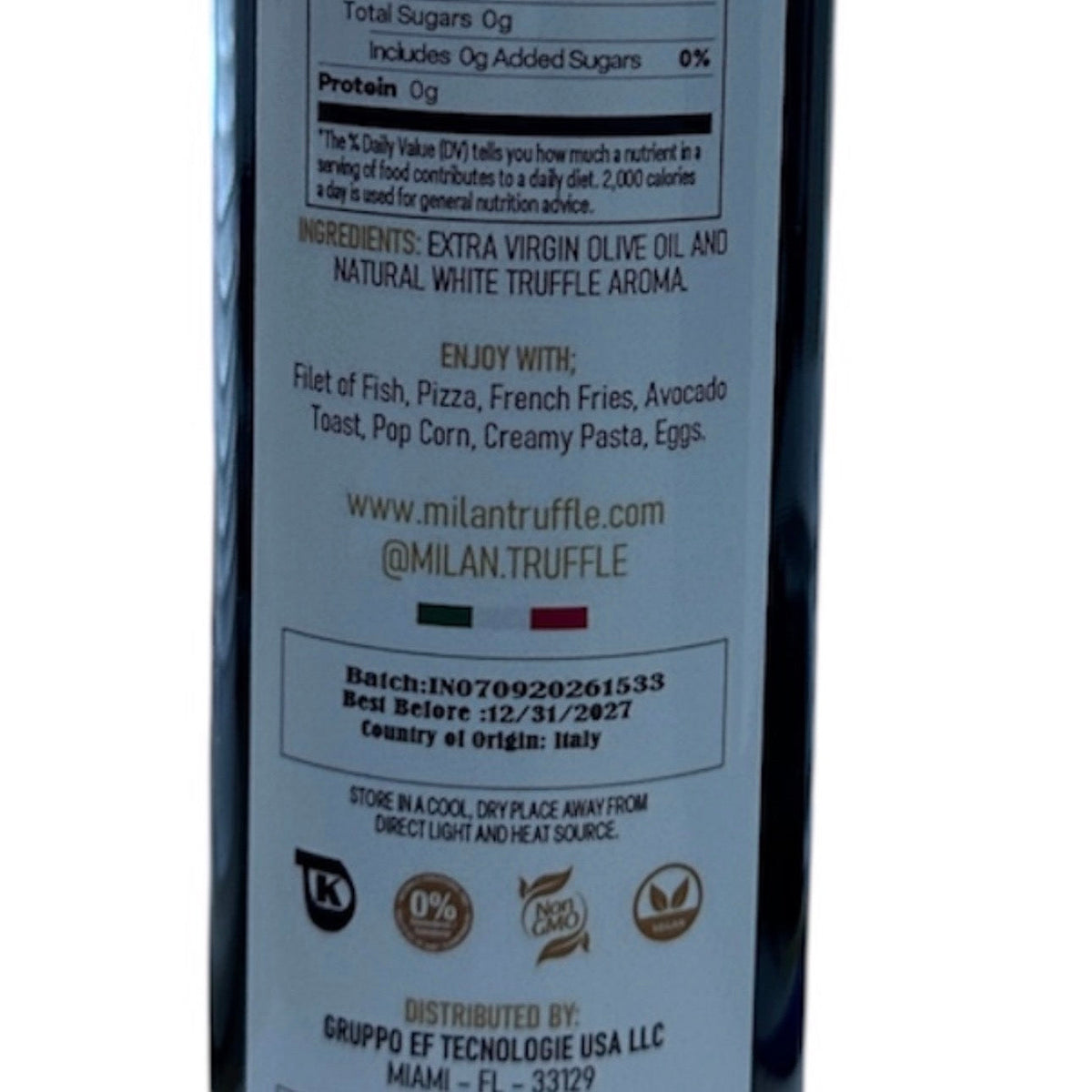
Flavored olive oil is olive oil combined with a separate source of flavor, such as lemon, basil, garlic, chili or truffle, either during milling or after the oil has been produced. The ingredient declaration on the back of the bottle, not the description on the front, is what tells you which oil is inside and what created the flavor.
Four things determine whether a flavored oil is worth buying: the grade of the base oil, the source of the flavor, whether both are disclosed, and whether the producer explains how the oil is meant to be used. No production method is automatically superior to another.
How Is Flavored Olive Oil Made?
Flavored olive oil is produced in four main ways: co-milling, infusion, blending with an aroma, and artificial flavoring.
Co-milling
Co-milling crushes olives together with another ingredient, such as citrus fruit or herbs, in the same production run. The flavor enters the oil at the moment the oil is made.
Infusion
Infusion places an ingredient in finished olive oil so that its aromatic compounds migrate into the oil over time.
Blending with an aroma
Blending combines finished olive oil with an essential oil, extract, distillate or natural aroma.
Artificial flavoring
Artificial flavoring adds synthetic flavoring substances to reproduce a specific aroma.
The appropriate method depends on the ingredient. Delicate herbs behave differently from citrus, and truffle behaves differently from both. What matters is not which method a producer chose, but whether the choice is stated on the label.
Which Olive Oil Is Used as the Base?
The base oil determines the character of everything in the bottle, and it is the first thing to check on the ingredient list.
Some flavored oils start from extra virgin olive oil. Others start from refined olive oil, which is more neutral in flavor and less expensive to produce.
- Extra Virgin Olive Oil in the ingredient list means the grade of the base oil is identified.
- Olive Oil is a category name that can cover a blend containing refined oil. How Italian olive oil is classified explains what separates the grades.
Producers who use extra virgin olive oil normally say so, because it is the more valuable claim. A flavored oil should not use added aroma to obscure the grade of the oil underneath.
Is Natural Aroma the Same as Artificial Flavor?
No. Natural flavor and artificial flavor are separate regulated categories under United States food labeling law, defined in 21 CFR 101.22.
Artificial flavor is defined there as a flavoring substance that is not derived from a spice, fruit, vegetable, edible yeast, herb, bark, bud, root, leaf or similar plant material, meat, fish, poultry, eggs, dairy products or fermentation products. Natural flavor covers essential oils, extracts, essences and distillates obtained from those same natural sources, where the significant function of the ingredient is flavoring rather than nutrition.
These are sourcing categories, not quality grades. A natural aroma is not automatically better tasting, and an artificial one is not unsafe. What the distinction tells you is where the flavor came from. Different rules apply outside the United States, so an imported bottle may carry a declaration written to another standard.
What Should a Flavored Olive Oil Label Show?
A transparent label discloses three things separately: the grade of the base oil, the source of the flavor, and any physical ingredient present in the bottle.
When those three are stated, the product can be evaluated on its own terms. Words such as artisan, premium and gourmet have no fixed definition and add nothing to that evaluation.
A transparent truffle oil declaration reads like this:
- Extra Virgin Olive Oil
- Natural White Truffle Aroma
Two ingredients, two facts: the grade of the oil and the source of the aroma. Nothing else is in the bottle, and nothing is implied that is not stated.
What Does Infused Mean on an Olive Oil Label?
Infused describes the product on the front of the bottle. It tells you the oil carries an added flavor. It does not tell you which method produced that flavor, and it does not mean that pieces of an ingredient were steeped in the oil or remain in it.
The back label answers what the front label only announces. An oil declared as extra virgin olive oil and natural white truffle aroma is an infused oil with two ingredients and no solids.
A visible piece of truffle floating in the oil is a separate matter, and not a mark of quality. It shows that truffle is physically present. It does not tell you where the aroma came from, and it does not tell you the grade of the oil surrounding it.


Milan Truffle's White Truffle Infused Extra Virgin Olive Oil is declared on exactly that basis: extra virgin olive oil and natural white truffle aroma, with no dried truffle. The Black Truffle Infused Extra Virgin Olive Oil is the same format in black truffle, and the unflavored Italian extra virgin olive oil is the same base oil without the aroma.
How Is Truffle Oil Different From Other Flavored Oils?
Truffle oil is the flavored oil where the label carries the most weight, because fresh truffle is seasonal and its aroma cannot be held in oil at a usable intensity for long.
Whether a particular truffle oil contains truffle, truffle aroma, or both is answered by its ingredient list and nothing else. Is truffle oil real or fake covers that question in full.
Comparing one truffle oil against another is a separate decision, covered in how to choose a good truffle oil.
Should You Buy Flavored Olive Oil?
Yes, if the flavored oil starts with a quality extra virgin olive oil and the label clearly identifies every ingredient.
The flavor is not the most important part of the bottle. The base oil is. Extra virgin olive oil carries polyphenols, the compounds behind its bitterness and pungency, and refining removes most of them. What polyphenols are and why olive oil tastes peppery cover what they are and how they register on the palate.
A strong added aroma can make that difference difficult to detect, which is why the ingredient declaration matters more on a flavored oil than on a plain one.
A flavored oil should add flavor to a good olive oil, not hide the identity of a poor one.
How Should Flavored Olive Oil Be Used?
Flavored olive oils work best as finishing oils, because aromatic compounds are volatile and lose intensity under prolonged heat.
- Lemon olive oil for dressings and seafood.
- Garlic olive oil for marinades and vegetables.
- Basil olive oil for salads and Mediterranean dishes.
- Chili olive oil for pizza, pasta and grilled food.
Truffle oil follows the same rule, in small amounts added immediately before serving. How to use truffle oil correctly covers quantity and timing; the best dishes for truffle oil covers pairings.
How the base oil behaves under heat is a separate question from how the aroma behaves, and is covered in olive oil smoke point. Flavored oils are stored the same way as any olive oil: away from heat, light and air, as set out in how to store olive oil.
How Do You Choose a Flavored Olive Oil?
Four questions decide it, and all four are answered on the label.
- Is the base identified as extra virgin olive oil?
- Does the label state what created the flavor?
- Is every ingredient in the bottle declared?
- Does the producer explain how the oil is meant to be used?
A good flavored olive oil is defined by the grade of its base oil, a flavoring method suited to the ingredient, and a label that states both. If a bottle answers all four questions, the marketing on the front is no longer doing any work. How to choose real olive oil applies the same reading to unflavored oil.
Frequently Asked Questions
What is flavored olive oil?
Flavored olive oil is olive oil combined with herbs, spices, fruit, truffle or another source of flavor, through co-milling, infusion, blending with an aroma, or artificial flavoring.
Is infused olive oil better than other flavored olive oil?
No. Infusion is one production method among several. Quality depends on the grade of the base oil, the flavoring ingredient and how clearly both are declared.
What does infused mean on an olive oil label?
Infused means the oil carries an added flavor. It describes the product on the front of the bottle and does not mean that pieces of an ingredient were steeped in the oil or remain in it.
Is natural aroma the same as artificial flavor?
No. Natural flavor and artificial flavor are separate labeling categories under 21 CFR 101.22. The terms describe where a flavor came from, not how good it is.
Does flavored olive oil contain polyphenols?
It depends on the base oil. A flavored oil made from extra virgin olive oil retains the polyphenols of that oil; one made from refined olive oil contains far fewer, because refining removes most of them.
Does a piece of truffle in the bottle mean the oil is better?
No. A visible truffle piece shows that truffle is physically present. It does not indicate the source of the oil's aroma or the grade of the base oil.
Does truffle oil contain real truffle?
It depends on the product, and the ingredient list is the only reliable answer.
Can you cook with flavored olive oil?
Some flavored oils hold up in cooking, but delicate aromas are better added after cooking. Truffle oil is used as a finishing oil.